

More news on this day
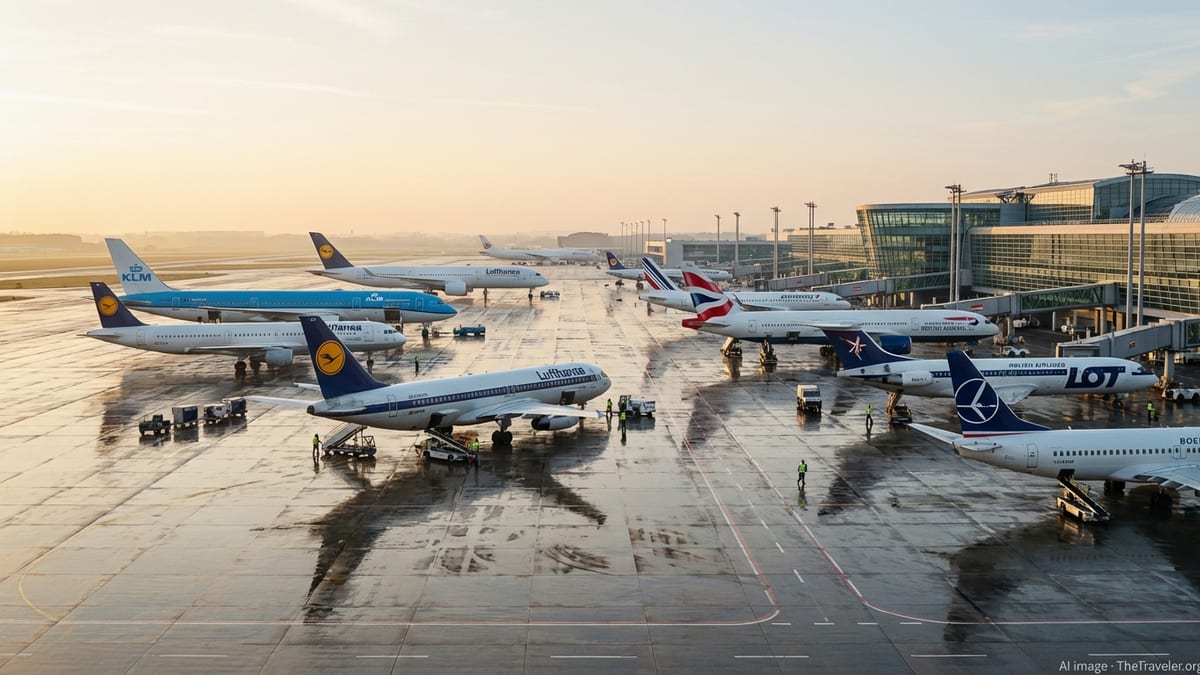
More than a century after the first fragile passenger aircraft connected European capitals, the continent’s oldest airlines are still flying, carrying with them a legacy of innovation, resilience and, increasingly, responsibility. As aviation confronts climate pressures, shifting geopolitics and new technology, carriers such as KLM, Lufthansa, Air France, British Airways and LOT Polish Airlines are drawing on long histories to reposition themselves for another turbulent era in the skies.
KLM: The Dutch Pioneer That Refuses to Age
Founded on 7 October 1919, KLM Royal Dutch Airlines is widely recognised as the world’s oldest airline still operating under its original name, a status the company highlighted during its centenary celebrations in 2019. From its first scheduled flight between London and Amsterdam in May 1920, KLM helped define what a modern flag carrier would look like, steadily building a European and intercontinental network from its Schiphol hub.
That legacy is central to how the airline presents itself today. After the shock of the pandemic, KLM has returned to growth, but is tying expansion closely to fleet renewal and fuel efficiency. The carrier is in the midst of a major short and medium haul transformation, progressively phasing out older Boeing 737s in favour of Airbus A321neo aircraft from 2024, while preparing to introduce Airbus A350s on long haul routes from 2026 to replace older widebodies. The shift is framed as a direct continuation of a century-long tradition of backing new aircraft technologies early.
Environmental policy has become an equally important pillar of KLM’s modern identity. The airline has been an outspoken advocate of sustainable aviation fuel and operational measures to cut emissions, positioning its historical status as a responsibility rather than purely a marketing slogan. In recent years it has promoted rail as an alternative to some short flights and engaged in sometimes controversial public campaigns encouraging passengers to fly more thoughtfully.
As competition intensifies within Europe and from Gulf and Asian carriers, KLM is betting that a blend of historical prestige, Dutch pragmatism and visible progress on sustainability will appeal to travellers. More than 100 years after Albert Plesman helped launch the airline, its future is increasingly tied to how convincingly it can show that long experience can coexist with genuine change.
Lufthansa at 100: Tradition, Turbulence and Reinvention
Germany’s Lufthansa is marking a milestone of its own. In 2026 the group is celebrating the 100th anniversary of the founding of Deutsche Luft Hansa in 1926, the predecessor it regards as the starting point of its flying and technical traditions. While the modern Lufthansa was re-established in the 1950s, the centenary has prompted a broad look back at a complex history that spans early European expansion, the jet age and a difficult reckoning with the airline’s role during the Nazi period.
The commemorations are not purely nostalgic. They coincide with one of the largest fleet modernisation drives in the airline’s history, as new long haul aircraft enter service and cabins are overhauled to keep pace with premium competitors. Lufthansa has already begun introducing revamped premium economy products and is rolling out a new generation of business and first class cabins intended to reset the experience on its flagship routes. The group is also using the anniversary to spotlight investments in more efficient aircraft and sustainable fuels as it seeks to cut emissions and operating costs simultaneously.
The centenary is also prompting a fresh examination of the airline’s past. Independent historians have been commissioned to produce a comprehensive study on the original Lufthansa’s entanglements with the Nazi regime, including the use of forced labour and support for military operations, with a detailed volume and public exhibition scheduled for 2026. For a company that now spans multiple former national carriers in Switzerland, Austria and Belgium, how it engages with this history is seen internally as crucial to its credibility.
At the same time, Lufthansa remains a central player in European aviation politics and economics. Following a painful restructuring after the pandemic, the group has expanded again through minority stakes and acquisitions, while pushing for a more level competitive field with state-backed rivals beyond Europe. As it toasts 100 years of heritage, Lufthansa is trying to show that the lessons of that century can be harnessed in service of a more accountable, sustainable business model.
Air France and the French Origins of Long Haul Glamour
While KLM and Lufthansa often headline lists of Europe’s oldest airlines, Air France’s story is equally entwined with the emergence of commercial aviation on the continent. The airline traces its roots back to 1933, when several French carriers were merged into a single national airline that would become a showcase for the country’s engineering and design ambitions. From the earliest postwar years, Air France cultivated an image of elegance and long haul sophistication, connecting Paris to colonial and then postcolonial destinations in Africa, Asia and the Americas.
That heritage shaped many of the airline’s most famous chapters, from early transatlantic routes to its role as one of only two carriers to operate Concorde. For decades, flying Air France was marketed as an extension of French cultural diplomacy, with cabin design, uniforms and onboard dining crafted to project a certain national style at 35,000 feet. Even as deregulation and low cost competition eroded some of the mystique around full service carriers, the airline has continued to lean on that legacy in its branding.
Today, Air France is focused on upgrading the hardware behind that image. Its long haul fleet renewal has accelerated, with new generation widebodies and refreshed cabins gradually replacing older aircraft. In parallel, the airline is investing in sustainable aviation fuel sourcing and efficiency technologies alongside its partner KLM within their joint group. The two historic carriers now share not only a holding company but also an overlapping roadmap on decarbonisation, digital services and customer experience.
For travellers, the legacy of Air France’s early decades remains visible in small ways: the emphasis on gastronomy, the design-led approach to lounges and cabins, and the importance placed on Paris Charles de Gaulle as a global crossroads. At the same time, the airline is grappling with the same pressures facing its peers, from labour disputes to environmental scrutiny, as it tries to reconcile its glamorous past with a more constrained future for aviation emissions.
British Airways and the Evolution of the Flag Carrier
Across the Channel, the story of British Airways is rooted in a cluster of even older airlines that helped establish some of Europe’s first international routes. Imperial Airways, formed in 1924, linked London with parts of the British Empire, while British European Airways and the British Overseas Airways Corporation later handled regional and long haul services from the United Kingdom. The 1974 merger that created British Airways drew these strands together and set the stage for one of Europe’s most recognisable global brands.
Through the 1980s and 1990s, British Airways cultivated a reputation as a premium long haul specialist, pioneering dedicated business class cabins, investing heavily in transatlantic routes and playing a founding role in the Oneworld alliance. Its aircraft and advertising became symbols of a newly liberalised, outward-facing UK, even as low cost rivals chipped away at its share of the short haul market. Heathrow, the airline’s primary hub, grew into one of the world’s most important connecting airports.
In recent years, however, the airline’s legacy has come under pressure. Intense cost competition, operational disruptions and criticism over ageing cabins prompted a multi-year investment programme aimed at refreshing aircraft interiors, upgrading digital services and reconnecting the brand with its earlier promise of refinement. British Airways and its parent group are also investing in sustainable aviation fuel partnerships and exploring future hydrogen and hybrid-electric aircraft concepts, conscious that their long haul network will be under increasing emissions scrutiny.
The airline’s long history still matters to many travellers, particularly on routes with deep historic and cultural links between the UK and destinations in North America, Africa and Asia. How British Airways balances that heritage with the need to modernise and cut its environmental footprint will be a key test of whether Europe’s flag carriers can remain relevant in a market reshaped by both low cost competitors and climate realities.
LOT, TAROM and the Eastern European Trailblazers
Europe’s aviation story is not solely written in its western capitals. LOT Polish Airlines, founded in December 1928 and commencing operations on 1 January 1929, is among the world’s oldest carriers still in operation and a founding member of the International Air Transport Association. Built initially by consolidating smaller domestic airlines, LOT symbolised a newly independent Poland’s desire to connect with its neighbours and the wider world, operating early routes across Central and Eastern Europe before the Second World War brought its growth to a halt.
Re-established after the war as a state enterprise, LOT navigated the politically constrained skies of the Eastern Bloc while gradually rebuilding a network reaching across Europe, the Middle East and later North America and Asia. In the post-communist era it faced fresh turbulence during market liberalisation and restructuring, but recent years have seen the airline expand its fleet of modern aircraft and refine Warsaw’s role as a transfer hub. Passenger numbers have grown as Poland’s economy has integrated further into the European Union, with LOT now positioning itself as a bridge between Western Europe and emerging markets to the east.
Romania’s TAROM traces its history back to 1920, when a precursor airline began operations, making it another of Europe’s oldest aviation brands. As the country’s flag carrier, TAROM played a crucial role in linking Bucharest to regional capitals through decades of political change, from monarchy to communist rule and then European Union membership. Its fleet and network are smaller than those of Western European giants, but its continuity has been symbolically important in a market where many earlier carriers, such as the Belgian airline Sabena, have vanished.
Together, LOT and TAROM illustrate how the legacies of long running airlines can be as much about national identity and continuity as about global scale. Their histories mirror broader political transitions in Central and Eastern Europe, and their future success will depend on whether they can leverage that heritage while competing on cost, reliability and sustainability in a crowded European marketplace.
From Colonial Networks to Global Alliances
The earliest European airlines often grew in parallel with colonial and imperial projects, using air routes to reinforce political and commercial ties from London, Paris, Amsterdam and Brussels to territories in Africa, Asia and the Middle East. Carriers such as KLM, Air France and the predecessors of British Airways developed long haul paths that followed shipping routes and telegraph lines, shrinking journey times from weeks to days and, eventually, hours. Aviation was a tool of soft power as well as commerce, moving mail, officials and eventually tourists along carefully controlled corridors.
As decolonisation gathered pace after the Second World War, those networks were reconfigured into more equal commercial relationships, even as historic traffic flows persisted. Many of today’s busiest long haul routes from Europe to North America, the Indian subcontinent and parts of Africa can be traced directly to the patterns set by early flag carriers. That legacy has shaped where aviation infrastructure is strongest, where high frequency services developed and which cities grew into natural connecting hubs.
In the late twentieth century, Europe’s oldest airlines became architects of a new order built around global alliances. KLM, Air France, Lufthansa and British Airways were among the first to see the strategic value in code sharing, joint ventures and shared frequent flyer programmes. Their alliances, including SkyTeam, Star Alliance and Oneworld, effectively stitched together the colonial-era route maps of multiple countries into larger, integrated networks. For passengers, that meant smoother connections and more choice. For the airlines, it was a way to defend their historical hubs against both low cost competitors in Europe and fast-growing long haul carriers from the Gulf and Asia.
Those alliances are now being tested by changing passenger behaviour, new regulatory pressures and the rise of ultra-long-haul point-to-point flights that bypass traditional hubs entirely. Yet they remain one of the clearest legacies of Europe’s early airlines, translating decades of bilateral agreements and national flag carrier prestige into a more flexible, market-driven system that still relies heavily on the airports and routes carved out in the first half of the twentieth century.
Heritage, Sustainability and the Next Century of Flight
As climate concerns rise up political and corporate agendas, Europe’s oldest airlines find their long histories under fresh scrutiny. Experience and brand recognition are assets, but they also come with a sizeable environmental footprint built up over decades of operation. Public expectations, especially among younger travellers, are shifting toward more transparent reporting of emissions, credible decarbonisation plans and visible investments in cleaner technology.
In response, carriers such as KLM, Lufthansa, Air France and British Airways are accelerating fleet renewal and experimenting with sustainable aviation fuel, more efficient flight planning and, in some cases, voluntary restraints on the least efficient ultra-short routes. Several have partnered with rail operators to replace or supplement flights on corridors where high speed tracks offer a realistic alternative, particularly within countries such as France and Germany. Others are backing research into hybrid-electric and hydrogen propulsion that could eventually transform regional flying.
Heritage is being repurposed as part of this sustainability narrative. Airlines are increasingly framing themselves as custodians of aviation’s future as well as its past, arguing that their depth of technical and operational expertise positions them to lead the sector’s transition. Centenary campaigns, historical exhibitions and retro liveries are being paired with messaging about carbon reductions, green investments and more responsible travel choices, in an attempt to ensure that nostalgia does not sit in isolation from the realities of climate change.
Whether those efforts will be enough remains an open question. What is clear is that Europe’s oldest airlines are unlikely to be defined solely by the sepia-toned photographs of their early aircraft or the glamour of bygone jet ages. Their legacies will increasingly hinge on decisions made in the coming decade, as they navigate the tension between a proud history of connecting people and places and the urgent need to fly in a way that keeps that story going for another hundred years.