

More news on this day
From revamped night trains to ambitious new high-speed links, a wave of rail investment across France, Germany and Italy is reshaping how tourists move around Europe and inspiring a shift away from short-haul flights.
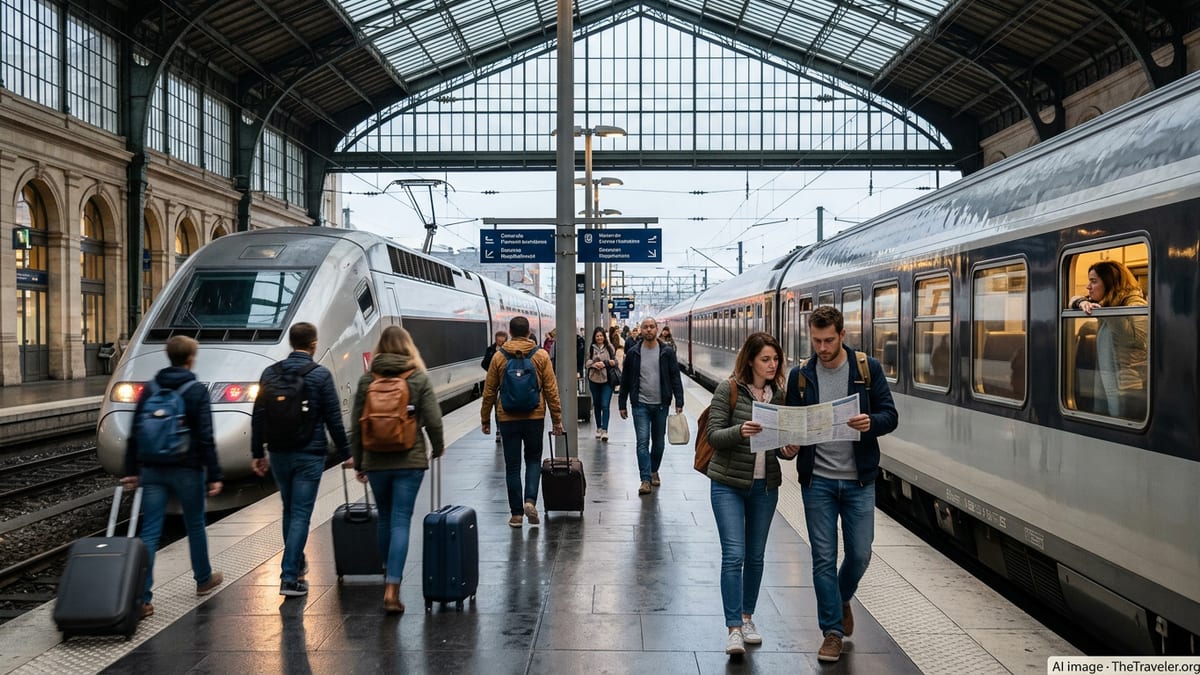
Night Trains Make a Comeback for Climate-Conscious Travelers
Across Europe, overnight rail is no longer a nostalgic niche but a fast-growing segment of the tourism market, with France, Germany and Italy at the center of the resurgence. In France alone, night train services carried more than a million passengers in 2024, a record that underscored how sleeper routes have become a mainstream choice rather than a curiosity for rail enthusiasts.
Travelers are increasingly choosing sleepers as a lower-carbon alternative to flying, especially on popular leisure routes where a hotel night can effectively be folded into the fare. Advocacy groups and operators say demand routinely outstrips supply during peak seasons, with new services selling out weeks in advance. The combination of environmental concerns, rail-friendly government policies and social media buzz around “slow travel” has pushed night trains to the top of many European bucket lists.
Railway cooperatives and national operators are racing to meet that demand. Belgian-Dutch startup European Sleeper is expanding its network beyond its initial Brussels to Berlin and Prague service, while state-backed companies in France and Italy are restoring or reinventing classic routes with modern rolling stock. The result is a patchwork of new options that give tourists far more freedom to crisscross the continent without boarding a plane.
Paris to Berlin: A Flagship Route for Europe’s New Sleeper Era
One of the most closely watched launches in 2026 is the revived Paris to Berlin night train, which has become a symbol of Europe’s rail revival. After the existing Nightjet service was placed under threat when French subsidies were withdrawn in 2025, the future of the route appeared uncertain. European Sleeper stepped in, announcing a new thrice-weekly connection beginning in March 2026 that will once again link the French and German capitals overnight.
Instead of following the older alignment through eastern France, the new service will run north via Brussels and Hamburg, knitting together three major city pairs in a single overnight journey. For tourists, it means the possibility of leaving Paris in the early evening, waking up in Berlin’s central station and then continuing by train to destinations like Prague or the Baltic coast. Operators expect strong demand from leisure travelers, city-break visitors and interrail pass holders looking to cover long distances while they sleep.
German and French rail policy makers see the route as a showcase for cross-border cooperation and a practical example of how rail can replace short-haul flights on some of Europe’s busiest city pairs. Travel agents report that many customers now ask specifically for Paris–Berlin rail options when planning multi-country itineraries, often combining the night train with high-speed day services onward to Munich, Vienna or northern Italy.
Italy’s High-Speed Push Links Cities and Coastlines
While night trains grab headlines, Italy is making news with an aggressive expansion of high-speed and long-distance services that appeal strongly to tourists. National operator Trenitalia’s latest winter and upcoming summer timetables add more Frecciarossa high-speed connections between major cities, including up to 100 daily services on the flagship Milan–Rome corridor and extended links north and south to Venice, Turin and Naples. The aim is to make it easier for visitors to pair art cities and coastal resorts in a single trip without relying on domestic flights.
New and upgraded infrastructure is set to reinforce that trend. The long-discussed high-speed axis between the port city of Genoa and the Po Valley, known as the Third Pass, is scheduled to open to passenger traffic in 2026, cutting journey times between the Ligurian coast and northern hubs such as Milan and Turin. Tourism boards along the Italian Riviera are preparing marketing campaigns built around fast rail access, positioning seaside towns as easy add-ons to itineraries that already include Milan, Florence or Rome.
Italy is also experimenting with heritage-inspired tourist trains that blur the line between transport and experience. The Espresso Riviera, launched in 2024 and expanded in 2025, offers vintage-style night and day services between Rome and the French Mediterranean coast, using classic rolling stock aimed squarely at leisure travelers. Trial seasonal services such as an overnight Rome to Munich train for events like Oktoberfest signal that Italian operators see tourism-focused rail as a growth market in its own right.
France Balances Record Demand With Funding Strains
France is experiencing a paradoxical moment in its rail revival: demand for trains is booming just as some services face financial and regulatory headwinds. Domestic night trains enjoyed double-digit passenger growth in 2024, prompting the government to order new rolling stock and to pledge the restoration of around 10 national sleeper routes by 2030. For tourists, that points to better connections to regions such as the Pyrenees, the Alps and the Mediterranean coast in the coming years.
Yet international links have proved more fragile. In 2025, the French state’s decision to withdraw subsidies for certain cross-border sleepers put routes such as Paris–Berlin and Paris–Vienna at risk, and the Paris-based Nightjet service is scheduled to end in late 2025. The gap is now being filled by private and cooperative operators, but the uncertainty has highlighted how delicate financing arrangements can be for long-distance rail that crosses several national networks.
At the same time, France continues to invest in its high-speed backbone. Projects in southern regions, including future upgrades between Montpellier and Perpignan, are designed to speed up services along the key Mediterranean corridor that carries millions of leisure travelers each year. Combined with a new wave of branded seasonal trains to ski resorts and Atlantic beaches, the message to tourists is clear: France wants to keep rail at the heart of holiday planning even as it recalibrates which services receive direct public support.
What the Rail Revival Means for Tourists in 2026
For visitors planning European trips in 2026 and beyond, the rapid evolution of rail in France, Germany and Italy is already changing how itineraries are built. Travel planners increasingly recommend combining high-speed day trains with at least one overnight service, turning long transfers into memorable experiences rather than lost time. With new routes opening and older links being reimagined, it is now possible to stitch together multi-country journeys that feel both efficient and romantic.
Tourism operators say the shift is particularly visible among younger and environmentally conscious travelers, who often see rail not simply as a way to get from A to B, but as a core part of the trip. Social media posts of compact sleeper cabins and sunrise views from dining cars are helping to market rail to a global audience, from North American visitors planning their first European grand tour to repeat travelers looking to explore beyond the well-trodden hubs.
There are challenges, including complex booking systems, varying levels of comfort between operators and lingering capacity constraints on peak-season departures. Nonetheless, as 2026’s new routes roll out, the direction of travel is unmistakable. Europe’s rail revival is no longer a future promise but a live reality, and France, Germany and Italy have placed themselves firmly on the front line of a travel trend that many holidaymakers are determined not to miss.