

More news on this day
Eurostar is rolling out a sweeping overhaul of its boarding procedures in London and across mainland Europe, promising to cut queues, ease overcrowding and make cross-Channel rail journeys faster and more convenient just as the European Union’s new digital border system comes into force.
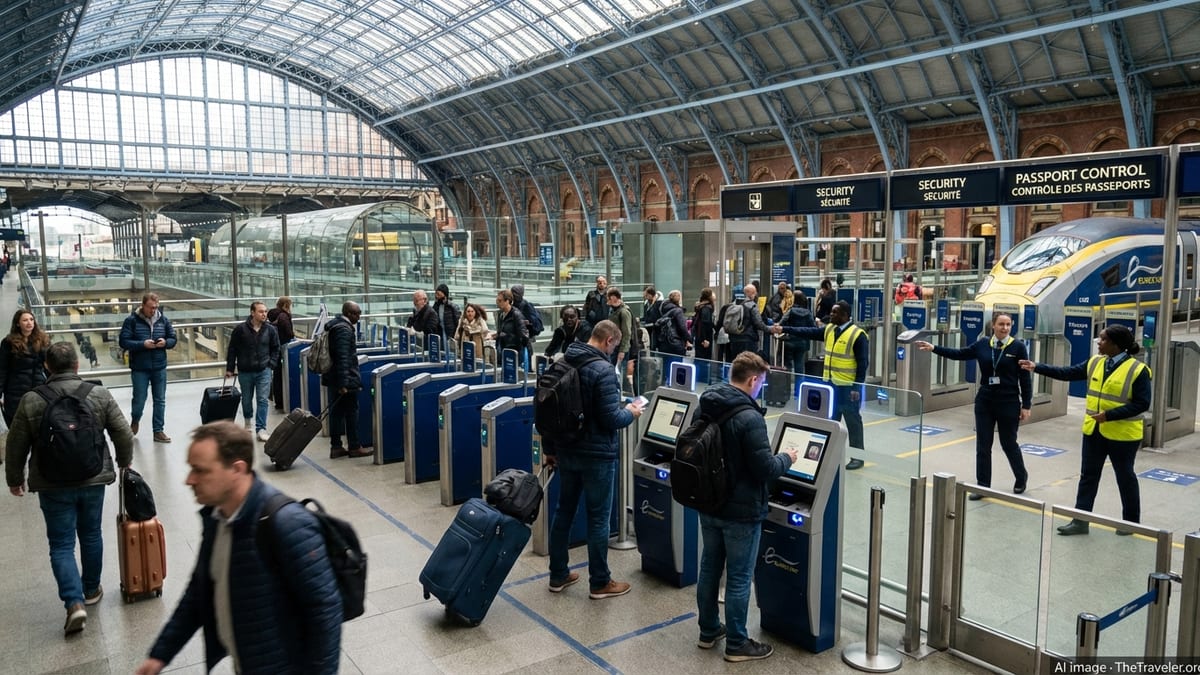
Earlier Boarding and Reworked Flows at St Pancras
London St Pancras International, the gateway for high-speed trains between the UK and mainland Europe, is at the heart of Eurostar’s changes. In an effort to ease chronic congestion in the departures hall, Eurostar now allows passengers to board trains up to around 30 minutes earlier than before, spreading passenger flows over a longer period and reducing last-minute surges at the gates and escalators to the platforms.
The new approach was introduced after some of the busiest periods in Eurostar’s history, with record passenger numbers putting intense pressure on the Victorian-era station’s confined international terminal. By encouraging travellers to move through security and border checks sooner, Eurostar and station managers aim to prevent queues from snaking back into the main concourse and to make it easier for travellers to find a seat in the departure lounge rather than stand shoulder to shoulder.
For passengers, the most visible change is that platform boarding screens light up earlier and staff begin calling trains well ahead of departure. Instead of a sudden rush when the gate opens, travellers are urged to pass through in a steady stream, which Eurostar says leads to a calmer experience and more predictable processing times at security and passport control.
Crucially, these new boarding windows are designed to dovetail with the EU’s Entry/Exit System, which is adding extra steps to cross-Channel journeys as biometric kiosks are phased in for non-EU nationals. By pushing passengers to arrive and board earlier, Eurostar believes it can absorb those additional checks without extending total journey times.
From Facial Recognition to Priority Lanes
In a sign of how rapidly border technology is evolving, Eurostar is simultaneously retiring one innovation while accelerating another. Its SmartCheck biometric fast-track lane at St Pancras, launched in 2023 to allow premium passengers to verify their identity and ticket using facial recognition, is being withdrawn and repurposed as a conventional priority boarding channel.
The SmartCheck system was originally billed as a glimpse of the future, enabling Business Premier and top-tier loyalty customers to skip traditional ticket gates and UK exit checks by enrolling their passport and face in a dedicated app before travel. Although the pilot was considered technically successful, Eurostar has confirmed that the lane will close and the hardware removed as the operator refocuses on the infrastructure needed for the EU’s new border regime.
Instead, the space previously used by SmartCheck will function as an additional priority security and passport lane for Eurostar Premier and eligible loyalty members. That change is intended to deliver a more immediate benefit to a wider pool of passengers, cutting waiting times for those paying higher fares while freeing capacity in the standard lanes.
Behind the scenes, Eurostar executives say the lessons learned from SmartCheck are not being discarded. The trial has given the company valuable data on how passengers respond to contactless identity checks, how long each stage takes in real conditions and how to communicate new procedures. Those insights, the operator argues, will help shape future digital border tools once the EES is fully established and regulators are comfortable with wider use of biometrics.
More Border Booths, More E-Gates and New EES Kiosks
Alongside timetable and lane changes, Eurostar has embarked on a construction push at St Pancras to expand the physical capacity of border controls. Working with UK and French authorities, the company has added positions for passport officers and increased the number of e-gates in the departure area, enabling more travellers to be processed in parallel.
Recent works have taken the number of automated gates for eligible passports from single digits to a higher double-figure total, while manual booths have been doubled in preparation for the new data collection demands. The aim is straightforward: to prevent passengers from having to queue on the concourse and to clear each wave of travellers more quickly during peak departure banks on Friday evenings, Sunday afternoons and holiday getaways.
The most visible new feature will be the Entry/Exit System pre-registration kiosks. These self-service terminals, funded jointly by Eurostar and public money, are being installed not just in the existing international zone but also in reclaimed spaces around the station, including areas previously used for domestic rail and other high-speed services. At the kiosks, non-EU travellers boarding Eurostar services to Paris, Brussels, Amsterdam and other Schengen destinations will scan their passports, have a photograph taken and, where required, register their fingerprints.
Eurostar says the kiosks are designed for one-time enrolment that should take only a few minutes for most passengers. On subsequent trips, travellers will usually need only a quick identity check rather than repeat fingerprinting, allowing them to move more swiftly through the departure sequence. Specially trained staff are being deployed in the kiosk zones to guide infrequent travellers through the process and to intervene quickly when a machine encounters a problem, which officials hope will minimise delays just as the new border regime beds in.
Revised Arrival Times and What They Mean for Travellers
The cumulative effect of these changes is a subtle but important shift in how passengers need to plan their Eurostar journeys. Official guidance now emphasises arriving at St Pancras and other key terminals earlier than many travellers were used to before Brexit, particularly on busy days when queues can swell suddenly. For standard and mid-tier ticket holders, recommended arrival windows generally range from about an hour to well over 90 minutes before departure during peak periods.
Check-in cut-off times themselves have not radically shortened. At London, gates for most travellers still close around 30 minutes before the train leaves, with a slightly later cut-off for Business Premier customers. What has changed is how strongly Eurostar is advising customers to treat those thresholds as firm. The company has warned that departure gates close exactly on time, even if a passenger is only a couple of minutes late, because border staff and train crews need a predictable buffer to complete safety checks before departure.
For leisure travellers used to cutting it fine at domestic stations, the new guidance represents a cultural shift closer to that of an airport. Families heading for Paris or Disneyland during school holidays are being urged to factor in extra time for security and the new biometric steps, while business travellers taking early morning trains are encouraged to pass through formalities before grabbing breakfast in the lounge.
On the continent, the experience is different but still evolving. At Paris Gare du Nord, Brussels-Midi, Amsterdam Centraal and Rotterdam Centraal, Eurostar continues to recommend arrival roughly 45 to 75 minutes before departure, depending on station and time of day. For journeys that do not involve the UK, such as services between France, Belgium, the Netherlands and Germany, boarding remains far more like a conventional high-speed train: passengers can normally arrive around 20 minutes before departure, head directly to the platform and have their tickets checked on board, with no passport control for Schengen-to-Schengen trips.
How the EU’s Digital Border System Fits In
The main driver behind many of these changes is the European Union’s Entry/Exit System, a long-planned digital register designed to track the movements of non-EU travellers into and out of the Schengen area. Launched in October 2025 and currently in a phased roll-out, the system replaces manual passport stamping with electronic records and biometric data, including facial images and fingerprints taken at kiosks or automated desks.
For Eurostar passengers, the crucial point is that EES checks take place in the UK before departure, because France and other Schengen countries conduct their border controls at St Pancras and other British terminals. That means the extra steps associated with EES are folded into the pre-boarding process rather than added on arrival, making efficient station layouts and disciplined boarding times even more important to avoid knock-on delays.
To manage the transition, European governments have agreed to a lengthy grace period before EES becomes fully mandatory at every crossing point. In practice, that has allowed operators such as Eurostar to test kiosks and passenger messaging in stages, starting with certain categories of travellers and specific departure times. Border officials also retain discretion to pause biometric enrolment temporarily if congestion becomes severe, reverting to traditional stamping while underlying issues are resolved.
Once fully bedded in, officials and operators argue that EES should ultimately help speed up regular travellers by eliminating repeated form-filling and by making it easier to verify identities quickly. For now, however, Eurostar’s priority is ensuring that its stations, staffing levels and boarding rules are robust enough to cope with the extra complexity without undermining the appeal of rail as a lower-stress alternative to flying.
Amsterdam and Rotterdam: New Terminals, New Routines
While London dominates the headlines, major changes are also underway in the Netherlands, where Eurostar has worked with local partners to overhaul its Amsterdam and Rotterdam operations. Following a period of reduced services and a temporary closure for construction, a revamped international terminal at Amsterdam Centraal is reopening with expanded security and passport facilities and a reconfigured departure flow designed to handle more passengers.
Under the new arrangements, Eurostar is gradually ramping up capacity on the Amsterdam to London route, with a dedicated boarding area acting as a funnel to security and immigration checks. Once fully operational, the station is expected to handle significantly more passengers per train than before the works, helped by clearer separation between domestic and international flows and additional space for queuing and pre-boarding checks.
At both Amsterdam and Rotterdam, passengers heading for London now need to allow more time before departure than they would for a domestic Intercity or other European high-speed service. Travellers must scan their tickets to access the international zone, clear security and pass through juxtaposed border controls before descending to the platform, echoing the St Pancras model. Eurostar is advising customers to download tickets in advance and to pay close attention to boarding announcements, as the timing of checks can vary while staff get used to the upgraded facilities.
For journeys starting in the UK and heading to Amsterdam or Rotterdam, the return experience should improve as the new Dutch terminals settle into regular operation. Eurostar expects the expanded infrastructure to reduce bottlenecks when large numbers of British visitors head home after weekend city breaks, concerts or major sporting events, helping to stabilise departure times and make missed trains less likely.
What Will Actually Feel Faster and More Convenient
For regular Eurostar users, the question is not just how the rules look on paper but how journeys feel in practice. The operator argues that by smoothing out passenger flows, adding more border capacity and shifting some processes to self-service kiosks, it can make the overall experience both quicker and more predictable, even if the official advice is to arrive earlier at the station.
One immediate change many travellers are likely to notice is a reduction in last-minute panic. With boarding starting earlier and staff encouraging passengers to move through checks steadily, long queues are more evenly spread over time rather than bunched up against a fixed gate opening. That, in turn, makes it easier to find a seat in the departures area, to visit shops or cafés without risking missing a security call, and to keep families together rather than rushing small children through winding lines.
Another benefit is the growth in automated options. More e-gates at passport control mean that eligible travellers with biometric passports can clear formalities in seconds rather than waiting for a manual desk. The EES kiosks, despite adding an initial step for some passengers, should reduce repeat questioning and manual data entry on subsequent trips, particularly for frequent visitors to the EU who previously had their passports stamped on every journey.
Eurostar also points to back-office gains that may not be obvious to travellers but contribute to smoother operations. Digital border records make it easier to predict how many passengers will need full biometric enrolment on any given day, allowing managers to roster staff and open lanes accordingly. Real-time monitoring of kiosk and gate usage helps identify bottlenecks quickly, so that staff can redirect queues or temporarily relax certain procedures before problems escalate.
How to Prepare for Your Next Eurostar Trip
For passengers planning cross-Channel journeys over the coming months, the practical takeaway from Eurostar’s new boarding rules is to build in more time and to expect a slightly more structured experience than in the past. Travellers are advised to check the latest recommended arrival times for their specific departure station and ticket type, and to treat those guidelines as a minimum rather than a suggestion, especially on Fridays, Sundays and school holidays.
Non-EU nationals should be prepared to use the EES kiosks at St Pancras and other UK departure points if they have not yet enrolled, allowing a few extra minutes for their first trip under the new system. Keeping passports and tickets easily accessible, following staff directions and staying alert to boarding announcements will all help journeys run more smoothly. Families and groups may want to agree a meeting point beyond security in case they are separated in the queues.
Although the biometric SmartCheck fast lane is being withdrawn, premium passengers will still benefit from new priority routes through security and passport control, along with more flexible check-in cut-offs. For everyone else, the key advantage of the new regime is not elite shortcuts but a more orderly, predictable boarding process designed to keep trains leaving on time even as border rules become more complex.
Eurostar insists that these changes are about preserving, and ultimately enhancing, the core appeal of high-speed rail to Europe: step onto a train in central London, step off in the heart of Paris, Brussels or Amsterdam a few hours later, and spend more of your trip enjoying the destination rather than waiting in queues.