

More news on this day
Tourism flows between Dubai and Europe are poised for another lift as German leisure carrier Eurowings extends its Berlin–Dubai route into summer 2026 and deepens its wider UAE and European network, strengthening Berlin’s role as a growing hub for sun-seeking and city-break travellers.
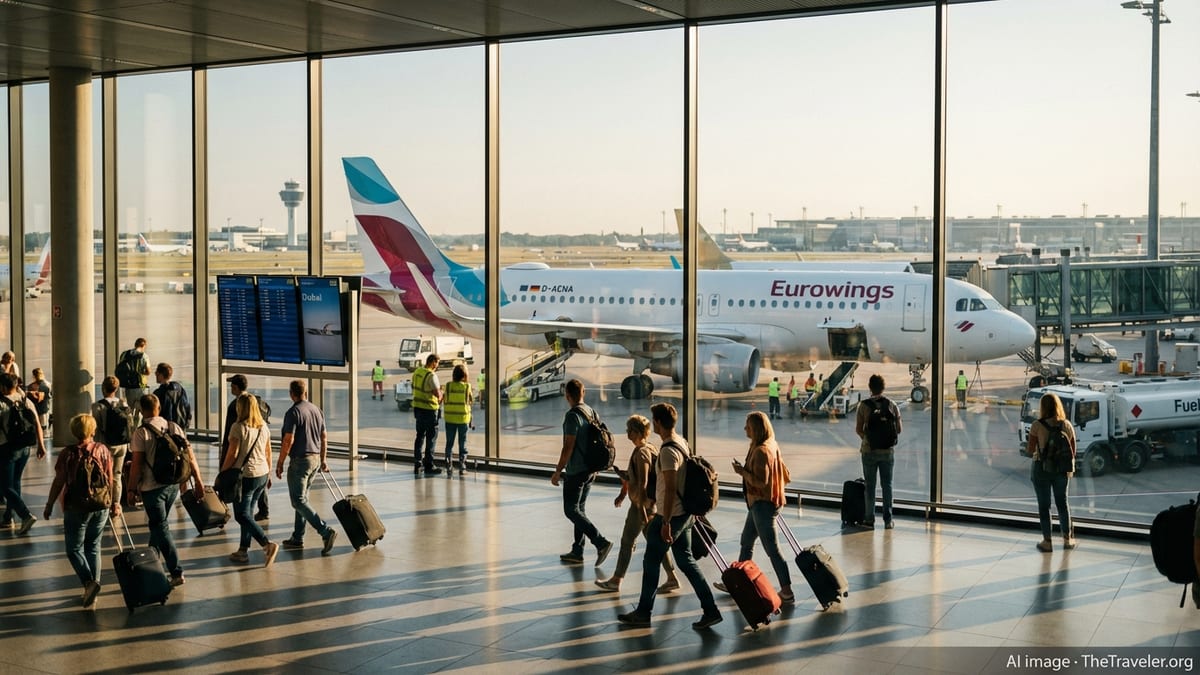
Berlin–Dubai Route Stays in the Sky Beyond Winter
For the first time, Eurowings will keep its Berlin–Dubai connection running beyond the traditional winter sun season, a move that signals confidence in sustained demand for UAE travel from Germany and wider Europe. According to Berlin Brandenburg Airport, the route, previously framed as a winter-only service, will now continue through June 2026, offering more continuity for both leisure and business passengers.
Eurowings will operate up to 11 weekly flights between Berlin and Dubai until the end of April, before adjusting to six flights per week in May and June. The schedule gives travellers a dense selection of departure days, improving flexibility and making it easier to plan short breaks or longer holidays around public holidays and school vacations across Europe.
The extension also strengthens Eurowings’ position on the competitive Europe–Gulf corridor. The airline, a Lufthansa Group subsidiary, is leaning on its low-cost, medium-haul model to open up Dubai, one of the world’s most popular city-break and stopover destinations, to price-conscious travellers who may previously have relied on indirect connections or premium carriers.
Crucially for the UAE, the added capacity from Berlin comes on top of Eurowings services from other German airports, giving Dubai access to a broader catchment area across central and northern Europe. For inbound visitors, the route offers an additional gateway into the European Union, with Berlin providing onward links to major cities across the bloc.
New UAE and Middle East Links Underpin Tourism Growth
The Berlin–Dubai extension forms part of a larger Eurowings push in the Gulf. In the upcoming 2025/2026 winter schedule, the carrier will fly twice daily from Berlin to the United Arab Emirates when its planned Abu Dhabi service joins the roster alongside Dubai. From early November 2025, Eurowings intends to operate three weekly flights from Berlin to Abu Dhabi, while ramping up Dubai frequencies to daily and beyond at the height of the season.
Across its German bases, Eurowings is set to offer more than 30 weekly flights to UAE airports, including Dubai International, Dubai World Central and Abu Dhabi. This represents a sharp increase over just a few years and reflects the airline’s strategy to carve out a niche in medium-haul leisure traffic to the Gulf using single-aisle Airbus A320neo aircraft.
For the UAE’s tourism authorities, the expanded Eurowings schedule feeds directly into efforts to attract more mid-market visitors, particularly younger travellers and families from Germany and neighbouring EU states. These passengers may be less focused on premium cabins and more interested in competitive fares, direct flights and bundled holiday packages to Dubai’s beaches, theme parks and shopping districts, as well as cultural and desert experiences.
Abu Dhabi also stands to benefit from increased visibility in the German-speaking market. With Wizz Air and some legacy European airlines reducing services to the UAE capital in recent seasons, Eurowings has spotted a gap and is positioning itself as a key low-cost bridge between Berlin and Abu Dhabi, with potential for further capacity increases if demand continues to grow.
What Travellers Need to Know About the New Network
For travellers, the expanded Berlin–UAE network delivers more choice but also requires closer attention to schedules and routing. Eurowings operates its medium-haul Gulf services with Airbus A320neo aircraft configured for economy and an upgraded “Premium BIZ” section offering extra comfort and space. Flight times between Berlin and Dubai typically run around six to seven hours, with overnight eastbound departures and morning arrivals common on the schedule.
Fares on the most competitive “Basic” tickets are pitched to appeal to budget-conscious tourists, though demand-driven pricing means early booking is advisable, especially for peak winter months, school holidays and major events in Dubai such as large-scale exhibitions and sports tournaments. Ancillary costs for seat selection, checked baggage and onboard catering can add up, so passengers should factor these into total trip budgets.
Recent airspace restrictions over parts of the Middle East have occasionally forced European carriers, including Eurowings, to reroute flights around certain regions, leading to longer flight times and occasional fuel stops. While such diversions are rooted in safety considerations and remain relatively rare, travellers heading to or from the UAE this year should allow extra buffer time for connections, particularly when booking separate onward flights within Europe.
On the ground, Berlin Brandenburg Airport has been reinforcing its positioning as a leisure and city-hub gateway, with Eurowings now one of its key operators. Passengers connecting in Berlin will find a growing menu of onward flights to cities across Germany and Europe, though most Eurowings Gulf services are designed as point-to-point operations rather than complex long-haul connections.
Stronger European City Links from Berlin
Alongside its Gulf expansion, Eurowings is investing in a denser European network from Berlin, a move that indirectly benefits UAE-bound travellers by broadening feed from secondary cities. From November 2026, the airline plans to launch a four-times-weekly route from Berlin to Rome, adding another capital-to-capital link that complements existing services to London, Lisbon and other major urban centres.
Routes such as Berlin–Rome, Berlin–London and Berlin–Lisbon help create a more robust web of connections for visitors arriving from Dubai or Abu Dhabi who may wish to pair a Gulf stay with a European city break. While Eurowings does not run a traditional hub-and-spoke model, the increased density of flights into and out of Berlin improves the chances of convenient self-made connections for flexible travellers.
The growth also underscores Berlin’s emergence as a gateway not just to Germany but to a cluster of nearby markets, including Poland, the Czech Republic and Scandinavia via additional carriers and rail links. For the UAE tourism industry, that means each additional seat Eurowings adds between Berlin and the Gulf potentially taps demand from a much broader European hinterland than Berlin’s own metropolitan area.
At the same time, the airline is extending its reach into southern Europe and the Mediterranean, with new or enhanced flights to Spanish, Greek and Portuguese holiday regions in the summer schedule. That allows Eurowings to cross-sell warm-weather packages year-round, from Dubai’s desert sun in winter to European coasts in summer, smoothing seasonal swings in demand.
Impact on Dubai’s Position in the European Market
Dubai has long marketed itself as an all-season destination, but the extension of Berlin flights into May and June should give the city a further lift during what has traditionally been a shoulder period between peak winter and the intense summer heat. Travellers seeking poolside relaxation, shopping and dining in slightly quieter conditions may find these months particularly appealing, supported by a more generous choice of direct flights.
For European tour operators and online travel agencies, the expanded Eurowings schedule opens up opportunities to package Berlin departures with hotel stays, desert safaris, cruise add-ons and stopovers en route to destinations in Asia or the Indian Ocean. The availability of multiple German departure points into Dubai and Abu Dhabi also makes it easier to design itineraries that start in one city and end in another, increasing flexibility for multi-destination trips.
Competition on the Europe–Dubai corridor remains intense, with Emirates and other Gulf carriers continuing to dominate long-haul traffic. However, Eurowings’ focus on point-to-point, low-cost operations gives it a distinct role in democratising access to the UAE, particularly for younger travellers, budget-conscious families and those who prioritise direct flights from regional German airports.
As Eurowings deepens its presence in both Dubai and Europe from its Berlin base, the airline is helping to stitch together a denser web of air links between the Gulf and the continent. For passengers planning trips in late 2025 and 2026, the key message is to watch the evolving schedules closely, book early where possible and be prepared for a wider range of timings, routing options and price points than ever before.