

More news on this day
Eurowings is set to enter one of Europe’s most hotly contested air corridors, adding a new Berlin Brandenburg to London Heathrow route from March 29, 2026, in a move expected to shake up competition and capacity between the United Kingdom and Germany.
Get the latest news straight to your inbox!
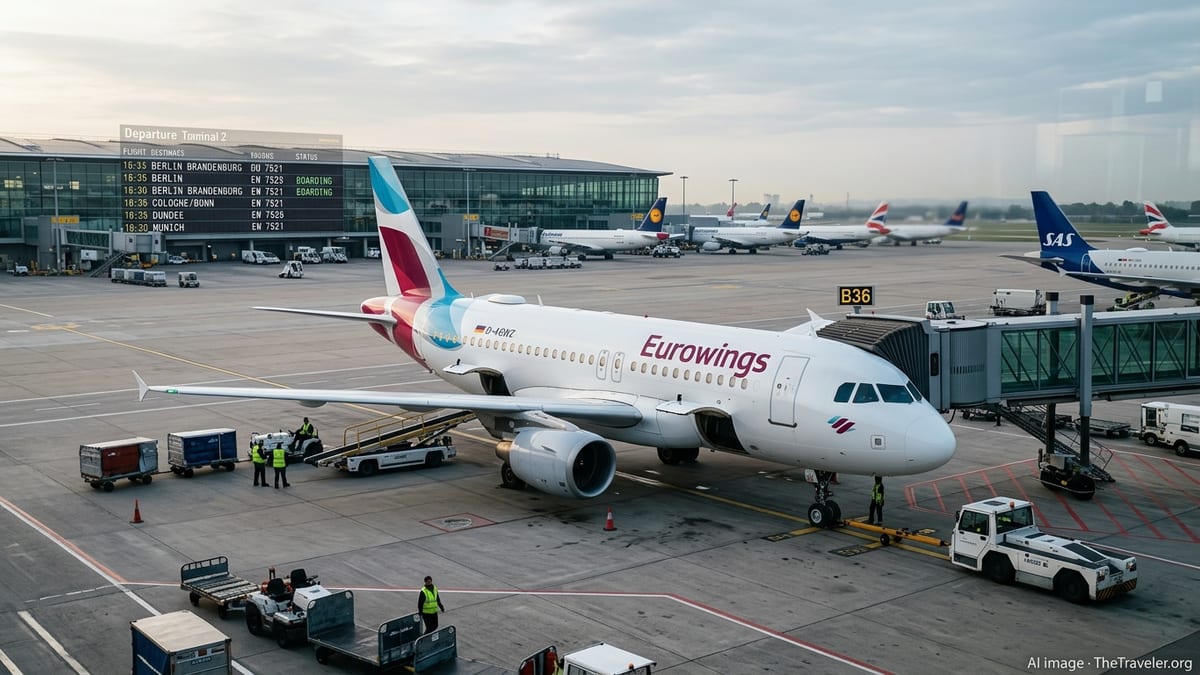
New Capital-to-Capital Link from March 2026
According to published schedules and airport announcements, Eurowings will begin operating flights between Berlin Brandenburg Airport and London Heathrow from March 29, 2026. The service is planned at up to 12 flights per week in the Northern summer schedule, positioning the Lufthansa Group low-cost carrier as a new challenger on a route historically dominated by full-service airlines.
Information released by Berlin Brandenburg Airport and the airline indicates that the Berlin–Heathrow connection forms part of a wider expansion from the German capital, with Eurowings branding its strengthened offering as a “capital express” strategy. The airline is simultaneously adding other European capitals from Berlin, but London Heathrow stands out because of the high-yield mix of business, governmental and leisure demand it attracts.
Heathrow’s own published route information now lists Eurowings alongside existing carriers linking the airport with Berlin, underscoring how the new entrant is inserting itself directly into one of Western Europe’s busiest short-haul markets. The move consolidates Berlin’s role as a key base in the Eurowings network as the carrier’s fleet in the city grows for the 2026 season.
Industry timetable data indicates that the route will initially be served by Airbus A319 aircraft, with selected frequencies to be upgraded to larger or more efficient types later in the season. This combination suggests a focus on both capacity and cost efficiency on a route where slot scarcity at Heathrow and competitive pricing are long-standing features.
Strategic Bet on the UK–Germany Travel Corridor
Publicly available network analyses describe the UK–Germany air corridor as one of Europe’s most resilient, with strong demand from corporate travelers, government traffic and city-break tourism. By placing Berlin–Heathrow at up to 12 weekly frequencies, Eurowings is signalling confidence that demand between the two capitals will absorb additional capacity, even in a market already served by established network carriers.
The new service also reflects a broader Lufthansa Group strategy of consolidating its presence at key European capitals through its low-cost brands. Eurowings is being positioned as a flexible tool to defend market share against other European low-cost competitors while also feeding long-haul and partner networks through major hubs such as Heathrow and Berlin.
For the UK market, the arrival of Eurowings on Heathrow–Berlin introduces another German carrier option beyond traditional incumbents. Pricing data has not yet fully stabilised for summer 2026, but experience from other routes suggests that additional low-cost capacity often leads to sharper fare competition, particularly on off-peak days and shoulder seasons.
On the German side, the route reinforces Berlin Brandenburg’s ambition to position itself not only as a political capital but also as a competitive gateway for European business travel. Airport communications highlight the importance of high-frequency links to major hubs like Heathrow in attracting investment and international events to the Berlin–Brandenburg region.
Timings, Frequencies and Fleet Plans
Initial schedule filings show Eurowings planning up to 12 weekly rotations between Berlin and Heathrow, allowing for multiple options on peak business days. While exact departure and arrival times remain subject to further adjustment, the pattern points toward morning and evening waves designed to appeal to day-trippers and short-stay corporate travelers.
Aviation schedule services report that the route will launch with Airbus A319 aircraft before a gradual move to Airbus A320neo equipment on selected flights later in the summer. The shift to newer aircraft is consistent with the group’s push to reduce unit costs and emissions on short-haul routes while maintaining competitive onboard standards.
The relatively high weekly frequency, compared with many other new Eurowings routes from Berlin, underlines the strategic weight attached to the London connection. By offering near-daily service and multiple options on key weekdays, Eurowings aims to establish itself as a credible alternative to existing carriers rather than simply a niche leisure operator.
Observers of European slot trading point out that securing and deploying Heathrow slots for a new short-haul route typically signals long-term intent. The allocation of scarce capacity to Berlin suggests that the Lufthansa Group sees sustained potential in the capital-to-capital market, even as some competitors reallocate capacity from shorter intra-European sectors to longer, higher-yield routes.
Implications for Travellers and Competing Airlines
For passengers, the most immediate impact of Eurowings’ arrival on Heathrow–Berlin will be greater choice in schedules, fare types and booking channels. Eurowings operates with a low-cost model layered with optional paid extras, ranging from seat selection to priority services, giving price-sensitive travellers a way to strip down costs while still flying into Heathrow rather than more distant London airports.
Leisure travellers from the UK stand to benefit from additional direct options into Berlin, which continues to attract strong city-break demand for culture, nightlife and events. Conversely, German travellers will gain another direct, low-cost connection into London’s primary international hub, which offers extensive onward connections across the UK and internationally.
On the competitive side, additional capacity on Heathrow–Berlin could pressure incumbents to adjust fare structures or tweak capacity during off-peak periods. Network carriers that previously enjoyed a relatively stable fare environment on the route may need to respond with targeted promotions, corporate deals or schedule refinements to defend their loyal customer base.
Travel management companies and corporate buyers are likely to watch booking patterns closely once tickets for the full summer window become widely available. If Eurowings can demonstrate reliable operations and attractive pricing, the route may quickly become part of managed travel programs on both sides of the Channel, particularly for cost-conscious mid-sized firms.
Part of a Wider Berlin Expansion
According to airport statements and airline communications, the new Heathrow service is just one element of a broader Eurowings expansion from Berlin for the summer 2026 timetable. The carrier is adding several new European destinations and increasing frequencies on existing routes, supported by additional aircraft based at Berlin Brandenburg.
Industry commentary describes Berlin as an increasingly important base within the Eurowings network, with the airline positioning itself as a key connector between the German capital and other European political, financial and leisure centres. New links to capitals such as Lisbon and Sarajevo complement the London route, broadening the range of non-stop options from Berlin.
For the UK–Germany travel market, the Berlin–Heathrow launch encapsulates a wider trend: low-cost and hybrid carriers are moving deeper into routes that were once the near-exclusive domain of traditional full-service airlines. As Eurowings prepares to commence operations on March 29, 2026, travellers and competitors alike will be watching how quickly the additional capacity reshapes fares, schedules and passenger flows between the two capitals.