

More news on this day
Europe’s long-planned shift to a fully digital border for non-EU visitors is set to reach a critical milestone in April 2026, and forecasts suggest it could transform how millions of UK holidaymakers move through Schengen passport control this year.
Get the latest news straight to your inbox!
A New Border Reality For UK Visitors From April 2026
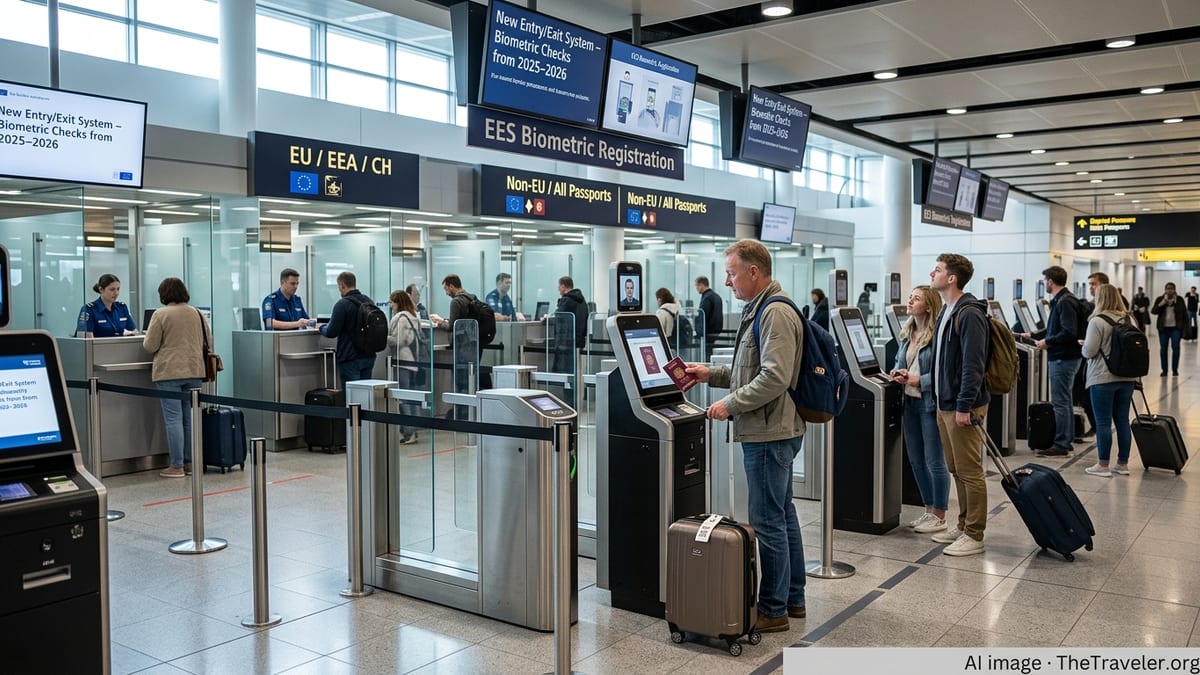
The European Union’s Entry/Exit System, a biometric border database for non-EU nationals, entered service in October 2025 and is being introduced progressively at air, land and sea crossings across 29 participating European countries. According to public information from EU institutions, the six month roll out is due to culminate on 10 April 2026, when the system is expected to be fully operational and traditional passport stamping largely phased out.
For UK citizens, who became third country nationals after Brexit, the change marks the biggest practical shift in Schengen travel rules in decades. Each short stay entry and exit will be recorded electronically along with biometric data, replacing the visible ink stamps that many British travellers have relied on to track their 90 days in any 180 day allowance.
Government guidance in London and explanatory material from Brussels both highlight that checks are being layered in gradually, meaning British passengers may still encounter a mix of manual stamps and digital registration until mid April. Travel industry briefings indicate that by the main summer season, the vast majority of UK leisure trips to Spain, France, Italy, Portugal, Greece and other top destinations are expected to pass through fully equipped EES lanes.
From Queues To Quick Gates: How The System Is Designed To Work
The Entry/Exit System captures fingerprints and facial images on a traveller’s first registration, then matches them against their passport on subsequent trips. EU technical descriptions state that the goal is to automate routine checks, cut down on repeat questioning and improve enforcement of stay limits by replacing manual inspection with database queries that run in seconds.
Border infrastructure at major airports and ferry ports has been upgraded with self service kiosks and biometric booths designed to pre-enrol passengers before they reach a staffed control point. Industry toolkits issued to transport operators describe a model where travellers complete much of the process themselves, with officials stepping in mainly for problem cases, rather than for every single passport swipe.
In theory, once the initial surge of first time registrations is complete, UK visitors who return frequently to the continent could experience shorter queues and a smoother flow through border halls. European Commission communications argue that the system should ultimately create faster lanes for compliant, low risk tourists while still tightening checks on overstayers and invalid documents.
Short Term Bottlenecks, Long Term Tourism Dividend
The short term picture is less straightforward. Coverage in outlets such as Euronews and The Guardian, along with sector reports from ferry and rail operators, has warned that the early months of EES have already brought pockets of congestion at some busy crossings. Concerns have focused on time consuming biometric capture for car passengers and coach groups, particularly at ports handling large volumes of British holiday traffic.
Despite these warnings, tourism analysts quoted across European media suggest that any disruption is likely to be temporary and front loaded into the 2025 to early 2026 transition window. Once databases are populated and infrastructure bedded in, they expect processing times to fall back toward or even below pre EES levels.
This view is feeding into bullish forecasts for European tourism in the second half of 2026. Travel economics consultancies point to pent up post pandemic demand, a broadly stable euro to sterling exchange rate and improving border predictability as reasons to expect a strong bookings season from the UK market. The ability to monitor lengths of stay more accurately may also encourage destinations to fine tune marketing for longer, higher value trips rather than only weekend breaks.
What Changes For UK Travellers In Practice
For most British holidaymakers, the headline rules for visiting the Schengen area remain familiar. Public information from the EU and the UK government reiterates that visa exempt travellers can still spend up to 90 days in any rolling 180 day window in participating countries, with EES acting as a record keeping tool rather than a new permit in its own right.
The main practical difference is the process at the border. First time EES users will provide fingerprints and a facial image alongside standard passport data, and officials will confirm the purpose of the visit and expected length of stay. On later trips, travellers should be recognised automatically, allowing checks to focus on whether the 90 day allowance has been respected and whether the passport remains valid.
Consumer advice from travel organisations in the UK now consistently urges passengers to build in extra time for border formalities during the first half of 2026, especially at car and coach terminals. Tour operators are adjusting schedules and check in times around peak holiday weekends, mindful that families unused to biometric kiosks may take longer to clear formalities during the introductory phase.
Knock On Effects For Airlines, Ports And Future Travel Rules
The shift to digital borders is reshaping operations behind the scenes as well as at the passport desk. Briefings from the Council of the EU and national transport departments describe extensive coordination with ferry companies, rail operators and airlines to sequence passenger flows and prevent queues from backing up into departure halls or motorway approaches.
Airports in popular destinations such as Spain and Greece have invested in new layouts that place EES kiosks before the main control booths, while ports serving cross Channel traffic from the UK have been reconfiguring vehicle processing lanes. Industry bodies report that simulations and live trials are being used to refine staffing models ahead of the system’s full activation in April.
Looking slightly further ahead, EES is also laying the groundwork for the separate European Travel Information and Authorisation System, or ETIAS, which EU planners expect to introduce from late 2026. Public documentation indicates that UK nationals will need to obtain this low cost electronic travel authorisation online before departure once it goes live, in a model broadly similar to the United States ESTA scheme.
For now, the focus for UK travellers is on navigating the 2026 bedding in period. If the technology delivers on its promise of quicker, more predictable border checks once the initial queues ease, Europe’s new digital frontier could end up being remembered less for its teething troubles and more as a turning point that made spontaneous weekend city breaks and multi stop touring across the continent simpler to plan again.