

More news on this day
Travelers flying with EVA Air, UNI Air and Tigerair Taiwan will no longer be allowed to place Bluetooth earbuds or their charging cases in checked baggage, as the Taiwanese carriers introduce stricter lithium battery rules aimed at reducing fire risks in aircraft cargo holds.
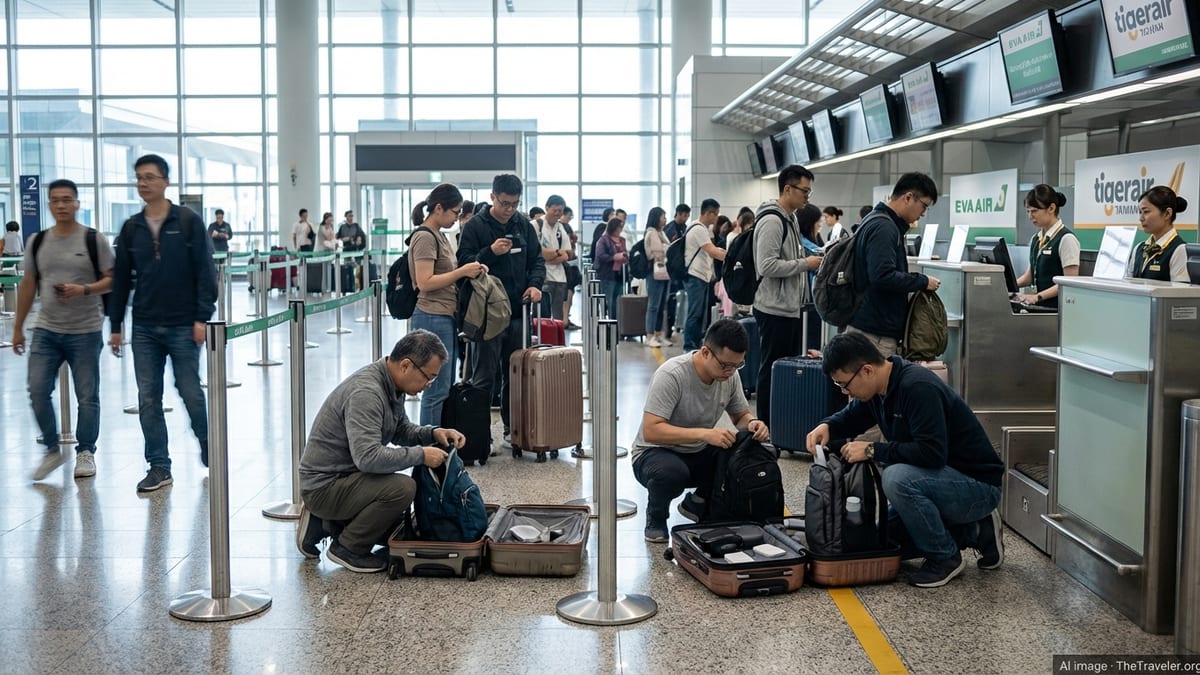
What Exactly Is Changing for EVA Air, UNI Air and Tigerair
The new policies, implemented by EVA Air, its regional arm UNI Air and low cost carrier Tigerair Taiwan, classify Bluetooth earbuds and their charging cases as portable electronic devices powered by lithium ion batteries. Under updated rules, these items cannot be checked and must travel in passengers’ cabin baggage instead. The airlines say the move closes a safety gap around small, easy to overlook devices that can continue drawing or delivering power even when stowed.
EVA Air and UNI Air specify that any personal electronic device placed in checked luggage must be completely powered off, not merely in standby or sleep mode. Bluetooth earbuds typically begin charging the moment they are placed inside their case, making it difficult to guarantee full shutdown once they are out of sight in the cargo hold. To avoid noncompliance with international dangerous goods regulations, the carriers have chosen to remove the option of checking them altogether.
Tigerair Taiwan has issued parallel restrictions, treating earbud charging cases in the same category as other compact gadgets with built in lithium ion batteries, such as mini handheld fans. These can only be carried in the cabin where crew can react quickly if overheating or smoke is detected. The change puts all three airlines in line with a broader regional trend of tightening rules on small rechargeable batteries.
Safety Concerns Behind the Bluetooth Earbud Ban
While Bluetooth earbuds are tiny compared with laptops or large power banks, they rely on the same lithium ion chemistry that has been at the center of a rising number of in flight and pre departure fire incidents worldwide. Aviation safety regulators warn that even a small battery can go into thermal runaway, a chain reaction where overheating triggers venting, smoke and potentially flames. In an aircraft cargo compartment, any delay in detection or firefighting can quickly become critical.
The risk posed by earbuds is amplified by the way they are designed to charge automatically whenever they are inside their case. Even if a traveler believes they were switched off at check in, the moment movement or a loose connection wakes the system, current can begin flowing again. Unlike a laptop that can be firmly powered down and closed, the devices are often left in a semi active state, making strict “powered off” rules hard to enforce.
These concerns have been underscored by recent high profile incidents involving lithium batteries, including a fire on a South Korean flight in 2025 that investigators linked to a portable battery pack in an overhead bin. Although that case involved a power bank rather than earbuds, it prompted regulators and airlines across Asia to reexamine how even small rechargeable devices are managed on board and in the hold.
How the New Rules Affect Passengers and Their Packing Habits
For travelers, the most immediate impact is practical rather than technical: Bluetooth earbuds and their charging cases must now be packed in carry on bags on EVA Air, UNI Air and Tigerair Taiwan flights. Check in staff are expected to remind passengers at counters and bag drops, but the responsibility ultimately falls on travelers to separate earbuds from checked suitcases before tagging their luggage.
Frequent flyers may also need to rethink how they distribute electronics between cabin and hold. With power banks already barred from checked bags on most global carriers, and many airlines now restricting their in flight use, a growing cluster of everyday gadgets is migrating into the overhead lockers and under seat spaces. Laptop computers, tablets, cameras, smartwatches, Bluetooth speakers and now earbuds are increasingly expected to travel within sight of their owners.
Passengers connecting between airlines with differing rules will need to pay close attention to each carrier’s guidance. Some competitors in the Taiwan market currently stop short of an outright ban on checked earbuds, instead advising that they are better kept in the cabin. However, that advisory language could harden into formal prohibitions if regulators pressure airlines to harmonize their lithium battery policies.
Part of a Wider Crackdown on Lithium Batteries in the Air
The earbud restrictions slot into a much broader global shift toward tougher oversight of rechargeable batteries in aviation. In the past two years, a growing list of Asian and long haul carriers have moved to ban the in flight use of power banks, even while continuing to allow them in cabin baggage. The focus has shifted from larger devices that were already tightly regulated to the smaller power sources that many travelers scarcely think about.
EVA Air has already revised its power bank rules, prohibiting passengers from using or charging portable battery packs during flights and reiterating that such items are never permitted in checked baggage. Across the region, South Korean airlines and Japanese authorities are also rolling out bans on inflight power bank use, alongside requirements that batteries remain within sight and are not stored in overhead bins. The Bluetooth earbud decision is another layer in that same safety strategy.
International guidelines from aviation bodies have long restricted how lithium batteries can be carried, but enforcement has recently become more assertive as incident numbers climb. Airlines argue that the safest option is to keep as many battery powered devices as possible in the cabin, where cabin crew are trained to respond swiftly with fire containment bags and extinguishers. Removing earbuds from the hold is presented as a logical extension of that philosophy.
What Travelers Should Do Before Their Next Flight
Passengers planning to fly with EVA Air, UNI Air or Tigerair Taiwan are being urged to treat Bluetooth earbuds the same way they already treat power banks and spare lithium batteries: always in carry on, never in checked luggage. That means double checking pockets, handbags and tech organizers before surrendering bags at the counter, particularly on busy business trips where earbuds are easy to forget.
It is also wise to assume that safety rules will continue to tighten, both in East Asia and beyond. Travelers who routinely pack smart luggage, rechargeable trackers, e cigarette devices or other small gadgets with built in cells should take a closer look at carrier specific policies before departure. Airlines increasingly emphasize that if a device has a rechargeable battery and is not essential to the operation of the aircraft itself, they would prefer it to remain accessible in the cabin.
For now, the message from Taiwanese carriers is clear: Bluetooth earbuds and their charging cases belong in your hand luggage, with enough charge to get you through the journey but not hidden away where cabin crew cannot see or reach them. As other airlines watch how these policies play out, similar restrictions on checked earbuds may soon appear on more routes across the region and potentially worldwide.