

Pinery Provincial Park on Lake Huron is one of Ontario’s most beloved outdoor escapes, combining sweeping beaches, rare oak savanna, and a full slate of four-season activities. Its popularity means that a little advance planning goes a long way. From reservations and campgrounds to trails, wildlife, and local rules, here is everything you need to know before you visit Pinery, whether you are arriving for a summer beach day or a quiet winter weekend.
Getting Oriented: Location, Landscape and First Impressions
Pinery Provincial Park is located in southwestern Ontario, just south of the resort town of Grand Bend on the southeast shore of Lake Huron. The park protects more than 2,500 hectares of rare and sensitive landscapes, including one of the largest remaining oak savanna ecosystems in North America and an extensive system of freshwater coastal dunes. For visitors, that translates into a striking mix of long, sandy beach, rolling dunes, forest, wetlands, and the calm Old Ausable Channel cutting through the interior of the park.
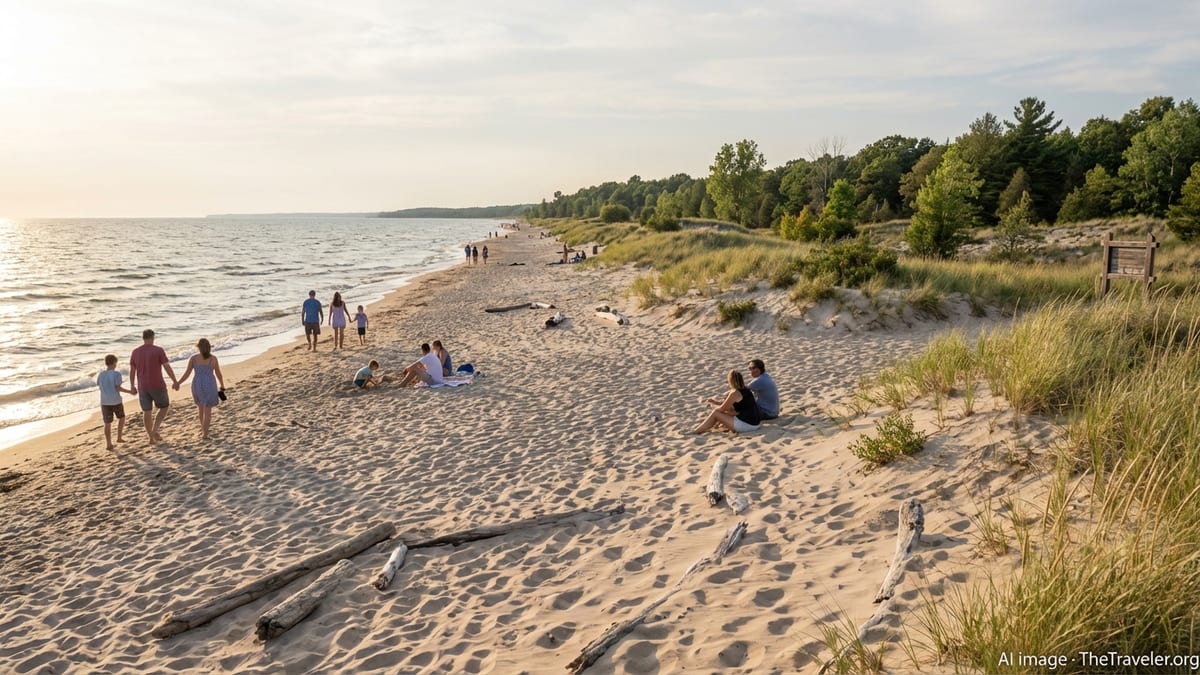
The park’s most iconic feature is its shoreline. Pinery offers roughly 10 kilometres of wide Lake Huron beach, with soft sand underfoot and typically shallow, swimmable water in summer. Sunsets here are especially celebrated, with the sun dropping into the open horizon of the lake, drawing both campers and day visitors down to the water’s edge in the evening. Inland, the landscape quickly shifts from open dunes to a patchwork of oak savanna and Carolinian forest, giving the park a surprisingly varied feel for its modest size.
Established in the late 1950s, Pinery was created explicitly to protect this dune and savanna system, which is home to hundreds of plant and animal species. The Old Ausable Channel, a former river course that now meanders slowly through the park, supports diverse aquatic life and provides calm, sheltered water that is ideal for paddling and wildlife watching. Even on busy weekends, stepping away from the main beach and into this interior network of trails and waterways can make the park feel peaceful and wild.
For first-time visitors, the overall impression is of a full-service, highly accessible park that still offers genuine natural immersion. There are multiple campgrounds, a visitor centre, park store, boat rentals, and extensive marked trails, but large sections of protected habitat and a strong conservation focus mean that development is carefully managed. Understanding this dual character helps you plan a visit that is both comfortable and environmentally responsible.
When to Go and How to Enter the Park
Pinery is open year-round, and each season delivers a distinct experience. Summer, from late June through August, is peak season for beachgoing and camping. Expect warm water, crowded parking lots, and fully booked weekends. If you want classic Lake Huron beach days, this is the time to come, but it is essential to reserve in advance and arrive early, particularly on sunny Saturdays and long weekends.
Spring and autumn are often the best times for visitors who prioritize hiking, cycling, and wildlife watching. May and June can bring wildflowers and bird migration, while September and October offer cooler temperatures, fall colours, and generally lighter crowds. Water temperatures may still be pleasant into early fall, making shoulder season an appealing compromise between beach weather and breathing room. Winter transforms Pinery into a cross-country skiing, snowshoeing, and winter hiking destination, with groomed ski trails and quieter campgrounds that suit those seeking solitude.
Day use hours typically run from morning until late evening, allowing enough time to enjoy both early hikes and Lake Huron sunsets. Because Pinery is one of the busier parks in the Ontario Parks system, daily vehicle permits for day use can be reserved in advance for a specific date. This is strongly recommended during peak season to avoid being turned away if the park reaches capacity. Seasonal and annual passes are also available for frequent visitors and can be used at the gate instead of single-day permits.
Daily vehicle permits are priced within the standard Ontario Parks range, with discounts for Ontario seniors and for visitors who qualify under provincial accessibility programs. Fees are subject to periodic changes, so it is wise to confirm current rates and any additional services, such as winter trail access, close to your visit. Regardless of the season, factor in a short wait at the gate during busy times, and keep your permit visible on your dashboard once you have entered the park.
Camping, Roofed Accommodation and Choosing Your Area
Camping is a major draw at Pinery, and the park’s three main campground areas, along with group sites and yurts, cater to a wide spectrum of visitors. All camping must be reserved through the provincial reservation system, and in summer, waterfront-proximate weekends can sell out quickly. If you have specific preferences such as electrical hookups, radio-free sites, or shorter walks to the beach, it is important to pay close attention to campground descriptions before you book.
Riverside Campground, open year-round, is the largest and most developed. It sits along the Old Ausable Channel and offers many electrical and pull-through sites suited to trailers and RVs. Comfort stations with showers, flush toilets, and laundry facilities are available, and some sections include barrier-free sites and amenities. Riverside is a good choice for families wanting full services, easy access to paddling and cycling trails, and proximity to the visitor centre and park store.
Dunes Campground, typically open from spring through fall, is closer to the main beach and recreation areas. It offers a mix of electrical and non-electrical sites and tends to attract a variety of campers, from tenters to trailer owners. It is also convenient to the outdoor amphitheatre, some of the most popular hiking trails, and day use areas. Burley Campground, open in the warmer months, sits farther from the main gate and provides more secluded, non-electrical sites embedded in forested dunes, with short walking paths leading to the beach. Many visitors choose Burley for a slightly quieter, more natural camping feel while still staying within walking distance of Lake Huron.
For groups and those seeking roofed accommodations, Pinery offers group camping areas and a collection of yurts. Group sites can host larger gatherings such as family reunions or youth groups and are positioned to balance privacy with access to facilities and the shoreline. Yurts, located within Riverside, sleep up to six people and provide bunks, basic furnishings, electric heat and lighting, and an outdoor cooking area with a barbecue and shelter. These roofed units are in high demand year-round, especially in winter when they allow comfortable cold-weather stays, so reservations should be made as far in advance as possible.
Beaches, Swimming and Water Safety on Lake Huron
Pinery’s shoreline is a central reason many people visit. The park’s sweep of Lake Huron beach offers broad sand, gentle slopes, and expansive views, making it an ideal place for swimming, sunbathing, and sunset watching. Beach day use zones are scattered along the length of the park, each with parking, comfort stations or vault toilets, and access paths over the dunes. Some sections are designated for pets, allowing dogs on-leash to enjoy the water, while other stretches are pet-free to maintain a quieter bathing environment.
The water temperature in Lake Huron can vary with weather and currents, but midsummer conditions are often comfortable for casual swimming. There are no lifeguards on duty, so visitors must assess conditions and supervise children closely. On windy days, waves and currents can become strong, and the steepness of the offshore drop-off can change over time. Check local advisories when available and err on the side of caution if the lake looks rough or if storms are in the forecast. Storm runoff and other factors can occasionally affect water quality, and beaches may be posted by local health units when high bacterial levels are detected.
In addition to safety considerations, visitors are encouraged to treat the beach and dune system carefully. The sand dunes that back the shoreline are an active, sensitive feature stabilized by dune grasses and shrubs. To help protect this habitat, access paths to the beach are clearly signed, and walking on designated trails rather than cutting across vegetation is both safer and better for the ecosystem. Driftwood, plants, and natural debris play a role in dune stability and wildlife habitat, so leaving natural materials where they lie is part of responsible beach use at Pinery.
Sun and wind can be intense along Lake Huron, especially on unshaded beach sections. Bring adequate sun protection, water, and layers for changing conditions. Evening temperatures can drop quickly once the sun sets, particularly outside high summer. Setting up large shade structures may be subject to park rules designed to keep sightlines and public space open, so it is best to use compact shelters and be considerate of neighboring visitors.
Trails, Cycling, Paddling and Year-Round Activities
Beyond the beach, Pinery offers a substantial network of trails and recreational options that reveal its interior landscapes. The park maintains roughly ten marked hiking trails that traverse dune ridges, oak savanna, forest, wetlands, and the Old Ausable Channel. Distances and difficulty levels vary, with shorter interpretive loops suitable for families and longer routes that reward committed hikers with quieter sections and viewpoints. Several trails feature interpretive signage that explains the park’s ecology, fire history, and ongoing restoration efforts.
The Savanna multi-use trail and other designated routes provide excellent opportunities for cycling. Much of the cycling infrastructure uses relatively gentle grades and paved or hard-packed surfaces, making it accessible to a broad range of riders. Helmets are strongly recommended, and cyclists are asked to yield to pedestrians and to obey posted speed limits in shared-use areas. Rental services in the park may provide bicycles during peak seasons, though availability can fluctuate, so bringing your own gear is a reliable option.
Paddling on the Old Ausable Channel is a highlight for many visitors. The sheltered, slow-moving water is ideal for canoes, kayaks, and paddleboats, and boat rental facilities within the park typically operate during the main season. The channel allows for quiet wildlife viewing, as turtles, fish, and a wide range of birds frequent its edges. Motorized boats are generally restricted in this sensitive waterway, which helps maintain the calm character and protects shoreline vegetation. Anglers can fish in the channel for species such as panfish and bass, provided they follow provincial fishing regulations and licensing requirements.
Winter at Pinery offers a different but equally rewarding experience. The park usually grooms certain trails for cross-country skiing when snow conditions permit and maintains designated routes for snowshoeing and winter hiking. Some camping areas and yurts remain open, attracting visitors who appreciate cold-weather camping, stargazing, and the quiet of a mostly snow-covered landscape. Conditions can change rapidly in winter, so checking recent reports, packing proper cold-weather clothing, and traveling with appropriate gear are essential.
Wildlife, Ecology and How to Visit Responsibly
Pinery’s ecological significance is one of the main reasons it exists. The park safeguards a mosaic of habitats, including oak savanna, dunes, wetlands, and Carolinian forest, that together support an impressive diversity of plant and animal life. The oak savanna in particular is rare in Ontario and depends on natural disturbance processes such as fire, which land managers now carefully reintroduce through prescribed burns. Visitors may encounter interpretive signs or temporarily closed sections where restoration work is underway, and respecting these closures supports the long-term health of the park.
Wildlife commonly seen at Pinery includes white-tailed deer, raccoons, chipmunks, and a wide variety of birds ranging from songbirds to raptors and waterfowl. The Old Ausable Channel and nearby wetlands are home to turtles, frogs, and fish, some of which are sensitive or at risk in the broader region. Because the park serves as a refuge for these species, visitors are expected to observe from a distance, never feed animals, and secure food and garbage carefully at campsites and picnic areas. Feeding wildlife can alter natural behaviors, lead to aggressive encounters, and ultimately harm both animals and people.
Insect life is abundant, especially in warmer months. Mosquitoes, biting flies, and ticks can all be present, particularly in wooded and grassy areas. While tick-borne illnesses have been detected in parts of Ontario, the distribution of species and risk levels can change, so it is prudent to use insect repellent, wear long sleeves and pants when hiking through tall vegetation, and perform regular tick checks after spending time outdoors. Staying on marked trails reduces your impact on fragile plants and can also help you avoid dense undergrowth where ticks may be more common.
Pinery operates under a park-wide set of rules designed to protect both visitors and the environment. These include restrictions on collecting firewood or natural materials, limits on alcohol and noise at certain times and locations, and designated quiet hours in campgrounds. Fires must be kept in existing fire rings, and the use of outside firewood is discouraged or restricted to prevent the spread of invasive insects and diseases. By adhering to these guidelines, visitors help ensure that the park’s rare ecosystems remain intact and that the experience of tranquility and natural beauty is preserved for everyone.
Essential Planning Tips, Reservations and Local Services
Because Pinery is highly popular, careful planning improves almost every visit. Reservations for camping and roofed accommodation open several months in advance and can fill quickly for peak summer weekends, holidays, and shoulder-season periods with good weather. Booking as soon as your dates are fixed gives you the best choice of campgrounds, site types, and yurt availability. For day trips, reserving a daily vehicle permit ahead of time is increasingly important during busy periods to guarantee entry.
Arriving prepared also means understanding what is and is not available on site. Pinery offers treated drinking water at taps and comfort stations, modern washrooms in main campground areas, and vault toilets at additional locations. Showers and laundry facilities are provided in central comfort stations. The park store stocks basics such as firewood, ice, some food items, and beach or camping supplies, but selection is limited compared with supermarkets in nearby communities. Grand Bend and other nearby towns provide full grocery stores, fuel, restaurants, and additional services, making it sensible to shop before entering the park if you have specific dietary or equipment needs.
Mobile phone coverage in the park is generally present but can be inconsistent in certain low-lying or forested areas. Wi-Fi is limited and is typically only available at or near the visitor centre, so visitors should not rely on a constant connection. Downloading or printing trail maps, reservation confirmations, and any important information in advance is good practice. Weather along Lake Huron can shift quickly, with lake breezes, sudden storms, and temperature swings, so packing layered clothing and rain gear is advisable even in mid-summer.
Travelers with accessibility needs will find that Pinery offers a range of barrier-free facilities, including select campsites, comfort stations, parts of the trail system, and access features such as beach mats in key areas. A specialized all-terrain chair may be available through the park for use on sand or rugged trails, though arrangements are best made ahead of time. Service levels and specific offerings can evolve, so visitors with particular requirements should contact the park directly before travel to confirm current conditions and make any necessary arrangements.
The Takeaway
Pinery Provincial Park combines the appeal of a classic Great Lakes beach holiday with the depth and complexity of a significant conservation area. Its broad Lake Huron shoreline, rare oak savanna, and calm interior channel create a setting that feels varied and expansive despite the park’s relatively compact footprint. Full-service campgrounds, equipment rentals, and an active interpretive program make the park accessible to newcomers, while quieter trails and four-season opportunities reward those who return beyond the height of summer.
To make the most of a visit, plan ahead. Reserve camping or yurts as early as possible, secure a daily vehicle permit for peak season day trips, and arrive with a clear sense of what you want from your time in the park, whether that is sunrise birding, lazy afternoons on the sand, or winter cross-country skiing. Respect for park rules and natural features is not only required but essential in a place that protects some of Ontario’s rarest habitats.
With thoughtful preparation and a willingness to explore beyond the main beach, Pinery can offer both lively family holidays and quiet, reflective escapes. From first-time visitors to long-time regulars, those who approach the park with curiosity and care are likely to find that it offers more than a single trip can fully cover, and may soon start planning their return.
FAQ
Q1. Do I need a reservation to visit Pinery Provincial Park for the day?
Day visitors are strongly encouraged to reserve a daily vehicle permit in advance, especially during summer and on weekends, because the park can reach capacity and vehicles may be turned away.
Q2. When is the best time of year to visit Pinery Provincial Park?
Summer is ideal for beachgoing and swimming, spring and fall suit hiking and quieter camping, and winter offers cross-country skiing and snowshoeing with fewer crowds.
Q3. What types of camping are available at Pinery?
The park offers car camping in three main campgrounds, group camping areas, and roofed accommodation in yurts, with a mix of electrical and non-electrical sites suited to tents, trailers, and RVs.
Q4. Are there lifeguards on the beaches at Pinery?
Beaches at Pinery are not typically supervised by lifeguards, so visitors should assess conditions themselves, keep a close watch on children, and avoid swimming in rough water.
Q5. Can I bring my dog to Pinery Provincial Park?
Yes, dogs are welcome when kept on a leash and under control, and there are designated pet exercise areas and a pet-friendly section of beach, but some areas remain pet-free.
Q6. What facilities are available for visitors with accessibility needs?
Pinery provides selected barrier-free campsites, comfort stations, and trails, along with accessible buildings and some assisted access to beach and trail areas, though visitors should confirm current details with the park.
Q7. Is fishing allowed in the Old Ausable Channel?
Fishing is permitted in the channel for species such as panfish and bass, provided anglers hold valid provincial fishing licences and follow current regulations and seasons.
Q8. Are there stores or restaurants inside the park?
The park has a store that sells basic supplies, snacks, firewood, and some gear, but full grocery stores, fuel, and a wider choice of restaurants are found in nearby towns such as Grand Bend.
Q9. How can I reduce my environmental impact while visiting?
Stay on marked trails, pack out or properly dispose of all waste, do not feed wildlife, use designated fire pits with approved firewood, and respect any restoration closures or posted guidelines.
Q10. Is Pinery Provincial Park open during the winter months?
Yes, the park remains open year-round, offering winter camping, yurts, groomed ski trails when conditions permit, and opportunities for snowshoeing and winter hiking.