

Exarchia is one of those neighborhoods that travelers hear about long before they arrive in Athens. It is described in turns as an anarchist stronghold, a bohemian enclave, a battleground between police and protesters, and a haven of independent culture and immigrant solidarity.
For visitors, the reality is more complex. Exarchia is at once gritty and welcoming, politicized and playful, a place where street art and social movements share the same narrow pavements as corner cafés and music bars. This guide unpacks the neighborhood’s history, shifting politics, cultural life, and practical realities so you can decide how, when, and why to explore it.
Where Exarchia Sits in Athens Today
Exarchia lies just north of the Athens city center, wedged between the elegant district of Kolonaki and the more rough-edged blocks around Omonia Square. The neighborhood fans out from Exarchia Square, a compact triangular plaza that has historically been a meeting point for students, activists, and locals.
Key city landmarks are within walking distance: the National Archaeological Museum is only a few blocks away, and the main campuses of the National Technical University of Athens and the University of Athens ring the area. This proximity to universities has shaped its identity as a student-heavy, intellectually engaged quarter.
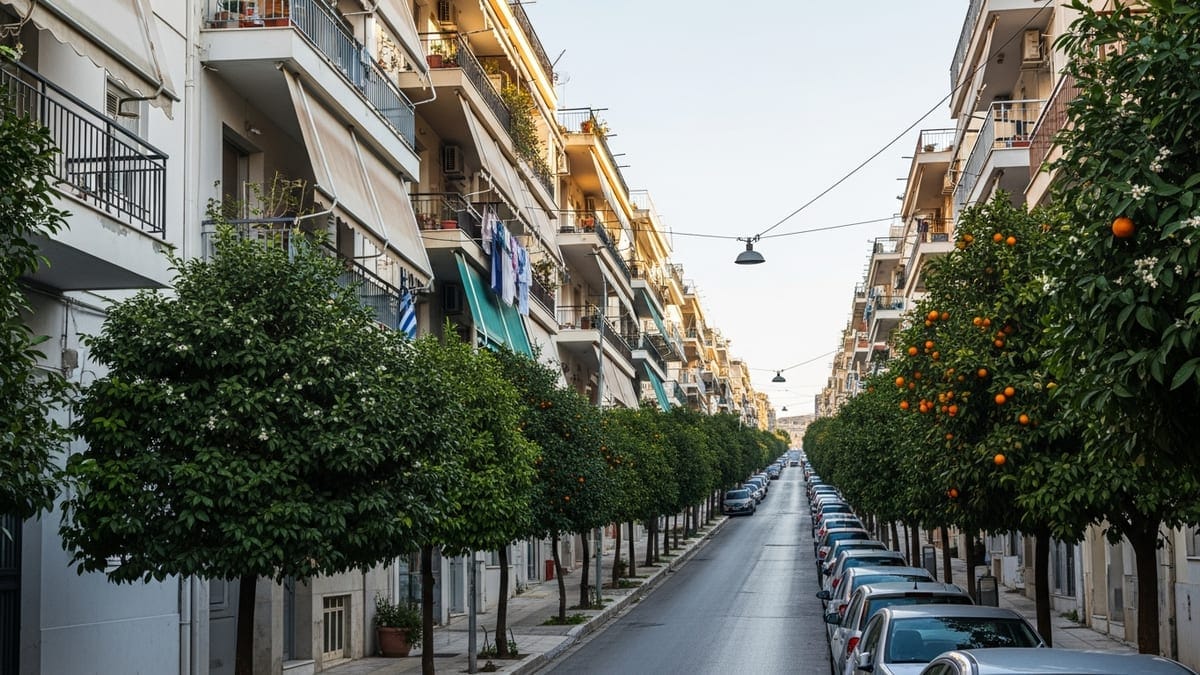
Urbanistically, Exarchia feels denser and more vertical than many postcard visions of Athens. Apartment blocks from the 1960s and 1970s line streets shaded by bitter orange trees and balconies overflowing with plants. At street level, however, the dominant visual impression is graffiti. Political slogans, large-scale murals, and layers of tags cover shutters, doorways, and facades. For some visitors this is striking and energizing, for others it reads as neglect. Both reactions are part of understanding Exarchia’s tension between informal expression and formal control.
The neighborhood has long attracted people on the margins of mainstream Greek society. Artists, writers, and academics live alongside migrant families and low-income workers. In the mid-2010s, as Greece received large numbers of refugees, several abandoned buildings in and around Exarchia were occupied and turned into self-managed accommodation, clinics, and community spaces. Even as authorities have moved to clear many of these squats in recent years, the reputation of Exarchia as a zone of solidarity remains central to its identity.
For travelers, Exarchia’s location is practical. It is an easy 10 to 15 minute walk from central metro stations on lines that connect directly to the Acropolis area, Piraeus port, and Athens International Airport. At the same time, the neighborhood feels distinctly different from the polished tourist circuits of Plaka and Syntagma. That sense of being in “another Athens” is a key part of its appeal for many visitors.
A Brief History of Rebellion and Memory
Exarchia developed as an urban district in the late 19th century and gained its name from a local shopkeeper. Its political importance grew rapidly in the 20th century, particularly after university departments relocated nearby in the 1960s and 1970s. Students and intellectuals made Exarchia their home, and the area became a heartland of opposition to Greece’s military dictatorship. The 1973 Athens Polytechnic uprising, a pivotal moment that helped bring down the junta, unfolded just south of today’s Exarchia core and cemented the area’s place in the country’s political memory.
In the decades that followed, Exarchia became synonymous with leftist, anti-authoritarian, and anarchist currents. Political parties and movements maintained offices here, and the side streets filled with radical bookstores, small publishing houses, independent theaters, and music venues. When Greece was shaken by economic crisis after 2008, Exarchia’s streets and squares were frequent stages for protest marches and clashes with riot police. Banks, police stations, and party headquarters in or near the neighborhood were targeted multiple times by far-left groups, reinforcing an image of Exarchia as a space of resistance.
December 2008 marked a particularly defining event: the police killing of 15-year-old student Alexandros Grigoropoulos on a side street in Exarchia. The incident triggered days of riots across Greece and became a symbol of state violence and youth anger. To this day, the spot where he died is marked by graffiti and a makeshift shrine, and his name is invoked on murals throughout the area. For many locals, this memory is not an abstract historical episode but a constant presence in everyday life.
More recently, the neighborhood has found itself at the center of a broader political struggle over security and urban policy in Athens. Since 2019, successive Greek governments have prioritized “law and order” operations in Exarchia, combining drug and squat raids with heavy police presence. Supporters argue that these measures are necessary to combat crime and restore public order. Critics see them as part of a deliberate effort to break the area’s self-organized culture and pave the way for gentrification. As a traveler, you will encounter traces of these conflicts in the form of barricaded buildings, protest banners, and the frequent sight of riot police units stationed on the edges of the neighborhood.
The Metro Station Controversy and Gentrification Pressures
One of the most visible flashpoints in Exarchia today is the planned construction of a new metro station for Line 4 directly beneath Exarchia Square. Work began in late 2022, with the removal of a historic fountain sculpture and the felling of trees to clear the way for excavation. For many residents and activists, this project has come to symbolize a broader attempt to reshape the area. Critics argue that the station will erase the neighborhood’s only central public square, further militarize the streets, and accelerate a wave of speculation and short-term rentals that is already pushing out long-term residents.
Opposition groups have organized protests, legal challenges, and campaigns aimed at European institutions, raising concerns about environmental impact, public consultation, and police violence during demonstrations. They describe the works as a “mega-project” imposed from above, one that uses public infrastructure to transform a politically active neighborhood into a more controlled and tourist-friendly zone. Protest posters and graffiti around the square often link the metro project to rising rents and the expansion of short-term rentals, warning of a future where Exarchia’s radical character is replaced by boutique hotels and visitor-friendly branding.
Supporters of the new station, including some local residents and city officials, counter that Exarchia has long been underserved by public transport and that better connections to the rest of Athens will benefit ordinary people, reduce car traffic, and support local businesses. From this perspective, the metro is a long overdue improvement rather than an attack. City representatives emphasize that trees can be replanted and argue that integrating Exarchia more fully into the urban transit network is essential for its economic sustainability.
What is not in doubt is that Exarchia is facing pronounced gentrification pressures. Golden visa policies, investment purchases by foreign and domestic buyers, and the rapid growth of short-term rentals have collectively driven up property values. Reports from residents and local commentators describe rents that are increasingly out of line with average Greek wages, and note that the number of squats and long-standing communal projects has declined under combined market and police pressure. For visitors, the effects of these dynamics are visible in the opening of new cafés, bars, and creative spaces that cater to a more international crowd, even as older residents struggle to remain in the neighborhood.
Café Culture, Nightlife, and Everyday Life
Despite its reputation as a theater of conflict, Exarchia is also a place where everyday life plays out at café tables, music bars, and neighborhood grocers. Daytime sees a mix of students with laptops, older locals reading newspapers, and families running errands. Cafés range from long-established, no-frills spots where regulars have held the same tables for years to newer, more design-conscious places offering specialty coffee, vegetarian dishes, and craft beers. For many travelers, this café culture is the most immediate and accessible introduction to Exarchia.
Independent bookstores are another hallmark of the neighborhood. Many double as small publishers or political hubs, with tightly packed shelves of philosophy, history, and radical theory in Greek and other languages. It is not uncommon to find flyers for local assemblies, film screenings, or solidarity events stacked by the register. Even if you do not read Greek, browsing these shops offers a window into the intellectual life that has defined Exarchia for decades.
After dark, the character changes again. Bars and music venues come alive, particularly around Exarchia Square and along nearby streets. You will find everything from rock bars and rembetiko joints to venues with punk, hip hop, and experimental performances. Many places retain a casual, unpolished feel. Plastic chairs spill onto sidewalks, music drifts between buildings, and conversations stretch well past midnight. Alcohol is inexpensive by northern European or North American standards, which can attract a younger, energetic crowd.
At the same time, late-night Exarchia is also where tensions occasionally resurface. While many evenings pass without incident, clashes between small groups of protesters or youth and police can still occur, especially after demonstrations or during politically sensitive anniversaries such as the December commemoration of Grigoropoulos’s killing or the November Polytechnic uprising. Tear gas and stun grenades, if deployed, can affect nearby streets even if you are not involved. Travelers who wish to experience Exarchia’s nightlife should stay alert, avoid large, tense gatherings, and follow their instincts if an atmosphere shifts.
Street Art, Squats, and Self-Managed Spaces
For many visitors, the most striking aspect of Exarchia is its street art. The neighborhood functions as an open-air gallery where almost every available surface bears some kind of mark. Large murals depict political icons, local heroes, and allegorical scenes, while smaller stencils and tags broadcast messages of antifascism, solidarity with refugees, or opposition to state repression. Some works are ephemeral, painted over within days, while others have become semi-permanent fixtures and landmarks in their own right.
Walking through Exarchia with an eye for these details can be illuminating. Slogans in Greek are interspersed with messages in English and other languages, reflecting the neighborhood’s ties to international struggles. Murals supporting Kurdish autonomy, Palestinian rights, or anti-racist campaigns sit alongside local references and tributes to musicians, writers, or activists. The density of images and words can be overwhelming, yet it is this saturation that gives Exarchia its distinctive texture and makes it feel different from almost any other district in Athens.
Another key feature of the area is its network of self-managed spaces, many of which emerged from squatted buildings. These projects have included social centers, community clinics, language schools, and refugee accommodation, often run on a volunteer basis with horizontal decision-making. One notable initiative has provided free or low-cost medical care in a former cinema near Exarchia Square, staffed by doctors, nurses, and non-medical volunteers who view healthcare as a social right rather than a commodity.
In recent years, police operations have targeted several of the neighborhood’s squats, leading to evictions, arrests, and the closure of some of these projects. Nonetheless, a number of self-managed spaces continue to operate, hosting concerts, theater performances, political discussions, and grassroots organizing. Access for visitors can vary. Some events are explicitly open to the public, while others are more embedded in local networks. Respectful curiosity is generally appreciated, but it is important to remember that these spaces primarily serve community needs, not tourism. Always follow posted guidelines, ask before photographing people, and be prepared for language and cultural barriers.
Safety, Policing, and Practical Advice for Visitors
Safety in Exarchia is a nuanced topic. On one hand, many travelers report feeling more at ease here than in some heavily touristed districts, citing a sense of community and the presence of people on the streets late into the night. Serious violent crime against foreigners is relatively rare. On the other hand, Exarchia has long been a focal point for confrontations between certain groups of residents and the police, and these dynamics can affect visitors who happen to be nearby when tensions flare.
Under recent governments, police presence around the neighborhood has increased markedly. Riot police units are often stationed on key corners or at the fringes of Exarchia, particularly near the works for the new metro station and routes leading toward central squares. Uniformed and plainclothes officers conduct periodic operations targeting drug dealing, undocumented migrants, or squats. For many locals, the sight of heavily armed officers is a source of stress and anger; for some visitors, it can be unsettling. As a traveler, the most important thing is to remain calm, keep a respectful distance from any police operation, and avoid photographing officers at close range, which may provoke confrontations.
Protests are a regular feature of Athens’ political calendar, and Exarchia often lies on or near march routes. Demonstrations are usually announced in advance by local media and are easily recognizable by banners, megaphones, and organized contingents. If you encounter a protest, you can watch from a distance if you wish, but be aware that police may deploy tear gas or other crowd-control measures if clashes occur. It is usually wise for short-term visitors to step away once tensions rise, particularly at night. Check local news or ask your hotel or host about planned demonstrations on days when you intend to explore the neighborhood.
As in any busy urban district, standard precautions apply. Pickpocketing and petty theft can occur, especially in crowded bars or on dark side streets late at night. Keep valuables secure and avoid displaying large amounts of cash or expensive electronics. Stick to better-lit routes when returning to your accommodation after dark. If you are unfamiliar with the area, using a map app to orient yourself before you set out can help you avoid confusion on the neighborhood’s many intersecting one-way streets.
How to Experience Exarchia Respectfully
Exarchia’s growing international profile means that more travelers seek it out each year. Some arrive with an almost romanticized notion of an “anarchist utopia,” others with apprehension driven by sensational headlines. The reality you encounter will depend in part on how you approach the neighborhood. Treating Exarchia as a living community rather than an urban curiosity is the first step toward a more meaningful visit.
One way to start is simply by spending an afternoon there without a rigid agenda. Have coffee at a sidewalk table, browse a bookstore, and observe the rhythms of daily life. You might hear heated political discussions at a nearby table; you may also see neighbors greeting each other, children playing, or people helping one another carry groceries. This mix of the everyday and the ideological is central to Exarchia’s character. If you speak some Greek, conversations can open quickly. If you do not, English is widely understood among younger residents, though not universal.
Photography is another area where sensitivity matters. While street art and architecture are generally fair game, many residents are wary of being turned into backdrops for strangers’ social media feeds, especially in settings connected to activism, squats, or refugee communities. Before photographing people, ask for permission. Avoid taking identifiable images of participants in protests or of the interior of self-managed spaces without explicit consent. Remember that for many locals, these images can have consequences beyond aesthetics.
Finally, consider the impact of your spending choices. Patronizing long-standing businesses, independent bookshops, and locally run cafés helps sustain the neighborhood’s social fabric. Be aware that the rapid growth of short-term rentals is controversial here, with some locals blaming platforms and foreign investors for rent increases and displacement. Choosing accommodation elsewhere in Athens and visiting Exarchia as a guest, rather than contributing to short-stay saturation in the core streets, is one way to enjoy the neighborhood while minimizing your role in these pressures.
Planning Your Visit: Timing, Transport, and Nearby Sights
When it comes to timing, the feel of Exarchia shifts throughout the day. Mornings are relatively quiet, with older residents and shopkeepers setting the tone. Midday and early afternoon see more student and office-worker traffic, especially during the academic year. Late afternoon into evening is ideal for travelers who want to balance atmosphere and safety: cafés are lively, shops are open, and the light is good for appreciating street art. After midnight, the neighborhood becomes more centered on bars and music venues, and while many nights pass without trouble, this is the period when intoxication and occasional clashes are most likely.
Access is straightforward. From central Athens, Exarchia is walkable from major spots like Syntagma, Monastiraki, and Omonia, though in the heat of summer the uphill sections can feel demanding. Several bus routes pass along the main avenues that border the neighborhood, and taxis are widely available and relatively affordable by Western European standards. There is currently no metro station within Exarchia itself. Works for the future station at Exarchia Square have introduced construction noise, fenced-off areas, and periodic disruptions to traffic and pedestrian flow around the plaza, so allow extra time and flexibility if you are meeting people there.
Combining Exarchia with nearby sights can make for a rich day. The National Archaeological Museum, one of Europe’s premier collections of ancient artifacts, lies just north of the neighborhood and is easily accessible on foot. To the southeast, the upscale district of Kolonaki offers an instructive contrast, with polished boutiques and galleries replacing graffiti and squats. Walking between these areas underscores Athens’ social and economic diversity within a compact radius. You can start your day with ancient sculpture, move through Exarchia’s murals and radical bookstores in the afternoon, and end with dinner in a taverna on a tree-lined side street.
Weather is also a factor. Athens summers can be intensely hot, with temperatures often exceeding 35 degrees Celsius (95 Fahrenheit) in July and August. In such conditions, late afternoon and evening visits are more comfortable. Spring and autumn bring milder weather and, for many travelers, a more enjoyable environment for walking and café-hopping. Winters are generally cool and can be rainy, but Exarchia’s indoor bars, music venues, and social centers provide ample shelter and atmosphere.
The Takeaway
Exarchia is not a theme park of rebellion, nor is it the dangerous no-go zone sometimes depicted in foreign coverage. It is an evolving neighborhood where conflicts over housing, policing, migration, and public space are especially visible. For travelers willing to look beyond the clichés, Exarchia offers a rare chance to observe how a city negotiates these tensions in real time. You will see empty storefronts and new businesses, political posters layered over one another on a single wall, and residents who are both proud of their area’s history and anxious about its future.
What you take away from Exarchia may depend on how much you engage with its complexities. You can come for a coffee and a walk among murals and leave with vivid photographs and a sense of having seen a different side of Athens. Or you can linger longer, read about the events that shaped the neighborhood, and talk to people whose lives intersect with its politics and culture. Either way, approaching Exarchia with curiosity, humility, and respect will deepen your understanding of both the neighborhood and the broader city around it.
FAQ
Q1: Is Exarchia safe for tourists to visit during the day?
Yes, for most visitors Exarchia is reasonably safe during daylight and early evening hours. The streets are busy, cafés are active, and violent crime against tourists is uncommon. Standard city precautions apply, such as watching your belongings and avoiding obviously tense situations or protests.
Q2: Should I avoid Exarchia at night?
Not necessarily, but you should be more cautious. Many people enjoy the neighborhood’s bars and music venues after dark without problems. However, late evenings are when clashes between small groups and police are most likely. If you choose to go out at night, stick to main streets, stay aware of your surroundings, and leave the area if you sense rising tension or see large numbers of riot police moving in.
Q3: Can I take photos of the graffiti and street art?
Yes, photographing murals and street art in public spaces is generally fine and is one of the pleasures of visiting Exarchia. The key is to avoid photographing people without their consent, especially in politically sensitive contexts such as protests, squats, or community centers. When in doubt, ask first and respect any request not to be photographed.
Q4: Are there guided tours of Exarchia?
Small independent guides and grassroots groups occasionally offer walking tours focused on Exarchia’s history, street art, and social movements. These can provide valuable context that you might miss on your own. Offerings change over time, so check current options once you are in Athens, and choose tours that present the neighborhood respectfully rather than as a spectacle.
Q5: Is it appropriate to visit squats or self-managed spaces?
Some self-managed spaces host public events such as concerts, film screenings, and talks, which visitors may attend. Others function primarily as housing or community services and are not oriented toward tourism. As a general rule, do not enter squats or social centers uninvited. If you see a public event advertised, you can attend, but follow the house rules, avoid intrusive photography, and remember that these are political and social projects, not attractions.
Q6: What is the situation with drugs in Exarchia?
Exarchia has struggled with open drug use and dealing, particularly around certain corners and side streets, which has been a concern for residents themselves. Increased policing has targeted some of this activity. As a visitor, avoid buying or using drugs, steer clear of obviously troubled spots, and focus your time on the many cafés, bookstores, and cultural venues that define the neighborhood’s public life.
Q7: How will the new metro station affect my visit?
Construction around Exarchia Square currently means fenced areas, noise, and occasional disruptions to pedestrian routes. For travelers, this may make the immediate square less visually appealing and slightly more chaotic. In the long term, once the station opens, it will make access easier, but it may also bring more visitors and accelerate changes already underway in the neighborhood.
Q8: Is Exarchia a good place to stay in Athens?
That depends on your priorities. If you value independent cafés, nightlife, and an alternative atmosphere, and are comfortable with visible political graffiti and frequent police presence on the outskirts, you may appreciate staying here. If you prefer quieter, more polished surroundings or are traveling with young children and want very tranquil evenings, you might choose to stay in another district and visit Exarchia during the day.
Q9: How do locals feel about tourists in Exarchia?
Attitudes are mixed. Many business owners welcome visitors who support local cafés, bars, and shops and who take a genuine interest in the neighborhood’s culture. Others worry about rising rents and the spread of short-term rentals that cater primarily to foreigners. Being respectful, avoiding disruptive behavior, and not treating the area as a backdrop for edgy photos can help foster more positive interactions.
Q10: What is the best way to learn about Exarchia’s political history before visiting?
Reading up on the Athens Polytechnic uprising of 1973, the 2008 killing of Alexandros Grigoropoulos, and the role of Exarchia in Greece’s economic crisis and refugee solidarity movement will provide valuable context. News features, essays, and books by Greek and international journalists and scholars can offer in-depth perspectives. Even a short overview before you arrive will make the graffiti, memorials, and ongoing debates you encounter in the neighborhood far more legible and meaningful.