

More news on this day
One of Devon’s most picturesque commuter and leisure railways has been abruptly silenced after storm damage along the Exe estuary, stranding passengers between Exmouth and Topsham yet failing to dim the county’s growing pull as a year-round tourist magnet.
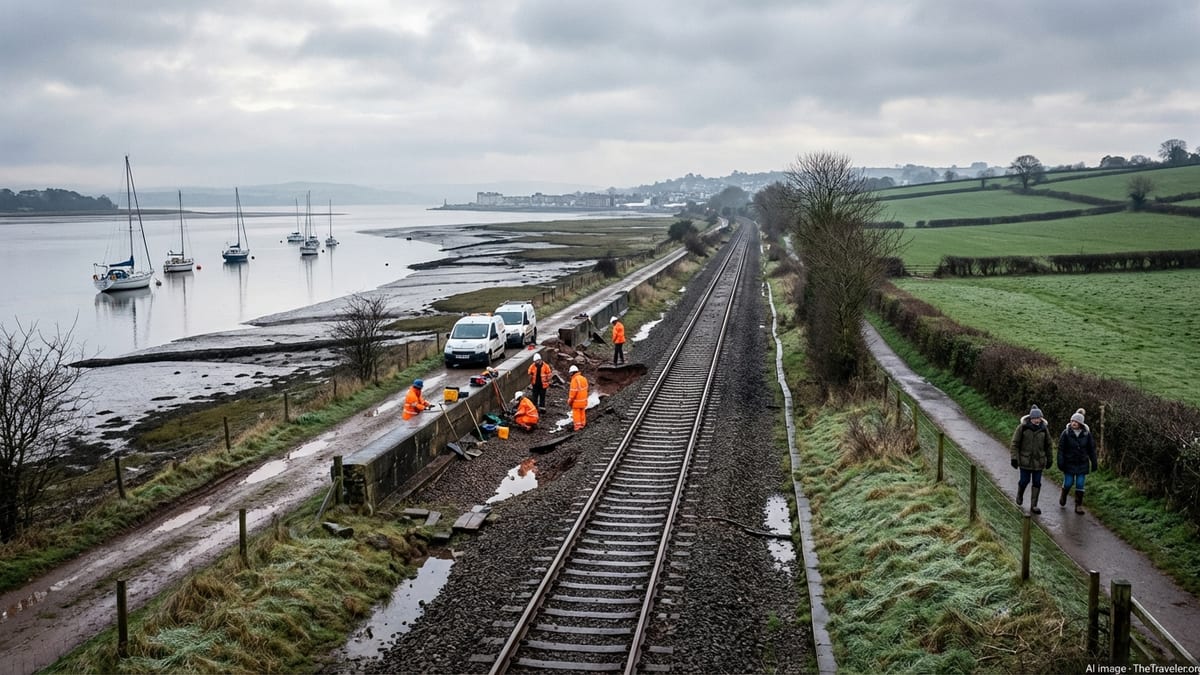
Sea Wall Damage Brings Avocet Line to a Standstill
Services on the Avocet Line between Topsham and Exmouth were suspended on Monday evening after engineers discovered damage to sea wall foundations near Lympstone, a low-lying stretch where the single-track railway runs just metres from the Exe estuary. National Rail reported that all lines were blocked, forcing Great Western Railway to cancel trains along the route and warn of disruption at least until the end of Tuesday.
The closure affects a key link connecting Exmouth and Topsham with Exeter St Davids and beyond to Paignton, Barnstaple and South Wales. Normally, trains run every half hour along the 11 mile corridor, popular with commuters as well as visitors drawn by sweeping estuary views and access to watersports, coastal paths and birdwatching sites.
Rail industry sources said a combination of high tides and recent storms had undercut a vulnerable section of the sea wall, echoing wider concerns about the resilience of Devon’s coastal railways as severe weather events become more frequent. Network Rail engineers worked through the night to stabilise the structure and clear debris as specialist teams assessed the extent of the damage.
While officials insisted that safety remained the overriding priority, the sudden shutdown immediately raised questions about the reliability of one of the county’s signature scenic lines, especially at the start of a busy late-winter short-break season.
Replacement Buses and Coastal Communities Under Pressure
In the short term, passengers between Exeter and Exmouth face longer journeys and patchier connections. Great Western Railway urged customers to check before travelling and confirmed that rail tickets are being accepted at no extra cost on a network of Stagecoach services, including the 57, 58, 58A, H, I and J routes linking Exeter, Exmouth and intermediate communities.
Rail replacement buses have been requested to shuttle along the closed section, but capacity is limited at peak times and journey times are significantly extended. For many commuters in Exmouth, Lympstone and Exton, the disruption has meant earlier starts, crowded buses and uncertainty about evening returns, with some opting to work from home where possible.
Local businesses in Exmouth and Topsham reported a noticeable drop in day-trippers arriving by train on Tuesday morning, particularly walkers, cyclists and birdwatchers who typically rely on rail access to the estuary. Cafés near Exmouth station described a quieter than usual breakfast trade, while independent shops in Topsham said regular customers from Exeter had postponed visits.
Officials at East Devon District Council said they were monitoring the impact but stressed that road access to both towns remained fully open, with park-and-ride options around Exeter and ongoing upgrades such as the Dinan Way extension in Exmouth designed to ease congestion for drivers.
Tourism Demand Remains Strong Along the Exe Estuary
Despite the immediate upheaval on the rails, tourism operators along the Exe estuary insist demand remains buoyant. The Avocet Line itself is marketed as a visitor attraction, with travel guides encouraging holidaymakers to hop between Exeter, Topsham and Exmouth to explore riverside pubs, galleries and sandy beaches connected by rail, ferry and coastal paths.
In Exmouth, hotel and guesthouse bookings for late February and early spring breaks are reported to be ahead of last year, bolstered by the town’s long sandy beach, growing reputation for kitesurfing and paddleboarding, and improved road links. Many properties are advising guests to arrive by car or coach over the coming days, while still highlighting the rail journey as a highlight once services resume.
Topsham, known for its Dutch-influenced architecture and independent food scene, also continues to attract strong interest from domestic visitors seeking shorter, off-season stays. Local tourism groups say inquiries for Easter and summer remain robust, suggesting that short-lived infrastructure shocks are unlikely to derail a wider trend towards year-round, experience-led travel in Devon.
Tour operators specialising in car-free itineraries acknowledged that the closure complicates logistics in the near term but expressed confidence that the line’s scenic pull and the well-established visitor economy along the estuary would ensure a swift rebound when trains return.
Investment Aims to Future-Proof Devon’s Visitor Network
The latest disruption comes against a backdrop of significant investment in Devon’s broader transport network, much of it geared toward supporting tourism and local economies. The reopening of the Dartmoor Line to Okehampton for regular passenger services, and plans for a new Okehampton Interchange station, have been cited by county leaders as proof that rail can drive sustainable growth in rural and coastal destinations.
Closer to Exmouth, work has been progressing on the extension of Dinan Way, a long-planned scheme aimed at easing congestion around the town and providing a more direct connection to the A376. Local officials argue that such projects, alongside improved active travel routes, will help absorb pressure when rail lines are disrupted and make it easier for visitors to reach resorts without funnelling through residential streets.
Network Rail meanwhile has been investing in sea wall resilience elsewhere on the South Devon coast after high-profile storm damage in recent years. The discovery of weaknesses on the Avocet Line near Lympstone is likely to sharpen calls for similar long-term engineering solutions along the Exe estuary corridor, with local stakeholders pressing for a balance between environmental sensitivity and infrastructure security.
Tourism bodies say that ensuring reliable, climate-resilient links is essential if Devon is to maintain its competitive edge against other coastal regions, particularly as visitors increasingly seek lower-carbon options such as rail and bus travel for UK holidays.
Communities Showcase Resilience as Rail Repairs Advance
As engineers work to restore services, communities in Exmouth and Topsham are emphasising that the area remains very much open for business. Attractions, eateries and accommodation providers are updating visitors with clear travel advice, often suggesting alternative scenic approaches via road, river and cycle paths to keep trips on track.
Local tourism groups are using the disruption as a prompt to highlight lesser-known experiences that do not rely on rail access, from estuary wildlife cruises and winter surf sessions to inland walking routes that start from easily reached car parks and bus stops. For many residents, the episode is a reminder of both the vulnerability and the value of the railway that threads their shoreline.
While the immediate priority remains repairing the sea wall and restoring the Avocet Line safely, there is a growing sense that the incident will feed into a broader debate about how Devon can protect its most scenic routes while welcoming rising numbers of visitors. For now, the trains may be silent between Topsham and Exmouth, but the wider tourism story along this stretch of coast continues to grow louder.