

More news on this day
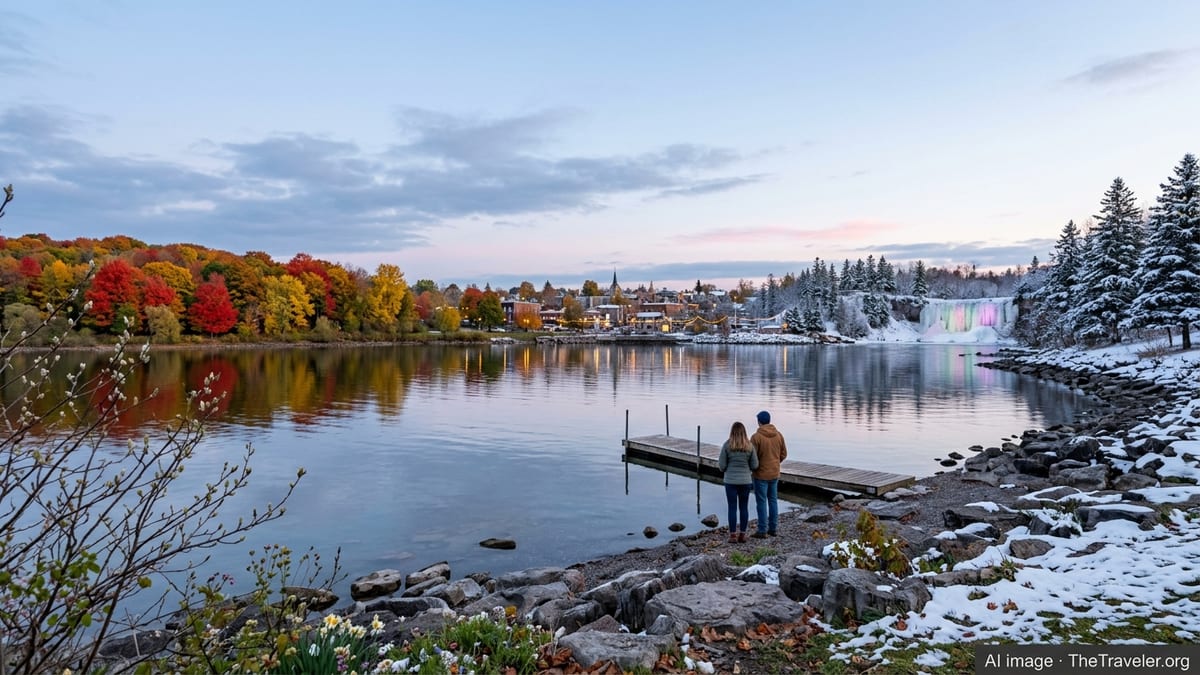
From frozen waterfalls bathed in colour to maple forests blazing red and gold, Ontario is increasingly promoted as the rare destination that delivers the full drama of all four seasons in one place, and recent tourism initiatives and festival lineups suggest travelers are taking notice.
Get the latest news straight to your inbox!
A Winter Wonderland of Lights, Ice and Outdoor Adventure
Ontario’s bid to define itself as Canada’s all-season showcase is especially visible in winter, when cities and small towns transform into destinations built around light, snow and outdoor culture. In Niagara Falls, the long-running Winter Festival of Lights is set to return for the 2025 to 2026 season, illuminating the parkway and the famous waterfalls with millions of lights from mid-November through early January and drawing visitors to evening strolls, fireworks and family-friendly programming that stretches across the holidays.
Reports indicate that Niagara’s winter calendar will again be anchored by the Icewine Festival, scheduled across three weekends in January 2025, turning vineyards and historic streets into tasting venues that highlight the region’s signature cold-weather wine styles and pairing menus. Tourism coverage notes that the event has become a key driver of overnight stays during what was once a quieter travel period, as visitors combine tastings with spa visits, skating and sightseeing.
Further east, Ottawa’s Winterlude continues to position the nation’s capital as a marquee winter destination. Publicly available information from Ottawa tourism guides describes how the 2025 edition expanded its program of ice sculptures, family zones and cultural performances while centering activities on the Rideau Canal Skateway, one of the largest naturally frozen skating surfaces in the world when conditions cooperate. The festival, typically staged over three weekends in February, is routinely cited as one of the country’s most significant winter draws.
Beyond headline events, regional attractions are adding winter-specific experiences that fit the province’s four-season narrative. At the Royal Botanical Gardens in Burlington, the Winter Wonders nighttime trail is slated to return from late November 2025 to early January 2026, combining illuminated garden routes with soundscapes and artful projections in Hendrie Park. Travel industry coverage points to the event’s role in extending both the gardens’ operating season and Ontario’s broader winter tourism offering.
Spring Thaw: Blossoms, Waterfalls and Shoulder-Season Escapes
As snow recedes, Ontario pivots quickly to promote spring as a time of renewal that contrasts sharply with the icy imagery of winter. Destination marketing materials emphasize how thawing rivers, budding forests and quieter towns provide a different way to experience many of the same landscapes visited in summer and fall. In regions such as the Niagara Escarpment and Muskoka, spring waterfalls and rushing streams become central to photography-focused trips and early hiking getaways.
Urban destinations also lean into seasonal transitions. Toronto’s waterfront and island parks see an uptick in cycling, running and early patio culture as temperatures climb, while cherry and crabapple blossoms in city parks offer a shorter, more subtle spectacle than autumn colour but attract a growing number of domestic visitors. Event listings for spring 2025 in southern Ontario highlight food, arts and literary festivals that deliberately bridge the period between winter celebrations and peak summer holidays.
Travel planners note that spring’s cooler temperatures and lower crowd levels are increasingly being marketed as advantages. Smaller communities along Lake Ontario and Georgian Bay promote shoulder-season stays tied to birding, fishing openers and maple syrup harvest events in March and April, when sugar bushes become temporary gathering points. Industry reports suggest these experiences are helping to distribute visitation more evenly across the year, reinforcing Ontario’s four-season identity.
Regional tourism organizations have also been aligning their branding around road trip themes that connect spring drives with later-season travel. Planning documents from Central Counties Tourism, for example, reference campaigns positioning parts of Ontario as “road trip destinations” across spring, summer and fall, underscoring an effort to keep travelers engaged with evolving landscapes as each season progresses.
Summer Lakes, Theme Parks and Festival Season
By summer, Ontario’s image shifts again, this time to a province of lakes, beaches and major attractions. More than a quarter-million lakes and extensive Great Lakes shoreline underpin classic cottage-country escapes in Muskoka, the Kawarthas and the Ottawa Valley, where boating, paddling and fishing dominate itineraries. Tourism statistics cited by provincial marketing agencies portray the warm months as a critical period for visitor spending, supported by both domestic vacationers and international travelers drawn to Canada’s outdoors.
Large-scale attractions amplify that seasonal pull. Canada’s Wonderland, near Toronto, remains one of the country’s most visited theme parks and is preparing to open AlpenFury, a new steel launched roller coaster, for the 2025 season. According to coverage from amusement industry publications and park announcements, the ride carries a fire and ice theme that mirrors the park’s push to be relevant across cooler and warmer months, with surrounding areas re-themed to extend that narrative.
Urban centers complement outdoor recreation with dense festival calendars. Toronto, Ottawa and Hamilton host summer music, film and food festivals that benefit from long daylight hours and warm evenings. Travel guides for 2025 point to waterfront concert series, multicultural street festivals and outdoor film screenings as draws that encourage visitors to build multi-day itineraries rather than quick visits, making use of patios, rooftop bars and late-night transit services.
Coastal communities along Lake Huron and Lake Erie, including parts of Ontario’s Southwest, promote beach-focused summer stays that contrast with the same towns’ quieter, nature-oriented shoulder seasons. Marketing emphasizes how mild lake breezes, warm water and coastal sunsets offer a distinct counterpart to winter’s ice formations and fall’s windswept shorelines, helping to illustrate the province’s seasonal range within the same geographic frame.
Autumn Colours and Harvest Trails Across the Province
While summer fills cabins and beaches, autumn in Ontario has become almost synonymous with forest colour. Travel coverage routinely ranks the province among North America’s leading fall foliage destinations, and 2025 is expected to see continued interest in leaf-peeping road trips through regions such as Algonquin Park, Prince Edward County and the Laurentian-style highlands north of Muskoka. These areas offer sweeping vistas of maple, oak and birch forests that shift from green to vivid reds, oranges and golds between late September and late October, depending on latitude and elevation.
Online trip reports and park advisories highlight how hiking and paddling routes in Algonquin and other provincial parks feel markedly different in autumn, with cooler temperatures, fewer insects and extended views through thinning canopies. Scenic rail and boat excursions in central and eastern Ontario also adjust their schedules to capture peak colour windows, underlining how transportation providers are tailoring operations to seasonal demand.
Harvest season adds another layer to the autumn story. Wineries in Niagara, Prince Edward County and emerging wine regions host grape harvest events and tasting weekends, while orchards across southern Ontario open for apple picking, pumpkin patches and corn mazes. destination guides point to these experiences as important for attracting families and day trippers, particularly from nearby urban areas, and for tying agritourism more tightly to the province’s overall tourism brand.
In many communities, autumn festivals serve as a bridge between summer crowds and winter illumination events. Fall fairs, craft shows and small-town harvest celebrations highlight local food, music and artisans, often set against the backdrop of changing leaves and cooler evenings. This sequencing helps maintain visitor interest deep into October and early November, reinforcing the sense that Ontario’s tourism calendar never truly goes dormant.
Tourism Strategy: Showcasing a Province for All Seasons
Behind the scenes, Ontario’s evolving four-season identity is supported by coordinated marketing efforts at the provincial and regional levels. Destination Ontario, the lead tourism marketing organization, describes tourism as a cornerstone of the provincial economy, supporting more than 325,000 jobs and 92,000 businesses and contributing an estimated 32 billion dollars to gross domestic product. Those figures, highlighted in recent corporate materials, frame the push to attract visitors in every season as an economic priority.
In updates published in September 2025, Destination Ontario outlined new campaigns designed to encourage residents to travel within the province during periods of economic uncertainty and shifting international travel patterns. Promotional efforts center on showcasing the diversity of experiences available in each season, from winter festivals and spa getaways to summer lakeside retreats and shoulder-season cultural events. Messaging emphasizes that travelers do not need to cross borders to experience the full cycle of Canadian seasons.
Regional tourism organizations are aligning with that strategy by curating itineraries that deliberately span multiple times of year. Marketing plans from Central Counties Tourism and other destination management groups reference seasonal themes that move from winter attractions to spring drives, summer adventures and fall colour tours, often under unified branding. Publicly available documents suggest these coordinated approaches aim to lengthen stays, increase repeat visitation and distribute economic benefits beyond traditional peak months.
Together, these developments position Ontario as a living showcase of Canada’s seasonal extremes and subtleties. Within the span of a single calendar year, travelers can skate along a frozen canal, watch vineyards sparkle under winter lights, paddle quiet spring rivers, ride world-class coasters on hot summer days and hike through forests ablaze with autumn colour, all without leaving the province’s borders.