

More news on this day
Explora Journeys is accelerating its transformation from newcomer to major player in ultra-luxury cruising, confirming a 2026 debut for its first LNG-powered ship and a rapid fleet buildout that tightens the brand’s sustainability ambitions through 2028.
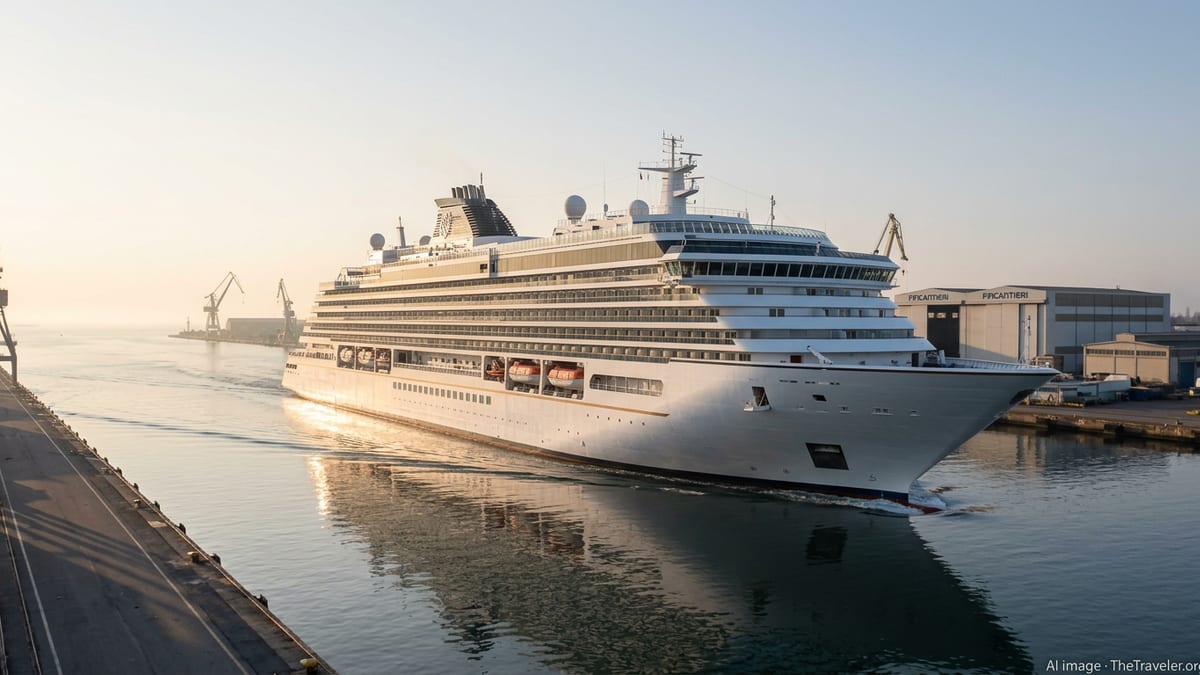
2026: Pivotal Year as Explora III Joins the Fleet
With two ships already sailing, Explora Journeys has set 2026 as a turning point, as Explora III prepares to join the fleet and mark a new technical era for the brand. Company executives and Italian shipbuilder Fincantieri recently celebrated a triple shipyard milestone in Italy, underscoring that the six-ship program is progressing on schedule and, in some cases, ahead of initial delivery targets.
Explora III is scheduled for delivery in July 2026, followed by a naming ceremony on August 1 at MSC Group’s new cruise terminal in Barcelona. The vessel will begin with a short Mediterranean prelude before sailing north to Western Europe and onward to North America, positioning the ship as a bridge between established Mediterranean circuits and new long-haul, destination-rich itineraries.
The 63,900-gross-ton ship will maintain Explora Journeys’ hallmark of an all-suite, all-balcony configuration, but with refinements based on guest feedback from Explora I and Explora II. Larger outdoor spaces, an expanded choice of dining concepts and a focus on quieter, residential-style design aim to appeal to a growing audience of luxury travelers seeking an alternative to both traditional cruising and land-based resorts.
For the brand, having a third ship in service by late summer 2026 significantly increases itinerary flexibility. It allows Explora Journeys to build longer, back-to-back journeys and to begin positioning one of its newest ships for seasonal deployment in regions such as Alaska and Asia from 2027 onward, while maintaining a strong presence in the Mediterranean and Caribbean.
LNG-Powered Newbuilds Anchor a Broader Sustainability Strategy
Explora III will be the first ship in the fleet to be powered by liquefied natural gas, a transitional marine fuel that can substantially reduce local air pollutants and carbon emissions compared with conventional marine fuels. From Explora III onward, all new ships in the program will be equipped for LNG, making environmental performance a defining feature of the fleet expansion rather than an afterthought.
The next three vessels, Explora IV, Explora V and Explora VI, will build on that platform. Designs incorporate readiness for future alternative fuels and, on the final pair of ships, the potential to integrate hydrogen fuel cells to eliminate emissions in port while hotel operations are running. The brand and shipyard teams are also studying battery storage, advanced waste-heat recovery and enhanced shore power connectivity as supporting technologies.
These investments align with MSC Group’s broader target of net zero greenhouse gas emissions by 2050 across its cruise division. For Explora Journeys, which positions itself squarely in the ultra-luxury segment, the environmental push is presented as part of the guest proposition: quieter, cleaner ships that can access more remote or environmentally sensitive destinations while operating within stricter local regulations.
Energy efficiency is also being addressed through hull design, propulsion systems and hotel operations. Continuous optimization of speed and routing, combined with demand-based heating and cooling, aims to reduce overall fuel consumption, while the use of advanced wastewater treatment and waste management systems is intended to minimize the impact on the marine environments the ships visit.
Fleet Roadmap to 2028: Six Ultra-Luxury “Floating Hotels”
The 2026 debut of Explora III is just one step in a compressed timeline that will see Explora Journeys operate six ships by 2028. Following Explora III, Explora IV and Explora V are scheduled to enter service in 2027, with Explora VI completing the series in 2028. All are being built by Fincantieri in Italy under a program valued at about 3.5 billion euros, representing one of the most ambitious investments in the current ultra-luxury cruise market.
Recent ceremonies at the Fincantieri shipyard highlighted just how quickly the program is advancing. The launch of Explora IV, the coin ceremony for Explora V and the first steel cutting for Explora VI took place on the same day, symbolizing the simultaneous construction of half the future fleet. Executives from MSC Group described the moment as the first time the entire Explora Journeys fleet could be considered “present,” even before all ships have touched water.
Each vessel is designed less as a traditional cruise ship and more as a high-end, floating hotel, reflecting shifting customer expectations. Explora Journeys reports a growing share of guests who typically choose luxury resorts or boutique hotels on land and are now looking for similar space, privacy and service standards at sea. Larger suites with private terraces, multiple pools spread across decks and a high crew-to-guest ratio are core to this positioning.
The staggered deliveries between 2026 and 2028 also give the brand the ability to fine-tune onboard experiences. Lessons from the first two ships have already informed adjustments in public space layout, wellness facilities and culinary concepts on Explora III, and further refinements are expected as the yard progresses through Explora IV, V and VI.
New Itineraries and Experiences for a Changing Luxury Traveler
As capacity grows, Explora Journeys is expanding beyond its initial focus on the Mediterranean and Caribbean to a wider set of regions, including Alaska and parts of Asia starting from 2027. Explora III is earmarked for inaugural seasons that connect Western Europe with Atlantic Canada and New England, before transitioning toward longer, more immersive voyages in colder climates.
Future seasons will see the newer ships undertake itineraries that are deliberately less port-intensive, favoring longer stays and overnights in key destinations. The company is targeting travelers who prefer to spend more time in fewer places, and who value the onboard experience as much as the ports themselves. The fleet’s size and design allow the ships to call at smaller, less frequented harbors that are often off-limits to larger mainstream vessels.
Onboard, the brand continues to roll out programming that blends slow travel with a high degree of personalization. This includes expanded wellness offerings, destination-led culinary experiences and a growing roster of experts-in-residence, from marine biologists to local cultural ambassadors, who join specific journeys. The aim is to frame each sailing as a “journey” rather than a cruise, resonating with guests who are new to the sector.
Demographically, Explora Journeys is also adapting to subtle shifts in the ultra-luxury market. The line reports a rising proportion of solo travelers, as well as multigenerational groups who treat the ships as moving private retreats. The expanded fleet arriving from 2026 gives planners more flexibility to create voyages that cater to these different segments without diluting the line’s emphasis on space and tranquility.
Competitive Signal in a Crowded Ultra-Luxury Cruise Market
The accelerated fleet expansion and sustainability roadmap send a clear signal in an increasingly competitive ultra-luxury cruise landscape, where hotel brands and boutique operators are launching their own ships. With Explora III entering service in 2026 and three more vessels to follow within two years, Explora Journeys is positioning itself as a first mover among the new generation of ocean luxury concepts.
Industry observers note that the combination of LNG propulsion, potential future hydrogen integration and a strong focus on design puts the brand in a favorable position as environmental regulations tighten. At the same time, by emphasizing residential comfort and longer, slower itineraries, Explora Journeys is directly challenging land-based luxury resorts for the same high-spending clientele.
For port cities and destinations, the 2026 expansion and subsequent fleet growth are likely to bring a modest but meaningful increase in high-yield visitors. The brand’s relatively small ship sizes and emphasis on longer stays can disperse economic benefits while easing the crowding often associated with larger vessels. As the first LNG-powered Explora ship prepares to sail, ports in Europe and North America are watching closely to see how this new wave of ultra-luxury, lower-emission cruising will take shape.