

New York State is far more than the streets and skyline of New York City. Beyond the five boroughs, a vast and varied landscape unfolds: glacial lakes and rocky peaks, rolling farmland and river valleys, industrial cities reinventing themselves, and small towns where history feels close at hand. Exploring New York State beyond NYC means tracing these regions and their distinct identities, and discovering how nature, culture, and communities combine into one remarkably diverse destination.
The Big Picture: Regions That Shape New York State
Leaving New York City behind, travelers encounter a patchwork of officially promoted regions, from the Hudson Valley and Catskills just north of the city to the Adirondacks, Capital Region, North Country, Finger Lakes, Central New York, Thousand Islands, and the Western and Southern Tier. Each area has its own mix of landscapes, economic history, and travel seasons, which together give New York an almost country sized range of experiences within a single state.
State and regional tourism offices group these areas partly around geography and partly around shared stories, such as canal towns tied to the Erie Canal, wine regions designated as American Viticultural Areas, or heritage corridors along the Hudson River and in the Adirondacks. For travelers, thinking in terms of regions helps make sense of distance and travel time, especially when planning road trips that combine city, countryside, and shoreline in one itinerary.
Many of these regions identify as Upstate New York, a flexible term that generally refers to anywhere north of the New York City metropolitan area. Within that broad label, the experiences range from remote wilderness in the North Country to college towns like Ithaca and Syracuse, and from Great Lakes shipping ports along Lake Ontario to historic riverfront cities lining the Hudson. Understanding these contrasts is the first step to choosing where to go beyond the city.
Climate and seasonality also vary across the state. Lake effect snow along Lake Ontario and in the Tug Hill Plateau creates deep winter conditions that support ski areas and snowmobiling networks, while milder pockets in the Hudson Valley and Long Island wine country can see extended autumn harvest seasons. Summer is prime time almost everywhere, but shoulder seasons are often quieter and more affordable, especially in popular mountain and lake regions.
Hudson Valley: River Towns, Estates, and Creative Culture
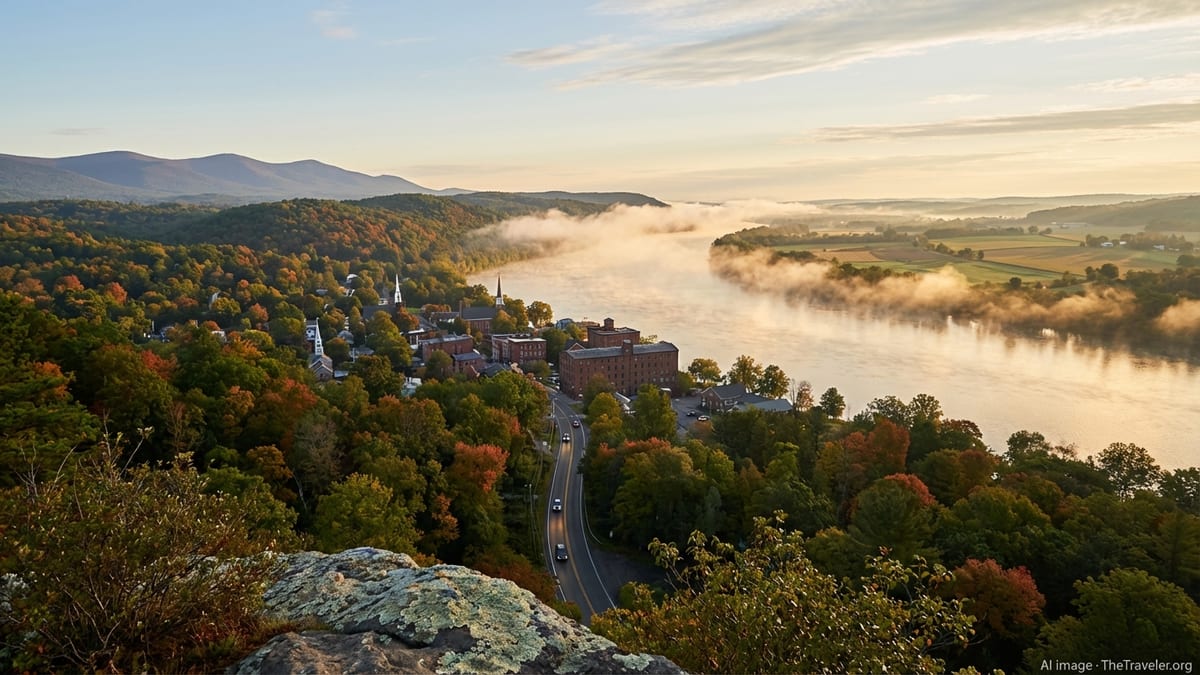
North of New York City, the Hudson Valley follows the broad sweep of the Hudson River from suburban counties into a corridor of farms, forested hills, riverside villages, and former industrial hubs that are reshaping themselves through arts, food, and heritage tourism. Designated as the Hudson River Valley National Heritage Area, the region highlights historic sites tied to the American Revolution and the early industrial era, as well as the landscapes that inspired the 19th century Hudson River School painters.
Visitors gravitate to riverfront towns such as Beacon, Hudson, Kingston, Cold Spring, and Poughkeepsie, where 19th century brick warehouses now house galleries, cafes, and design shops. Scenic overlooks and trail networks line both sides of the river, while estates such as those once owned by political dynasties and business magnates tell the story of wealth, power, and conservation in the region. Culinary destinations, from farm restaurants to cider houses and small urban breweries, showcase the valley’s agricultural revival.
In recent years, the Hudson Valley has become a weekend escape for many New York City residents, which means that summer and fall foliage weekends can be busy in popular hotspots. Travelers willing to explore inland from the river will find quieter farmland, small hamlets with classic main streets, and lesser known trailheads in the Shawangunk Ridge and Taconic foothills. Planning ahead for lodging, keeping an eye on seasonal festivals, and stretching stays over weekdays can help visitors experience the valley with less crowding.
For those interested in thematic travel, the state’s Path Through History program ties together many historic sites in the Hudson Valley and beyond, from Indigenous history and colonial forts to industrial infrastructure and civil rights landmarks. Following one of these interpretive themes can add a layer of context to river journeys, especially for travelers combining museum visits with outdoor stops.
Catskills and Capital Region: Mountains, Small Towns, and a Working Capital
West of the Hudson, the Catskill Mountains rise in a series of forested peaks and valleys, protected in large part by Catskill Park, a state designated preserve created in the 19th century. The park’s mix of public forest and private inholdings creates a patchwork of hamlets, hiking areas, ski resorts, and reservoirs that supply drinking water to New York City. Classic resort towns have evolved into year round outdoor hubs where hiking, skiing, and fishing share space with farm to table dining and independent arts venues.
Today, the Catskills balance a long history as a retreat for downstate visitors with a growing community of full time residents who run outdoor guide services, small inns, breweries, and creative businesses. Areas near Hunter and Windham ski areas see strong winter traffic, while trailheads to peaks and waterfalls fill up quickly in July, August, and October. Travelers who are flexible can aim for shoulder season weekdays, explore less publicized trail networks, or base themselves in quieter valleys like the western Catskills to experience the landscape with more breathing room.
Just to the north and east lies the Capital Region, centered on Albany, the state capital, and the historic cities of Troy, Schenectady, and Saratoga Springs. Albany’s location at the confluence of river routes and the Erie Canal made it a strategic hub long before it formally became the capital in 1797. Today, the region blends state government, universities, and an emerging technology sector with 19th century streetscapes and museums that explore New York’s political and industrial history.
Saratoga Springs adds another layer to the Capital Region story, with a long running reputation for mineral springs, Victorian architecture, and horse racing. The summer racing season draws national attention, but the city also functions as a year round base for excursions to the southern Adirondacks and the upper Hudson Valley. In surrounding counties, small towns, farm country, and the Upper Hudson wine region offer a quieter counterpoint to the state government bustle just down the Thruway.
Adirondacks and North Country: Wilderness, Lakes, and Borderlands
Farther north, the Adirondack region encompasses one of the largest protected park areas in the continental United States. Adirondack Park covers around six million acres in a mix of public forest preserve and private land, stitched together by small towns, lakeside communities, and long stretches of forested highway. The park’s size allows for everything from roadside short hikes and family resorts to multi day backcountry trips and paddling routes across linked lakes and rivers.
Tourism is a core part of the Adirondack economy, with recent reports indicating that visitor spending in the region continues to rise in the mid 2020s. That influx supports local jobs but also places pressure on fragile mountain and lake ecosystems. Travelers will encounter ongoing efforts to manage parking at popular trailheads, encourage Leave No Trace practices, and spread visitation across lesser known areas. Planning ahead by checking local information on trail conditions, shuttle systems, and seasonal closures helps visitors explore responsibly.
Within the park, destinations such as Lake Placid, Saranac Lake, Tupper Lake, Lake George, and Old Forge each have their own character. Lake Placid, twice host to the Winter Olympics, mixes sports heritage with a busy main street and access to the High Peaks. Lake George combines deep lake scenery with a dense strip of family attractions, boat tours, and campgrounds. Smaller communities in the central and western Adirondacks appeal to travelers looking for quieter lakes, classic lodges, and dark skies.
Beyond the formal boundary of the park, the broader North Country stretches to the Canadian border, Lake Champlain, and the Saint Lawrence River. This largely rural region includes Fort Drum, agricultural areas, and small cities like Watertown and Plattsburgh, along with the Thousand Islands archipelago in the Saint Lawrence. Cross border connections with Ontario and Quebec influence everything from local radio stations to grocery shelves, and visitors can sense this borderland character in bilingual signage, historic forts, and riverfront towns that look out toward Canada.
Finger Lakes and Central New York: Water, Wine, and College Towns
South and west of Syracuse, the Finger Lakes region is shaped by long, narrow glacial lakes stretching roughly north to south, framed by vineyards, orchards, waterfalls, and college towns. Lakes such as Cayuga, Seneca, Keuka, Canandaigua, Skaneateles, and others create a patchwork of microclimates that support a substantial wine industry, particularly cool climate varieties like Riesling. Officially recognized wine regions and individual lakeside wine trails give travelers structured ways to explore tasting rooms, farm stands, and lake views.
Towns including Ithaca, Geneva, Auburn, Penn Yan, and Watkins Glen serve as gateways to the lakes. Ithaca, home to universities and a strong arts scene, offers access to gorges and state parks with steep waterfalls, along with independent bookstores, cafes, and live music venues. Watkins Glen combines a dramatic gorge trail with a deep water harbor on Seneca Lake and an auto racing heritage. Each community presents a slightly different mix of outdoor access and cultural life, making the region attractive for travelers who like to balance hiking or boating with dining and performance.
Central New York anchors the northern fringe of the Finger Lakes with Syracuse and a ring of smaller communities. Here, the Erie Canal story is especially visible in canal towns, towpaths converted to trails, and locks that still function as working infrastructure. Museum exhibits, interpretive centers, and canal side public spaces highlight how the canal once tied New York City to the interior of the continent and accelerated the state’s economic growth. For modern visitors, canal paths now offer level cycling routes that link parks, villages, and urban neighborhoods.
Weather in the Finger Lakes and Central New York is strongly shaped by lake effect patterns, which bring heavy winter snow but also contribute to the moisture that supports vineyards and forests. Travelers visiting outside summer should be ready for fast changing conditions, from lake fog to sudden spring or fall storms. In return, they gain access to quieter tasting rooms, uncrowded trails, and the atmospheric appeal of off season lakeside towns.
Thousand Islands, Great Lakes Shorelines, and Western New York
Along the northern and western edges of the state, New York meets the inland seas of Lake Ontario and Lake Erie, as well as the Saint Lawrence River. The Thousand Islands region spreads across the Saint Lawrence between New York and Ontario, with forested islands, shoreline castles, lighthouses, and small harbor towns. Seasonal boat tours, paddling routes, and fishing draw visitors from late spring through fall, when the navigation season is open and weather is relatively stable.
Moving west along Lake Ontario, travelers encounter ports and lakeside communities that once depended on shipping, shipbuilding, and commercial fishing. Today, these towns mix marinas, beaches, and lakefront parks with museums that interpret maritime history. Prevailing winds can make the shoreline feel dramatically different from inland areas on any given day, with cooler temperatures in summer and intense lake effect snow in winter. Checking local conditions is especially important for boaters and paddlers on these large, often choppy waters.
Farther west, the Buffalo Niagara region bridges Lake Erie, the Niagara River, and the famous falls that straddle the international border. Niagara Falls remains one of the most visited natural attractions in the state, with viewpoints, boat tours, and parks on both the New York and Ontario sides. Nearby Buffalo has gained renewed attention for its early 20th century architecture, waterfront redevelopment, and evolving food scene, including neighborhoods with strong Central and Eastern European influences.
Inland from the Great Lakes shoreline, Western New York and the Southern Tier include Rochester, the Genesee River valley, rolling hills, and former industrial towns now marketing themselves through arts, festivals, and outdoor recreation. Waterways, including the Erie Canal and tributaries feeding the lakes, link many of these communities. For travelers who have only seen New York through the lens of Manhattan, Buffalo and Rochester provide a different urban experience: smaller scale, deeply tied to manufacturing history, and surrounded by countryside rather than suburban sprawl stretching for hours.
Planning Your Journey: Seasons, Routes, and Responsible Travel
Because New York State extends from the Atlantic Ocean almost to the Great Lakes and Canadian border, travel logistics and timing matter. Winter lasts longer in the Adirondacks and Tug Hill than in the Hudson Valley or Long Island. Spring can be muddy in mountain regions and along unpaved roads, while summer brings dense foliage, warm swimming waters, and the height of crowding in popular lake and mountain areas. Autumn foliage, particularly in the Catskills, Adirondacks, and Finger Lakes, draws heavy weekend traffic, making advance reservations and flexible schedules essential.
Most visitors explore beyond NYC by car, which offers the flexibility to move between regions and follow scenic byways along rivers, lakes, and ridge lines. Major interstates link New York City to Albany, Syracuse, Rochester, and Buffalo, while state routes branch off into valleys, small towns, and park interiors. Train service runs along the Hudson River between New York City and Albany and continues toward the North Country and Western New York, providing alternatives to driving along some corridors. Buses fill in gaps, especially between larger cities and college towns.
Responsible travel has become a priority across the state, particularly in regions where visitation has grown faster than local infrastructure. Local organizations emphasize staying on marked trails to protect fragile alpine vegetation in the Adirondacks, respecting private land boundaries in Catskill and farm regions, and observing carry in, carry out principles around lakes and rivers. Supporting locally owned accommodations, restaurants, and outfitters spreads the economic benefits of tourism more widely and helps sustain small communities through the off season.
Travelers should also stay alert to changing conditions and regulations. Trail closures for maintenance or habitat protection, parking limits at popular natural sites, and seasonal restrictions on certain activities are increasingly common, particularly in high use mountain corridors. Checking regional tourism sites, park agencies, or local visitor centers shortly before departure can provide up to date information on access, safety advisories, and opportunities to join guided experiences that deepen understanding of a place.
The Takeaway
Exploring New York State beyond New York City reveals how varied the state’s environments and communities really are. Within a day’s travel of the city, visitors can walk Revolutionary War battlefields, hike rugged peaks, sip wine above glacial lakes, watch freighters slip past riverfront towns on their way to the ocean, or wander brick lined streets that reflect centuries of migration and industry. Each region offers its own combination of landscape and culture, inviting repeat trips and deeper exploration over time.
For travelers willing to look past the iconic skyline, New York becomes not a single destination but a constellation of places: the Hudson Valley’s river towns and orchards, the Catskills’ forested ridges, the Adirondacks’ far reaching wilderness, wine country in the Finger Lakes, canal cities in Central New York, and lakeshore communities brushing against Canada. Moving between them, visitors gain a richer understanding of how geography, history, and people have shaped the Empire State.
Choosing where to start depends on personal interests, the season, and how much time is available. What remains constant is the opportunity to experience an unexpectedly diverse state, where each bend in the road or river uncovers another layer of story. Beyond New York City, New York State proves itself as a destination worthy of dedicated journeys rather than a backdrop to a single famous metropolis.
FAQ
Q1. How many days should I plan for a New York State trip beyond NYC?
For a first visit focused on one or two regions, five to seven days is usually enough to see highlights without feeling rushed. Longer trips allow time to combine multiple regions, such as the Hudson Valley and Catskills or the Finger Lakes and Buffalo Niagara.
Q2. Do I need a car to explore regions outside New York City?
A car offers the most flexibility, especially in rural areas and parks. Some corridors, such as the Hudson River and major cities like Albany, Syracuse, Rochester, and Buffalo, can be reached by train or bus, but reaching trailheads, small towns, and lakeside areas usually requires driving or joining local tours.
Q3. When is the best time of year to visit the Adirondacks or Catskills?
Summer and early autumn are the most popular, with warm weather and full services. Late September and October bring vivid foliage but also heavier crowds on peak weekends. Spring can be quieter but muddy at higher elevations, while winter appeals to skiers, snowshoers, and snowmobilers who are prepared for cold, snowy conditions.
Q4. Are the Finger Lakes suitable for families with children?
Yes. Many lakes have gentle shorelines, public parks, and boat tours suitable for families, while nearby towns offer museums, farm visits, and ice cream stops. Trail choices range from short, well maintained gorge walks to longer hikes, so it is easy to match activities to children’s ages and energy levels.
Q5. How can I travel responsibly in popular natural areas?
Stay on marked trails, pack out all trash, respect posted rules and seasonal closures, and avoid trampling vegetation at overlooks or along shorelines. Consider visiting lesser known sites, traveling midweek, and supporting local conservation groups or guided outings that reinvest in protecting the landscapes you enjoy.
Q6. Is it feasible to visit Niagara Falls and the Finger Lakes on the same trip?
It is possible on a weeklong itinerary, especially with a rental car. Many travelers spend two or three days around Buffalo and Niagara Falls, then drive several hours east to base themselves near one of the major Finger Lakes for wine tasting, hiking, and lake activities.
Q7. What should I know about winter travel in Upstate New York?
Winter conditions can be severe, particularly in the Adirondacks, Tug Hill Plateau, and lake effect snow belts near the Great Lakes. Drivers should be comfortable with snow and ice, check forecasts frequently, and leave extra time for travel. The reward is access to ski resorts, ice fishing, and quiet winter landscapes if properly equipped.
Q8. Are there good options for travelers without outdoor experience?
Yes. Many regions offer accessible attractions such as historic sites, museums, river cruises, winery tours, and short, paved or well graded paths to viewpoints and waterfalls. Staying in small cities or larger towns provides easy access to dining and culture while keeping day trips to nearby parks manageable.
Q9. How far in advance should I book lodging in popular regions?
For peak summer, autumn foliage, and major event weekends, booking several months in advance is wise in places like the Adirondacks, Catskills, Saratoga Springs, and the Finger Lakes. Shoulder seasons and weekdays often offer more flexibility, but even then, reserving at least a few weeks ahead helps secure preferred locations and price ranges.
Q10. Can I combine New York City with Upstate destinations in one trip?
Many travelers do. A common pattern is to spend several days in New York City, then rent a car or take a train to the Hudson Valley, Capital Region, or beyond. Building in a buffer day between city time and more rural exploring helps with the transition in pace and logistics.