

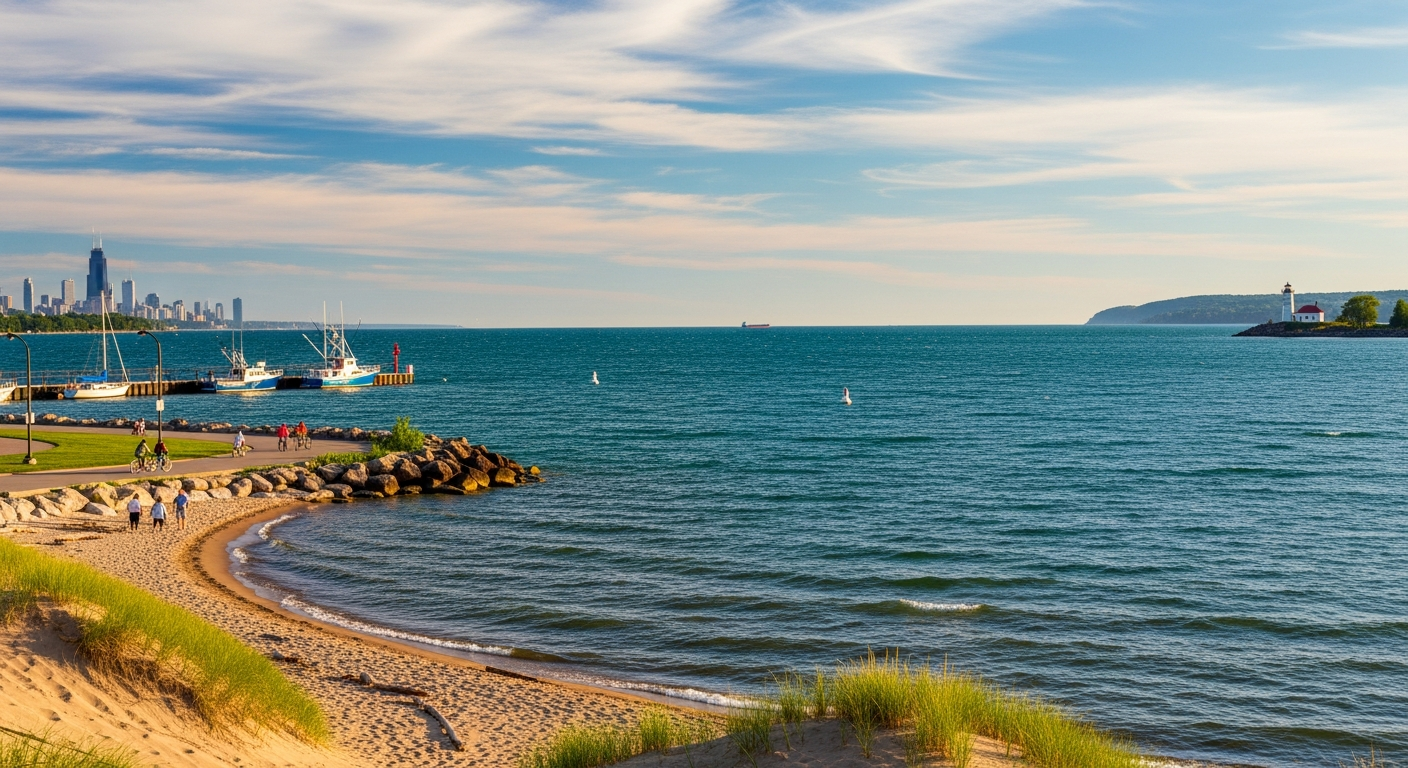
The Great Lakes form the largest body of fresh water on Earth, touching eight U.S. states and a sizeable stretch of Canada. For travelers, they offer inland seas with ocean-style horizons, sandy beaches, dune systems, islands, sophisticated cities, and quiet harbor towns.
This guide focuses on where to go, what to see, and how to plan a trip around all five lakes with the most up-to-date perspective.
Getting to Know the Five Great Lakes
Before choosing destinations, it helps to understand the character of each lake. Though interconnected, they differ in mood, shoreline, and style of travel. Thinking of them as five distinct regions makes trip planning more intuitive and helps you match your itinerary to the experiences you want, from big-city energy to remote backcountry paddling.
Lake Superior: The Wild North
Colder, deeper, and more remote than the others, Lake Superior rewards travelers who appreciate wild shorelines and fewer crowds. Northern Minnesota, Wisconsin’s Bayfield Peninsula, and Michigan’s Upper Peninsula hug its rocky coasts, with dense forests, waterfalls, and high cliffs plunging into clear water.
Key draws include the Apostle Islands in Wisconsin, the rugged North Shore east of Duluth, Minnesota, and Michigan’s Pictured Rocks and Keweenaw Peninsula. Conditions can change quickly on Superior, so trip plans involving paddling, boating, or winter visits should build in flexibility and respect for the weather.
Lake Michigan: Beaches and Dunes
Lake Michigan combines wide sand beaches and tall dunes with some of the region’s most charming resort towns. The eastern shore in Michigan is especially notable for its chain of beach communities and national lakeshore scenery, while the Wisconsin side blends maritime heritage with quieter beaches and agricultural landscapes.
Chicago and Milwaukee bracket the southern end with major cultural attractions, while more relaxed options unfold as you head north to places like Door County, Wisconsin, and the Sleeping Bear Dunes region of northwest Michigan.
Lake Huron: Islands, Lighthouses, and Quiet Shores
Lake Huron is defined by intricate shorelines and island-studded waters. The Straits of Mackinac area is its most famous gateway, with ferry routes to Mackinac Island and access to historic forts and lighthouses. Farther north, Huron’s North Channel and Georgian Bay (on the Canadian side) are among North America’s top cruising and paddling destinations.
Michigan’s sunrise coast offers smaller communities, state parks, and dark-sky areas, making Huron ideal for travelers who want scenery and history without city traffic or heavy resort development.
Lake Erie: Wineries, Islands, and Short Getaways
Shallower and generally warmer than the other Great Lakes, Lake Erie lends itself to classic summer getaways. Its southern shorelines in Ohio, Pennsylvania, and New York feature beaches, fishing communities, and a major wine region, while the western end near Toledo and Sandusky offers islands and amusement parks.
Because of its relatively compact size and proximity to major highways, Erie is a favorite for long weekends, especially for visitors from the Midwest, Ontario, and the Northeast.
Lake Ontario: Urban Waterfronts and Niagara Gateway
Lake Ontario mixes big-city waterfronts with pastoral wine country and access to Niagara Falls. Toronto anchors the northern shore, while the U.S. side from Rochester to the Thousand Islands area has a quieter, small-town feel, dotted with lighthouses and state parks.
Travelers often combine Ontario with broader itineraries that include Niagara, central New York, or eastern Canada, using the lake as a scenic backdrop for road trips and rail journeys.
Iconic Destinations on Each Lake
The Great Lakes region is too large to see in a single trip, so identifying standout hubs is a useful starting point. The following destinations represent some of the most compelling bases for first-time and return visitors, with a mix of scenery, culture, and access to outdoor experiences.
Chicago, Illinois (Lake Michigan)
Chicago offers a full-scale urban escape right on the shore of Lake Michigan. A miles-long lakefront path connects beaches and parks to the downtown skyline, while architectural boat tours reveal how closely the city is tied to its waterways.
Beaches such as North Avenue and Oak Street are within minutes of major museums and shopping districts, making it easy to combine culture, dining, and time on the water in a single day. Summer brings frequent lakefront festivals and outdoor concerts.
Sleeping Bear Dunes and Traverse City, Michigan (Lake Michigan)
Sleeping Bear Dunes National Lakeshore, near Traverse City, has become one of the signature stretches of Lake Michigan shoreline, with high dunes dropping steeply toward intense blue water. Scenic drives, short overlooks, and longer hikes offer options for all ability levels.
Traverse City, about 30 to 40 minutes away, serves as the main service hub with lodging, restaurants, and access to wine trails on the Old Mission and Leelanau peninsulas. Summer and early fall are peak seasons, especially when lake temperatures are more swim-friendly.
Mackinac Island, Michigan (Lakes Huron and Michigan)
Mackinac Island sits in the straits where Lakes Huron and Michigan meet and remains one of the Great Lakes’ most distinctive destinations. The island is largely car-free, with visitors getting around by bicycle, horse-drawn carriage, or on foot.
Highlights include the cliff-top Fort Mackinac, limestone formations such as Arch Rock, and 19th-century hotels that recall the region’s early tourism boom. Travelers booking ferry tickets or attraction passes should purchase directly from official operators to avoid third-party resellers that have recently drawn scrutiny from state regulators for deceptive practices.
Duluth and the North Shore, Minnesota (Lake Superior)
Duluth marks the start of Minnesota’s North Shore, a drive that follows Lake Superior through a string of state parks, waterfalls, and cliff-top overlooks. The city’s shipping canal, maritime museum, and busy harbor give visitors a sense of the working Great Lakes.
From Duluth, travelers can follow Highway 61 northeast toward Gooseberry Falls, Split Rock Lighthouse, and Grand Marais, with opportunities for hiking, cycling, and winter sports. The route works well as a three to five day trip when combined with inland detours to the Boundary Waters region.
Pictured Rocks National Lakeshore, Michigan (Lake Superior)
Pictured Rocks, on Michigan’s Upper Peninsula, showcases some of the most dramatic coastal scenery in the Great Lakes region. Multicolored sandstone cliffs, sea caves, and waterfalls dominate this stretch of Lake Superior.
Sightseeing cruises from Munising provide the most accessible views of the cliffs, though experienced paddlers can also explore sea caves by kayak in suitable conditions. Trails offer access to overlooks and backcountry camping for visitors willing to hike beyond the main viewpoints.
Apostle Islands National Lakeshore, Wisconsin (Lake Superior)
Off northern Wisconsin’s Bayfield Peninsula, Apostle Islands National Lakeshore protects 21 islands and 12 miles of mainland shoreline on Lake Superior. The area is known for sea caves, red sandstone cliffs, historic lighthouses, and relatively undeveloped beaches, along with a recent emphasis on managing visitor access and safety.
Most visitors base in Bayfield, where sightseeing boats and water taxis provide access to various islands. Summer is the main season for paddling and camping, while occasional winter cold snaps can create ice formations along the mainland caves, though authorities now closely monitor and often restrict access when ice conditions are unstable.
Door County, Wisconsin (Lake Michigan)
Door County occupies a long peninsula that separates Green Bay from Lake Michigan and is often compared to New England for its mix of harbor towns, orchards, and historic lighthouses. The shoreline alternates between rocky bluffs and pocket beaches, with several state parks protecting scenic headlands and coves.
Fishing villages such as Fish Creek, Ephraim, and Sister Bay provide galleries, performance venues, and a growing food scene, making Door County suited to travelers who prefer a slower-paced, multi-day stay in one region rather than a point-to-point road trip.
Lake Erie Islands and Shores, Ohio (Lake Erie)
Ohio’s Lake Erie shore is anchored by a cluster of islands and waterfront towns that cater to summer crowds. Ferries run to destinations such as South Bass Island, home to Put-in-Bay, which blends historic sites and boating marinas with a lively bar and music scene in high season.
On the mainland, communities like Sandusky and Port Clinton offer family-friendly beaches, fishing charters, and connections to the region’s large amusement and water parks. Because of Erie’s relatively warm water, swimming and boating seasons are often longer here than on the upper lakes.
Niagara and the Lake Ontario Shore, New York (Lake Ontario)
Lake Ontario forms the eastern backdrop for visits to Niagara Falls and the surrounding wine regions. While the falls themselves pull the biggest crowds, continuing along the lake toward Rochester and the Thousand Islands reveals a quieter side of the shoreline.
State parks and small harbor towns offer swimming, fishing, and paddling, while nearby countryside supports vineyards, orchards, and cycling routes. Travelers can use cities such as Rochester or Kingston (on the Canadian side) as gateways to explore both lakefront and inland attractions.
Top Natural Wonders of the Great Lakes
From dune systems and sea caves to dark-sky preserves, the Great Lakes offer scenery that rivals coastal and mountain destinations. The following natural areas highlight the diversity of landscapes within the region and make strong anchors for outdoor-focused itineraries.
Sleeping Bear Dunes National Lakeshore, Michigan (Lake Michigan)
Sleeping Bear Dunes remains one of the best-known natural sites on the Great Lakes, and its popularity continues to grow. Massive sand dunes rise more than 400 feet above Lake Michigan, offering wide views and dramatic sunsets.
Visitors can tackle the famous dune climb, follow the Pierce Stocking Scenic Drive to numerous overlooks, or opt for quieter trails through forests and wetlands that back the dune fields. Nearby Glen Arbor and Empire provide lodging, restaurants, and outfitter services, making the area easy to access for families.
First Street Beach, Manistee, Michigan (Lake Michigan)
First Street Beach in Manistee has recently drawn national attention in annual rankings of Michigan’s top beaches, recognized for its wide sandy shoreline, relatively calm surf, and family-friendly facilities such as volleyball courts, picnic areas, and nearby dog-friendly spaces.
Located along Lake Michigan’s central coast, the beach is part of a broader stretch of shoreline where visitors can combine time in the water with visits to lighthouses, riverwalks, and small downtown districts. The region works well as an alternative to more heavily visited resort areas farther north.
Apostle Islands Sea Caves, Wisconsin (Lake Superior)
The sea caves along the Apostle Islands’ mainland and several outlying islands are among Lake Superior’s signature formations. In summer, paddlers can weave through arched tunnels and wave-carved recesses on calm days, while sightseeing cruises pass along cliff-lined stretches.
In winter, when conditions occasionally allow solid ice to form, the same cliffs become covered with icicles and frozen waterfalls. However, fluctuating temperatures and safety concerns now mean that access is only permitted when specialists confirm stable ice, and in many years the caves remain closed to foot traffic for the entire season.
Pictured Rocks Cliffs and Beaches, Michigan (Lake Superior)
Along more than 40 miles of Lake Superior shoreline, Pictured Rocks alternates between sheer cliffs, sand beaches, and dunes. Minerals seeping through sandstone create streaks of orange, red, and green on the rock faces, giving the lakeshore its name.
Because of Superior’s cold water and quickly changing conditions, many visitors choose boat tours that keep a safe distance from the cliffs. For those who want solitude, interior trails and backcountry campsites provide quieter experiences away from the main viewpoints.
Lake Huron Dark-Sky Shores, Michigan
Several stretches of Lake Huron’s shoreline retain relatively low levels of light pollution, making them attractive to stargazers. State-designated dark-sky preserves and lightly developed parks provide wide views over open water, with opportunities to see the Milky Way on clear nights.
On some autumn and spring nights, visitors along the northern and eastern shores occasionally report low-latitude aurora displays when geomagnetic conditions are favorable. Travelers interested in night sky tourism should plan for flexible schedules and check short-term forecasts rather than relying on any guaranteed viewing.
Cities, Culture, and Historic Harbors
While many visitors gravitate toward beaches and parks, the Great Lakes are also rich in maritime history, Indigenous culture, and port cities. Combining urban stops with quieter coastal towns offers a well-rounded picture of the region.
Maritime Museums and Lighthouses
Lighthouses remain some of the most photographed structures on the Great Lakes, and many have been restored for tours. Along Lake Huron, lights such as Fort Gratiot, Tawas Point, Presque Isle, and Sturgeon Point interpret the challenges of early navigation on shallow, reef-studded shores.
On other lakes, visitor centers and museums in cities like Duluth, Milwaukee, and Toledo highlight the role of shipping, fishing, and shipbuilding in shaping local economies. These stops are particularly useful for understanding how the lakes function as working waterways rather than just recreational areas.
Indigenous Heritage and Cultural Sites
The Great Lakes sit within the homelands of numerous Indigenous nations, including Ojibwe, Odawa, Potawatomi, Haudenosaunee, and others. Historic and contemporary communities border major stretches of shoreline, and cultural centers, powwows, and artisan markets offer opportunities for respectful engagement.
Travelers should look for tribally run museums, guided walks, and educational programs near parks and islands, especially around Lake Superior and Lake Huron. Supporting Indigenous-owned businesses and following local guidance on accessing sacred or culturally sensitive sites are important parts of responsible travel in the region.
Harbor Towns and Waterfront Districts
Small harbor towns are among the Great Lakes’ biggest assets. Communities from Michigan’s Ludington and Charlevoix to Wisconsin’s Bayfield and Ohio’s Vermilion pair marinas and working docks with walkable main streets, local restaurants, and seasonal festivals.
Many of these towns maintain waterfront paths or boardwalks that allow visitors to watch freighters, fishing boats, and recreational craft. Even brief overnight stops can reveal local traditions, from fish boils and cherry festivals to tall ship events and waterfront concerts.
Planning Your Great Lakes Road Trip
Covering all five lakes in one trip is ambitious, but travelers can craft focused routes around one or two lakes or follow longer loops that connect key highlights. Whether you drive, pair rail and rental cars, or use ferries to link peninsulas and islands, it pays to think through timing, distances, and seasonal patterns.
Classic Great Lakes Itineraries
Three to five day trips work well around a single region, such as:
- Lake Michigan’s northwest coast, linking Manistee, Sleeping Bear Dunes, and Traverse City
- Lake Superior’s Minnesota shore from Duluth to Grand Marais, with side hikes to waterfalls and overlooks
- The Straits of Mackinac and Lake Huron’s sunrise coast, combining Mackinac Island with scenic state parks
- Lake Erie’s western basin, including island visits and coastal towns around Sandusky and Port Clinton
For longer journeys, travelers sometimes attempt a full circle of Lake Superior or Lake Michigan, allowing at least a week to ten days to avoid rushed drives and to account for weather days.
Best Seasons to Visit
Summer remains the peak season on all five lakes, with July and August offering the warmest water and most reliable conditions for swimming and boating. This also means higher prices and busier trails and ferries, especially on weekends and around holiday periods.
Late spring and early fall are often ideal for hiking, cycling, and scenic drives, with cooler temperatures and more available accommodations. Fall color can be spectacular in northern Michigan, Wisconsin, Minnesota, and Ontario, though some seasonal businesses and ferry routes reduce schedules after mid-October.
Winter travel appeals mainly to visitors interested in snow sports, wildlife tracking, or quiet coastal retreats. While images of frozen shorelines and ice caves can be iconic, actual access depends heavily on current ice and weather conditions, which can vary significantly from year to year.
Transportation and Ferries
Most Great Lakes visitors travel by car, which provides maximum flexibility for accessing smaller towns and parks. Major interstate corridors connect Chicago, Detroit, Cleveland, Buffalo, Minneapolis, and Toronto, with smaller highways linking coastal communities.
Car ferries play an important role in some itineraries. Services across Lake Michigan and to islands like Mackinac and South Bass Island can save drive time and add variety to a trip. Because schedules vary by season and weather, travelers should verify current timetables and book in advance for peak dates.
Lodging Options and Reservations
Lodging along the Great Lakes ranges from major hotels in cities to vintage motels, campgrounds, and vacation rentals in smaller communities. National and state parks often operate campgrounds near beaches and trailheads, though they typically require advance reservations in popular areas.
In recent years, high demand has pushed some summer travelers to book key destinations six months or more in advance, especially for weekends, festivals, and holiday weeks. Those who prefer spontaneity may find more options midweek, outside peak season, or in inland towns a short drive from the water.
Outdoor Activities on the Great Lakes
Whether you are a casual beachgoer or a dedicated backcountry paddler, the Great Lakes support a wide spectrum of outdoor activities. Understanding local conditions and matching them to your experience level is essential, particularly on the colder and more remote lakes.
Hiking and Biking
Trail networks hug many parts of the shoreline, from short boardwalks and beach accesses to long-distance routes that trace cliffs and dunes. Some of the most popular hiking areas include the dune and bluff trails at Sleeping Bear Dunes, cliff-top paths at Pictured Rocks, and state parks along Lake Michigan and Lake Superior.
Cycling ranges from paved rail-trails and urban lakefront paths to quiet county roads and mountain bike networks in forested areas. Visitors should check local maps and park advisories for route conditions, as sections can be affected by erosion, high water, or seasonal maintenance.
Paddling and Boating
Paddling on the Great Lakes can be rewarding but requires caution. Protected bays, inland waterways, and short shoreline segments are suitable for newer paddlers, while exposed coastlines and island crossings are best left to experienced sea kayakers with appropriate gear and safety training.
Powerboaters and sailors can explore island chains, harbor towns, and river mouths that connect directly to the lakes. Marina networks, lock systems, and established cruising guides help boaters plan multi-day or multi-week voyages, particularly around Lake Huron’s North Channel, Lake Michigan’s islands, and Lake Superior’s northern reaches.
Beaches and Swimming
Despite their northern latitude, the Great Lakes offer beaches that feel distinctly coastal in summer, with fine sand and clear water. Lake Michigan and Lake Erie generally warm earliest and to the highest temperatures, especially in shallow bays and near river mouths.
Swimmers should remain aware of rip currents, variable water temperatures, and local advisories related to waves and water quality. Many popular beaches post daily flags or notices to indicate conditions and lifeguard presence.
Fishing and Wildlife Watching
Recreational fishing is a longstanding tradition on all five lakes, targeting species such as salmon, trout, walleye, and perch, depending on location and season. Charter operations in cities and small ports help visitors without their own equipment or boats access offshore waters.
Birdwatchers find rich opportunities during migration seasons, particularly at marshes, river mouths, and island stopovers. Shorelines and nearshore forests support bald eagles, loons, and other emblematic species of the northern lakes, while wetlands shelter herons, ducks, and songbirds.
The Takeaway
The Great Lakes form a vast, varied travel region that can support everything from quick weekend escapes to multi-week road trips. Understanding the distinct personalities of each lake, focusing on a few key hubs and natural highlights, and planning with seasons and conditions in mind will help you get the most out of a visit.
From islands and lighthouses to working harbors and rugged national lakeshores, the region rewards those who slow down and explore beyond a single viewpoint or beach. For many travelers, an initial trip to a marquee destination like Sleeping Bear Dunes, Mackinac Island, or the Apostle Islands sparks a longer-term fascination that brings them back to discover new stretches of shoreline year after year.
FAQ
Q1. How many Great Lakes are there and which states do they touch?
There are five Great Lakes: Superior, Michigan, Huron, Erie, and Ontario. Together they border Minnesota, Wisconsin, Illinois, Indiana, Michigan, Ohio, Pennsylvania, and New York on the U.S. side, along with the Canadian province of Ontario.
Q2. What is the best time of year to visit the Great Lakes?
Late June through early September offers the warmest weather and best swimming conditions, though it is also the busiest. May, early June, late September, and early October are excellent for hiking, cycling, and scenic drives with fewer crowds, while winter appeals mainly to visitors interested in snow sports or quiet retreats.
Q3. Can you swim safely in the Great Lakes?
Yes, swimming is common at designated beaches, especially on Lakes Michigan and Erie, but visitors should respect posted advisories, watch for rip currents, and be aware that water can remain cold, particularly on Lake Superior and in early summer.
Q4. Do I need a car to explore Great Lakes destinations?
A car offers the greatest flexibility, especially for reaching smaller towns and parks. Major cities have public transit and some regional bus or train connections, but many of the most scenic stretches of shoreline and trailheads are easiest to reach by driving.
Q5. Are there ferries that connect different Great Lakes regions?
Yes, several ferry routes operate on the Great Lakes, including services across Lake Michigan and to islands such as Mackinac, South Bass, and others. Schedules and capacities vary by season, so it is wise to check current timetables and reserve in advance for peak travel dates.
Q6. How cold is Lake Superior compared with the other lakes?
Lake Superior is generally the coldest of the five, with surface temperatures that often remain chilly even in late summer. Many people limit their swimming there to brief dips, while reserving longer swims for warmer lakes or sheltered bays.
Q7. Are Great Lakes storms really dangerous for boaters and paddlers?
Storms on the Great Lakes can build quickly and generate large waves, strong winds, and reduced visibility, which can be hazardous for small craft. Boaters and paddlers should monitor marine forecasts, stay within their skill level, and avoid exposed routes when conditions are unstable.
Q8. What should I pack for a summer Great Lakes road trip?
Pack layers for changeable weather, a light jacket or fleece even in July, sturdy footwear for trails, sun protection, swimwear, insect repellent, and a dry bag or waterproof cases if you plan to be on or near the water. Advance reservations and printed or downloaded maps are also helpful in areas with limited connectivity.
Q9. Are there any health or environmental concerns travelers should know about?
Visitors should pay attention to local advisories about beach water quality, harmful algal blooms, and trail or road closures. Staying on marked paths, respecting wildlife, and reducing plastic and other waste help protect the lakes’ ecosystems for future travelers and residents.
Q10. Can I visit all five Great Lakes in one trip?
It is possible to see all five in a single extended road trip, but distances are significant and rushing can reduce the experience. Many travelers find it more satisfying to focus on one or two lakes per trip, returning in later years to explore new sections of shoreline.