

More news on this day
A massive explosion reported near the coast of Sharjah has sent shockwaves through one of the world’s busiest maritime corridors, leaving at least one commercial vessel damaged, its crew reported safe and regional authorities issuing urgent warnings to ships transiting the surrounding Gulf waters.
Get the latest news straight to your inbox!
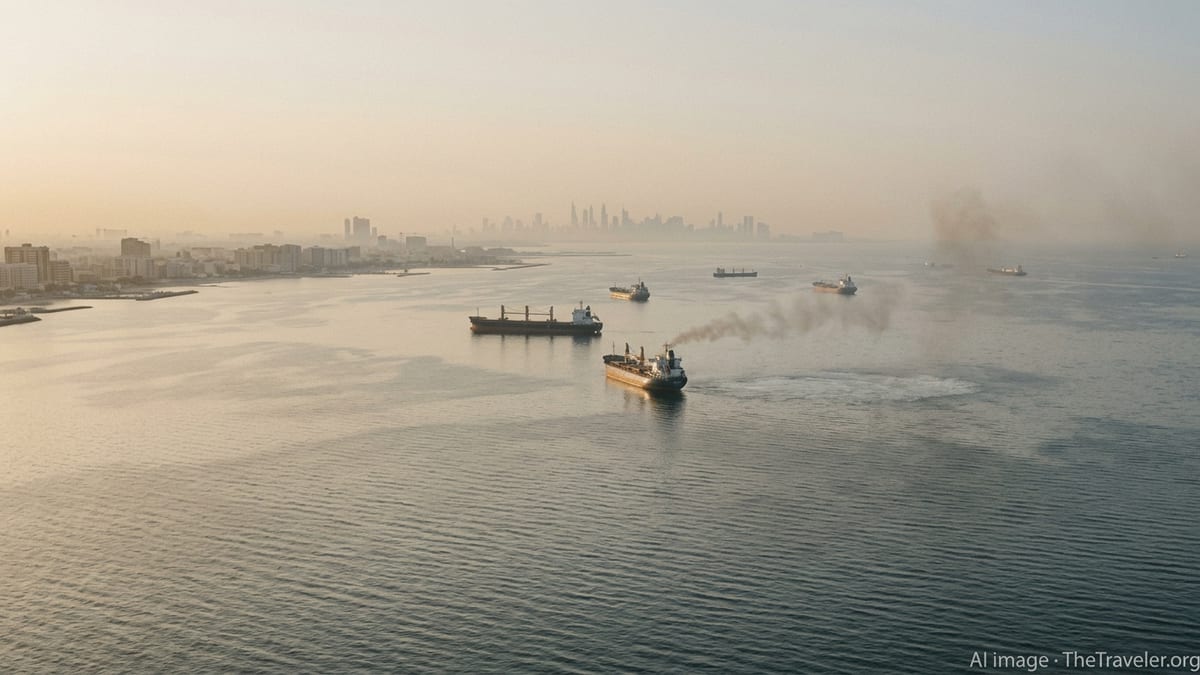
Blast Reported Off UAE Coast Near Sharjah
Publicly available maritime security reports describe an explosion in close proximity to a bulk carrier operating in the approaches to Sharjah, on the United Arab Emirates’ northern coastline. The incident occurred in international waters in the wider Gulf of Oman and Strait of Hormuz region, an area already on heightened alert amid ongoing tensions affecting commercial shipping.
According to recent advisories circulated to shipowners and operators, an unidentified projectile detonated near a merchant vessel approximately 35 nautical miles west of Sharjah. The blast produced a visible plume of smoke and was powerful enough for the crew to report a loud explosion and a shockwave, but early indications suggest the ship itself avoided catastrophic structural damage.
The episode follows weeks of intermittent reports of distant booms and flashes across parts of the UAE, including Sharjah and Dubai, as regional air defence systems respond to threats. Social media posts from residents in coastal neighbourhoods describe windows rattling and low, rolling thunder-like sounds at sea around the time of the reported maritime incident.
Travel industry observers note that while such events typically unfold far offshore, the psychological impact on residents and visitors can be significant when explosions are heard or felt along busy urban shorelines and popular waterfront districts.
Crew Reported Safe as Maritime Alerts Escalate
Maritime incident summaries covering the region state that the crew of the affected bulk carrier raised the alarm immediately after the nearby detonation. Despite the intensity of the blast, publicly available information indicates that the seafarers on board were accounted for and described as safe, with no serious injuries recorded at the time of reporting.
Operators and insurers tracking vessel safety in the Indian Ocean and Gulf of Oman have highlighted the incident as part of a broader pattern of strikes, near misses and suspicious projectiles involving tankers, bulk carriers and container ships over recent weeks. In several recent cases, vessels have reported fires, localized hull damage or shockwaves from explosions in the water close by.
In the Sharjah-area incident, early reports indicate that any damage to the vessel, if confirmed, is likely to be limited to external fittings and paintwork rather than critical systems or the cargo hold. This has allowed the ship to maintain stability and avoid becoming a hazard to navigation in already congested waters.
Shipping agents and crew-assistance providers monitoring the case describe the safe accounting of the crew as a key factor in keeping immediate disruption relatively contained, even as broader risk assessments for the region are updated.
Urgent Warnings to Ships in UAE and Strait of Hormuz Waters
In the wake of the explosion off Sharjah, a series of updated maritime security advisories have been circulated through regional information centres and industry channels, urging masters to exercise extreme caution when transiting UAE coastal waters and the Strait of Hormuz approaches. These notices recommend enhanced watchkeeping, careful routing and close monitoring of official safety broadcasts.
Recent weekly security summaries for the Indian Ocean region highlight multiple incidents in nearby waters, including a tanker reportedly struck by drones off Khor Fakkan on the UAE’s east coast and other vessels reporting explosions or projectiles near standard shipping lanes. Together, these episodes have prompted renewed emphasis on risk mitigation for ships calling at UAE ports or passing close to the emirates’ shoreline.
Advisories distributed to ship operators encourage vessels to maintain a safe distance from unidentified floating objects, small craft or aerial vehicles, and to report any suspicious activity immediately through established maritime security channels. Captains are being urged to keep engines ready for rapid manoeuvring, limit unnecessary deck work at night and ensure that safety drills are current.
Insurance and P&I circulars referencing the latest incidents also remind owners that failure to follow recommended routing guidance or to keep updated records of risk assessments could affect cover in the event of damage, particularly in waters currently classified as higher risk.
Impact on Travel, Cruise Calls and Waterfront Tourism
For travellers heading to the UAE, the sight and sound of military activity or distant blasts at sea can be unsettling, especially in coastal emirates such as Sharjah, Dubai and Fujairah that rely heavily on their waterfront appeal. While airports, city centres and main tourist districts remain open and operational, the cumulative effect of maritime incidents has led some visitors to seek clearer information on safety and potential disruptions.
Cruise lines and regional ferry operators monitor the same advisories as cargo ships, and itineraries in the Gulf and Gulf of Oman are occasionally adjusted in response to changing security assessments. Publicly available schedules show that some vessels have opted for altered timings, wider offshore tracks or port substitutions when risk levels have risen, though major UAE cruise terminals continue to receive calls.
Hotel and resort districts along the Sharjah and Dubai coasts, including beach areas popular with family travellers, have so far reported normal operations. Travel professionals recommend that visitors stay aware of local news, follow any public safety messages issued through the UAE’s alert systems and check with tour operators for the latest guidance on excursions that involve boat trips or coastal sightseeing.
Industry analysts point out that the UAE has a long record of maintaining secure sea lanes and robust emergency-response capabilities, which has helped limit the direct impact of offshore security incidents on day-to-day tourism and business travel within the country.
What Mariners and Travelers Should Watch in the Coming Days
Looking ahead, shipowners and captains are expected to treat the explosion near Sharjah as another data point in a shifting maritime risk landscape across the wider Gulf. Security specialists are watching for any pattern in the timing, location and nature of projectiles or explosive devices reported by commercial vessels, particularly within key approach corridors to UAE ports.
Mariners are being encouraged to track updates from recognized maritime security information providers, maintain regular contact with company security officers and log all unusual sightings or sounds, even if no damage occurs. Enhanced transparency about near-miss events is seen as critical to building a clearer picture of evolving threats and refining recommended routes around the most exposed areas.
For air and land travellers, the main considerations remain situational awareness and adherence to official public safety messaging. Travel advisors suggest that visitors enable government alert settings on their phones where possible, note the locations of safe indoor areas in unfamiliar neighbourhoods and allow extra time for journeys if traffic or security checks temporarily intensify near ports or coastal highways.
Although the latest reports indicate that the crew involved in the Sharjah-area incident are safe and that port operations across the UAE are continuing, the explosion serves as a reminder of how quickly conditions can change in one of the world’s most strategically important maritime chokepoints, and why both mariners and travelers are being urged to remain vigilant.