

More news on this day
Unusually heavy late‑season snowfall in Nepal’s eastern Himalaya has disrupted domestic flights, cut off remote mountain districts and raised new travel concerns for visitors from the United States, India, the United Kingdom and China at the height of the spring trekking season.
Get the latest news straight to your inbox!
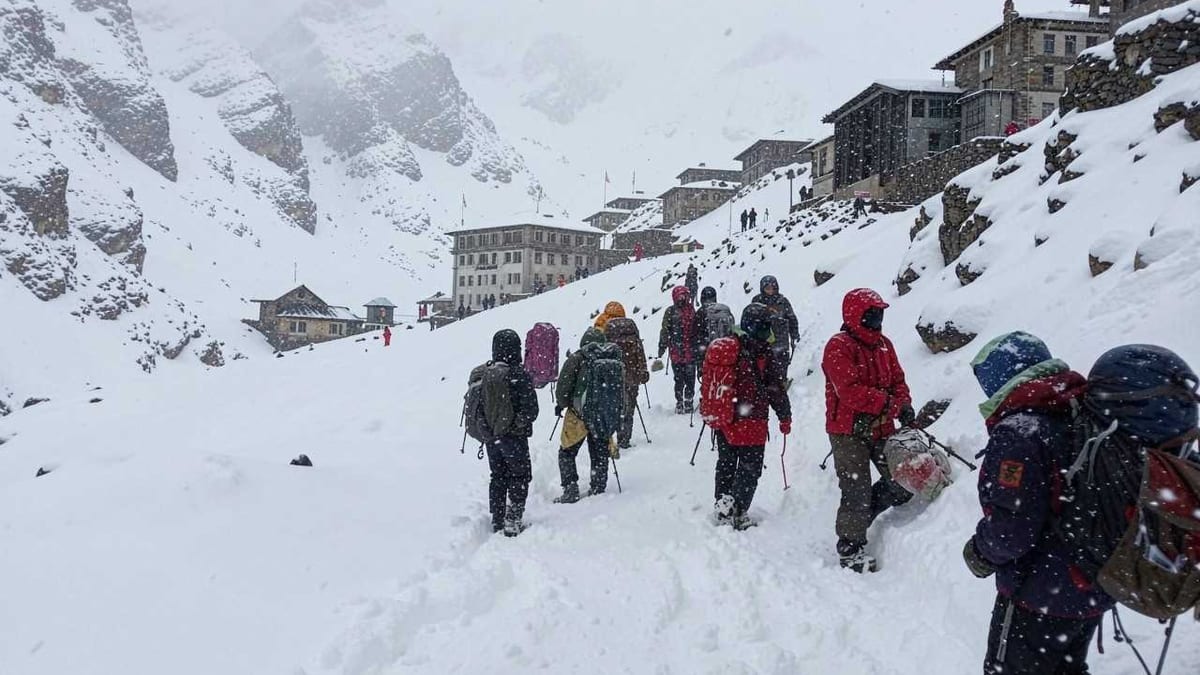
Image by Travel And Tour World
Eastern Himalaya Buried Under Late-Season Snow
Weather bulletins from Nepal’s Department of Hydrology and Meteorology and regional media describe an active western disturbance funneling moisture deep into the eastern Himalayan arc, triggering intense snow at elevations above roughly 2,500 to 3,000 meters in recent days. While March is normally a transition period toward drier spring conditions, this latest system has produced conditions more typical of midwinter across parts of Province 1 near the border with India’s Sikkim region.
Reports from local outlets in eastern hill districts indicate that high passes and approach roads toward popular trekking gateways have been repeatedly closed by fresh accumulations, with some settlements experiencing multi day interruptions to road traffic. The pattern has added to a run of volatile late winter and early spring weather across the broader Himalaya, where temperature swings and intense short lived storms are increasingly noted in official climate summaries.
The heavy snow comes just as Nepal’s important March to May trekking window gathers pace, particularly in eastern routes that frame views of Mount Kanchenjunga and surrounding peaks. Tour operators monitoring conditions warn that the combination of deep snow, ongoing avalanche risk and intermittent visibility has already forced changes to itineraries and, in some cases, early returns to lower altitude towns.
Flight Disruptions Hit Suketar and Other Mountain Airstrips
Domestic aviation has been among the first sectors to feel the impact. Publicly available flight information and local news coverage point to repeated weather related disruptions at Suketar Airport, which serves Taplejung, and at other short takeoff and landing strips in the eastern hills. These airports are highly exposed to low cloud and crosswinds, and fresh snow on short runways has added an extra layer of operational difficulty.
Reports from earlier winter months had already highlighted how prolonged poor visibility around Suketar can ground aircraft for weeks at a time, forcing airlines to compress services into short clear windows. The latest round of heavy snow appears to be reviving similar conditions, with cancellations and diversions rippling through domestic schedules out of Kathmandu as pilots wait for safe landing opportunities in the east.
While Nepal’s main international gateway in Kathmandu remains open, the knock on effect is being felt by foreign travelers who rely on connecting domestic flights to reach trailheads and remote lodges. Travel forums and agency advisories describe trekkers stuck in the capital or in mid route towns as they wait for clearance to fly, underscoring the fragility of mountain aviation during extreme weather. For time constrained visitors, even a delay of one or two days can mean abandoning ambitious itineraries in favor of shorter, lower elevation walks.
Spring Tourism Plans Upended for Key Source Markets
The disruptions are particularly significant given the importance of spring for Nepal’s tourism economy and the growing volume of arrivals from the United States, India, the United Kingdom and China. Official statistics for recent years show that March and April consistently rank among the busiest months for international arrivals, as mild temperatures and clear skies usually coincide with the prime trekking season.
Travel agencies tracking bookings report that a large share of high value trekking and mountaineering clients originate from these four markets, with US and UK visitors often targeting longer expeditions and Indian and Chinese travelers fuelling a rapid expansion in shorter Himalayan holidays. Sudden route closures and flight uncertainties in the eastern Himalaya therefore carry outsized implications for revenue just as operators seek to consolidate a post pandemic recovery.
Publicly available advisories from airlines, tour companies and insurance providers in these markets emphasize the importance of flexible planning. Many are encouraging clients already in Nepal to build in additional buffer days at the start and end of treks, and for those yet to depart to remain in close contact with local partners for the latest route updates. Some operators are quietly steering new bookings toward more accessible regions, such as lower altitude circuits and road linked hill towns, until weather patterns stabilize.
Travel Alerts and Practical Guidance for Foreign Visitors
In response to the evolving situation, travel information services that monitor South Asia are flagging the combination of heavy snow, landslide risk on melting slopes and the potential for further airport disruption in eastern Nepal. These alerts are particularly directed at travelers from long haul markets such as the United States and the United Kingdom, where itineraries are typically locked in weeks in advance and last minute changes are costly.
Advisories urge visitors bound for the eastern Himalaya to review ticket conditions on both international and domestic sectors, confirming change fees and refund policies before departure. Flexible airfares and travel insurance that cover weather related delays are being highlighted as especially relevant during this unsettled period. Trekkers are also encouraged to consult local operators about snow conditions on specific routes, including any recent avalanche activity or restrictions on high passes.
For travelers from India and China, who often combine Nepal trips with broader regional circuits, publicly available guidance suggests monitoring both Nepal’s weather bulletins and any updates from local aviation and road authorities. Cross border movements through nearby Indian hill regions, some of which have also experienced heavy late season snow, may face additional delays as road agencies work to clear key passes. Visitors are advised to build flexibility into overland journeys and to keep contingency plans for extended stays in transit hubs.
Longer-Term Questions for Himalayan Tourism
The latest extreme snowfall episode is feeding into a broader discussion within Nepal and among regional climate experts about how increasingly erratic weather is reshaping mountain tourism. Academic and policy reports over the past decade have documented a trend toward warmer average temperatures in Nepal combined with more concentrated bursts of precipitation, affecting both snow reliability and the timing of the trekking seasons.
Analysts note that these shifts are creating complex challenges. On one hand, reduced and irregular snowfall in some winters can shorten the traditional snow sport season and alter water availability for high mountain communities. On the other, sudden heavy snowstorms, such as the current event in the eastern Himalaya, expose trekkers, porters and residents to heightened avalanche and exposure risks, while also disrupting the aviation and road networks that underpin the tourism economy.
Industry observers argue that the sector will need to adapt through more conservative scheduling of high altitude departures, better real time communication with clients and investment in resilient infrastructure at key gateways. For travelers, the message emerging from this latest event is clear. Even during what has historically been considered a relatively stable spring window, journeys into Nepal’s eastern Himalaya now demand greater flexibility, awareness of local conditions and a willingness to adjust plans when extreme snow abruptly reshapes the landscape.