

More news on this day
From conflict‑scarred frontiers to little‑known island outposts, a niche group of extreme travelers is adapting to fast‑changing border regimes and security risks in an escalating quest to “complete” the world.
Get the latest news straight to your inbox!
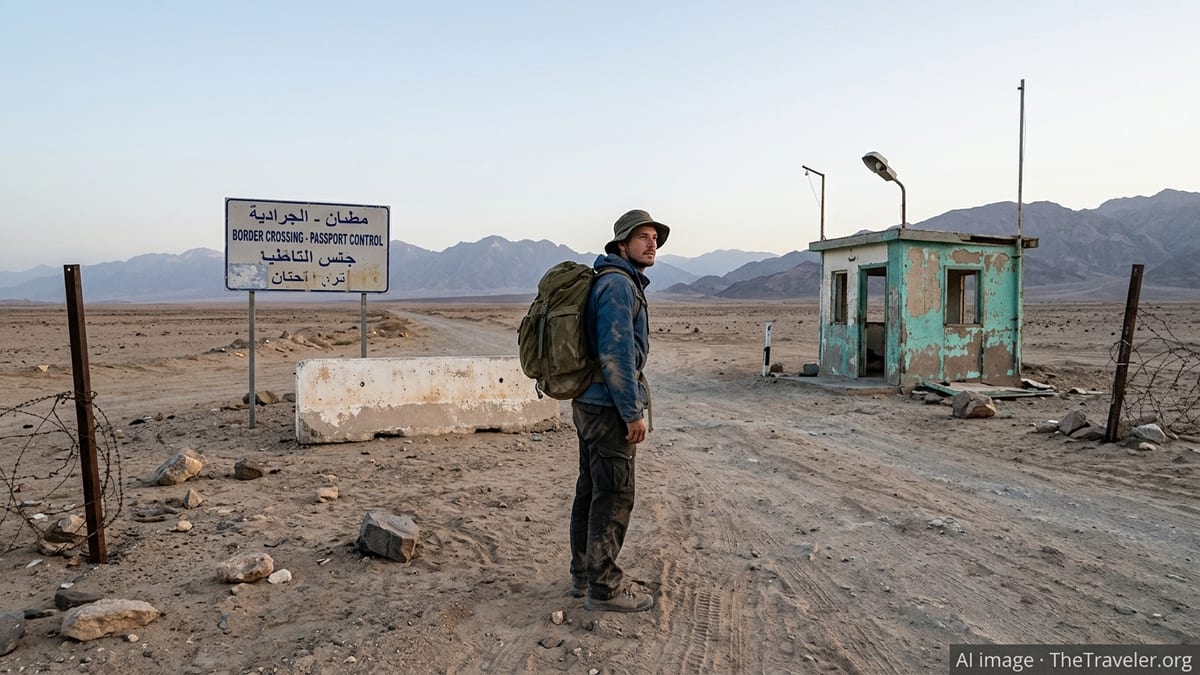
From Country Counting to Total World Coverage
What began as a challenge to visit every United Nations member state has evolved into a complex game of global completeness. Online communities such as NomadMania, Most Traveled People and the Travelers’ Century Club have transformed country counting into a quasi‑competitive pursuit, using ever more granular lists of regions, territories, exclaves and remote islands. NomadMania, for example, tracks more than 1,300 regions, while also maintaining specific lists for “quirky” or hard‑to‑reach places that appeal to the most obsessive travelers.
Publicly available data from these communities suggests that only a few hundred people have visited all 193 UN member states, and an even smaller subset is attempting to cover every region in expanded lists that can triple the number of required destinations. Reports from these platforms indicate that travelers increasingly debate what should “count” as a legitimate visit, with some insisting on overnight stays or overland entries to validate the experience.
The culture around these achievements has become more structured, with clubs setting membership thresholds and documenting completions. Profiles of so‑called “UN Masters” and record hunters show that many now design multi‑year itineraries around filling remaining gaps, often clustered in conflict‑affected states, remote archipelagos or politically sensitive borderlands.
As the goals grow more ambitious, the challenges extend far beyond booking flights. Visa regimes, regional instability and evolving definitions of borders are reshaping how, and whether, these travelers can realistically attain total world coverage.
New Borders, Biometrics and Security Layers
Extreme travelers planning intricate overland routes are increasingly contending with new border controls and biometric requirements. Legal analyses and government notices highlight how major destinations are digitizing entry procedures, tightening security screenings and, in some cases, reconfiguring how borders function for foreign visitors.
Russia’s introduction of expanded biometric collection for many foreign nationals, rolled out through a phased program that broadened from a limited set of entry points in 2024 to all border crossings by mid‑2025, has complicated traditional transcontinental journeys. Travelers seeking to stitch together overland routes across Eurasia now face more extensive data collection and pre‑registration requirements, even when they already hold valid visas.
In parallel, changes inside the Schengen Area have seen several European states temporarily reinstate internal border checks in response to irregular migration and security concerns. Legal briefings on Schengen practice show that countries including Austria and Sweden extended or renewed land border controls in late 2025 and into 2026, affecting overland itineraries that once relied on seamless movement between EU states.
For travelers heading toward the United States as part of global completion projects, new rules are also altering the picture. Coverage on regulatory changes indicates that, from late 2025, expanded biometric screening and tighter vetting procedures for many Middle Eastern nationals and other foreign visitors have increased processing times and uncertainty at airports and land crossings. While ordinary tourists may encounter these measures only once or twice, extreme travelers looping repeatedly through major hubs must absorb the added friction into already complex plans.
Conflict Zones and “Red List” Destinations
The remaining blank spaces on many extreme travelers’ maps are often in places that mainstream tourism advisories classify as high‑risk. Public foreign affairs guidance for countries such as Yemen, Syria and parts of Libya continues to warn against all travel due to terrorism, armed conflict and instability, underscoring the gulf between official messaging and the ambitions of some completion‑focused travelers.
In Yemen, for example, travel advisories emphasize widespread security threats, from landmines to kidnapping, and highlight concerns about the misrepresentation of safety on the island of Socotra by some overseas operators. These warnings have not erased the island’s appeal in extreme travel circles, where its isolation and biodiversity make it a coveted entry on regional and “unusual places” lists.
Syria remains another prominent gap for many would‑be completists. Security monitoring organizations continue to describe the country as extremely volatile, pointing to ongoing clashes in southern regions despite shifts in political control. Travel intelligence sites note that Western advisories still maintain the highest warning levels for Syria as of early 2026, making legitimate tourism logistics both difficult and ethically contentious.
Libya similarly occupies a unique role in the psychology of extreme travel. Surveys and discussion within specialist travel communities indicate that it frequently appears as a “last country” for those finishing the UN list, partly because of its visa complexity and persistent security issues. The combination of reputational risk, limited commercial air links and sudden shifts in on‑the‑ground conditions means that even experienced overlanders struggle to find workable, legal routes.
Ethics, Legality and the Line Between Travel and Risk
The pursuit of total world coverage is increasingly raising ethical questions. Academic and policy reports on irregular migration routes across Africa and the Middle East describe some of the same corridors that entice extreme travelers as among the most dangerous on the planet, with high rates of exploitation, detention and death. For humanitarian organizations, these routes are primarily a story of displacement and smuggling, not adventure.
In some cases, the desire to unlock a hard‑to‑reach country or border crossing can bring travelers uncomfortably close to zones where local populations face severe insecurity. Analysts warn that publicity around “frontier” travel risks normalizing visits to areas where basic services are strained and local communities may see little benefit from outside arrivals. These concerns have prompted some veteran travelers to advocate for stricter personal rules, such as avoiding active frontlines or refusing to use intermediaries who may also be involved in irregular migration networks.
Legal realities are another constraint. Executive actions and immigration policy shifts in major hubs have tightened visa issuance and introduced new bond requirements or entry restrictions for citizens of specific states. While these measures are largely aimed at broader security and migration control, they also complicate the ambitions of travelers trying to complete lists that include politically isolated or heavily sanctioned countries.
Within extreme travel communities, there is growing discussion about the line between legitimate, fully legal border crossings and behavior that edges into “border tourism” in fragile contexts. Some platforms now emphasize that travelers should rely on verifiable, lawful entry routes and respect local and international restrictions, even when that means accepting that certain destinations may remain off limits for extended periods.
Rewriting the Map: Islands, Micronations and Micro‑Regions
As conflict, visa regimes and security policies slow progress through traditional bottlenecks, many extreme travelers are turning their attention to lists that subdivide the world into hundreds of micro‑regions. Platforms such as NomadMania and Most Traveled People maintain detailed catalogs of islands, enclaves and semi‑autonomous territories, creating parallel goals that can be pursued even when a handful of states are inaccessible.
These expanded lists include remote archipelagos, outer territories and obscure border anomalies that rarely feature in mainstream tourism campaigns. Travelers chasing them typically face logistical obstacles such as infrequent cargo services, restrictive local permit systems and volatile weather windows. Reports from these communities highlight multi‑stage journeys that can involve coordinating with supply ships, chartering small boats or timing seasonal flights that operate only a few times a year.
The appeal lies partly in the narrative of discovery. Many of these locations are inhabited, and travelers who reach them often share detailed trip reports about local cultures, infrastructure and environmental conditions that are otherwise sparsely documented. At the same time, there is a growing awareness that increased attention can strain fragile ecosystems and small communities, prompting some platforms to spotlight sustainability guidelines and encourage longer, lower‑impact stays instead of rapid “tick box” visits.
For a subset of extreme travelers, the goal is no longer just to touch every country but to experience each recognized region, however tiny. That ambition requires navigating not only the geography of remote islands and complex borders but also an evolving web of rules, ethics and responsibilities that now shape what it means to have truly seen the world.