

More news on this day
Formula 1’s early-season Middle East double header has been wiped from the 2026 calendar, tearing a reported £100 million hole in the sport’s finances and creating an unprecedented five-week gap that could transform the competitive order once racing resumes.
Get the latest news straight to your inbox!
Calendar Shock: From Packed April to a Five-Week Void
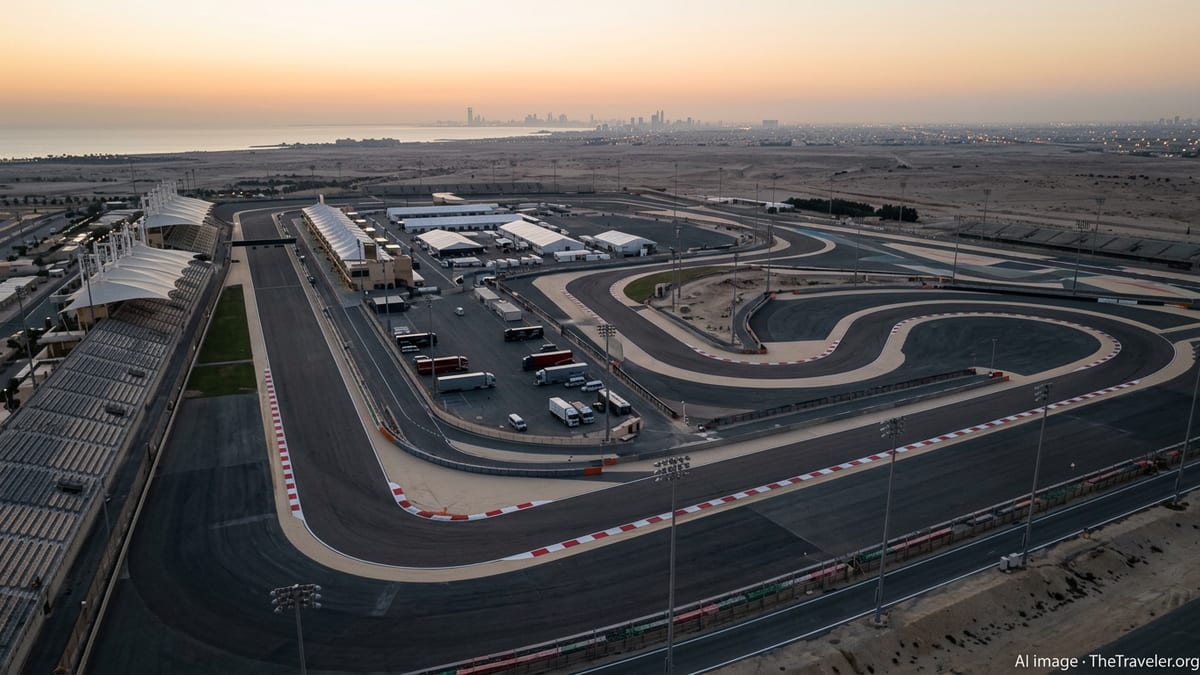
The Bahrain Grand Prix at Sakhir and the Saudi Arabian Grand Prix on the Jeddah Corniche Circuit, originally scheduled for mid-April, have been officially called off amid escalating conflict in the region. Published coverage indicates that the races will not be replaced, reducing the 2026 season from 24 to 22 rounds and turning what was meant to be a high-intensity Middle East swing into a race-free April.
The cancellations carve out an unusually long gap between the Japanese Grand Prix at Suzuka and the next scheduled round in Miami. Reports on the evolving calendar describe a break of around five weeks, a stark contrast with Formula 1’s usual preference for two or three weeks between long-haul flyaway events, particularly in the first half of the season.
For spectators and host countries, the lost races mean the abrupt disappearance of night-sky floodlights over Sakhir’s desert circuit and Jeddah’s waterfront street track. For teams, broadcasters and sponsors, the disruption is measured not only in spectacle but also in lost exposure, track time and competitive rhythm just as a new regulations era is taking shape.
The £100m Question: How Lost Fees Hit F1’s Business Model
Industry estimates suggest Bahrain and Saudi Arabia together contribute in the region of £100 million in annual hosting fees, making the double cancellation one of the most financially significant calendar shocks Formula 1 has faced since the pandemic era. Specialist motorsport outlets report that Saudi Arabia is among the sport’s most lucrative race contracts, with Bahrain not far behind, reflecting the Middle East’s central role in F1’s commercial expansion.
Those fees sit at the core of the championship’s revenue model, alongside race promotion, broadcasting and sponsorship income. The immediate effect of losing both events is a sharp reduction in expected 2026 turnover, even if some fees are partially protected by force majeure clauses or renegotiated arrangements. Publicly available analysis indicates that the commercial rights holder can still meet minimum race guarantees for its long-term deals with broadcasters and partners, but with a notable dent in headline income.
For teams operating under the financial regulations, the wider economic impact is more nuanced. Prize money paid out to competitors is tied to the championship’s overall profitability, so a sizeable shortfall from lost sanctioning fees could filter through into future distributions. With many outfits already planning aggressive investment programmes around the 2026 power unit and chassis rules, any downward pressure on central payments will sharpen debates about cost caps, spending priorities and long-term sustainability.
Travel Fallout for Bahrain and Jeddah as Racing Goes Dark
The withdrawal of both races lands heavily on the tourism and events sectors in Bahrain and Saudi Arabia, which have invested heavily in elite motorsport to showcase infrastructure and draw international visitors. In recent seasons, both Sakhir and Jeddah have positioned their Grands Prix as anchor events in broader destination strategies, packaging race weekends with concerts, cultural showcases and premium hospitality aimed at high-spending foreign fans.
With 2026’s F1 visits cancelled and no immediate alternatives on the calendar, travel industry projections for April are being hurriedly revised. Hotels that typically sell out around the Bahrain International Circuit and along Jeddah’s Red Sea corniche now face sharp drops in occupancy compared with previous race years. Airlines that built tailored schedules around F1 traffic from Europe and Asia are also expected to see reduced premium-cabin demand during what had become a reliable events window.
For regional tourism boards, the setback arrives at a sensitive moment. Both countries have been working to diversify visitor inflows beyond religious travel and business traffic, using high-profile sports to attract leisure tourists. Travel analysts note that while one lost season will not derail long-term strategies, the absence of Formula 1 temporarily removes one of the Middle East’s most visible global shop windows just as competition intensifies among destinations across the Gulf.
A Rare Development Window: How Teams Will Use Five Empty Weeks
On the sporting side, the most intriguing consequence of a race-less April is the opportunity it creates for competitive reset. The five-week hiatus arrives only a few rounds into a radically new technical cycle, with 2026 regulations introducing new power units and active aerodynamics. Instead of bouncing directly from Suzuka to back-to-back desert races, engineers and mechanics will return to their factories with both data and time to act on early-season lessons.
Team insiders quoted in specialist coverage describe the unexpected pause as the equivalent of an in-season mini winter break. Simulation crews can re-run correlation programmes, aerodynamic departments can accelerate update packages for floor and wing concepts, and power unit partners gain breathing space to refine drivability and energy deployment maps that may have proved problematic in the opening flyaways.
Crucially, the absence of travel means staff are not spending back-to-back weeks on the road. That could improve productivity at the design office and in the wind tunnel, particularly for midfield teams that entered 2026 with aggressive upgrade timelines already compressed by freight and personnel constraints. When the championship reconvenes in Miami, the competitive picture may look significantly different from what early-season results implied, with some teams bringing upgrades that would usually have appeared much later in the year.
Strategic Trade-Offs: Competitive Balance vs Commercial Losses
The Middle East shake-up highlights a tension that has run through much of Formula 1’s modern era. Long, high-fee flyaway events underpin the business model, yet a leaner calendar with carefully placed gaps can offer greater sporting intrigue by allowing teams to make meaningful progress between rounds. The 2026 situation is unusual in that such a large window has emerged by necessity rather than design, but it offers a live case study in how schedule structure can influence competitive dynamics.
Some commentators have already suggested that if the extended break produces a closer field in the middle part of the season, calls may grow for future calendars to build in more generous development pauses, even at the cost of one or two race weekends. Others counter that the loss of major events, particularly in strategically important markets such as the Gulf, risks weakening the global reach that has drawn new manufacturers, sponsors and broadcasters into the sport.
What is clear is that the cancellation of Bahrain and Jeddah has ramifications far beyond the immediate security context. It affects how teams plan upgrades, how fans experience the narrative of the season and how host countries use Formula 1 to position themselves on the world stage. As the 2026 campaign unfolds, both the financial shock and the five-week development window created by the Middle East’s absence are likely to be felt long after the lights finally go out again in Miami.