

More news on this day
The U.S. Federal Aviation Administration is preparing to temporarily cap flights at Chicago O’Hare International Airport this summer, moving to contain aggressive schedule growth by United Airlines and American Airlines that regulators say would push the busy hub beyond its safe operating capacity.
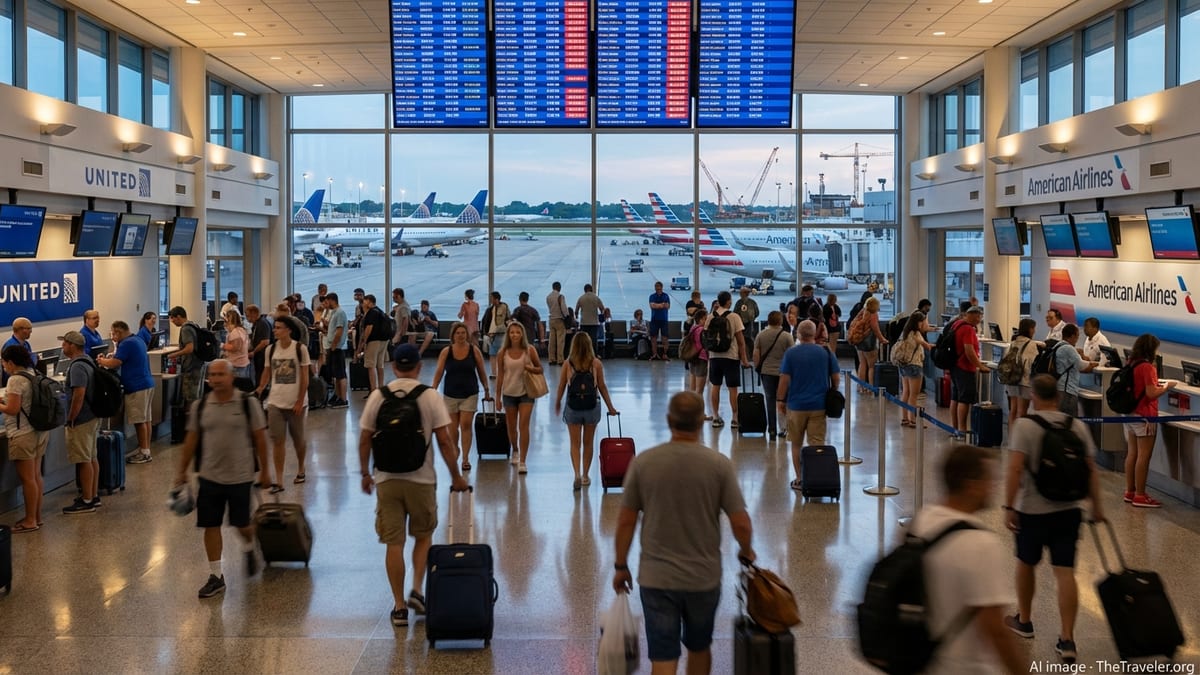
Federal Action Targets Summer 2026 Overscheduling
In a notice slated for publication in the Federal Register next week, the FAA warns that published airline schedules at O’Hare for the summer 2026 travel season significantly exceed what the airport’s runways, terminals and air traffic control system can reliably handle on peak days. Regulators are responding after carriers, led by hub giants United and American, loaded a record number of flights into the March through October schedule period.
The agency says carriers have scheduled more than 3,080 combined takeoffs and landings on the busiest days, up sharply from a peak of about 2,680 daily operations last summer. Internal FAA analysis concludes that such a jump, if operated as published, would result in severe congestion, cascading delays and a higher risk of disruptions across the national airspace system centered on Chicago.
To avert that outcome, the FAA plans to freeze total daily operations at O’Hare at roughly 2,800 flights, a level it describes as “manageable” with current infrastructure and staffing. That cap translates to about 100 combined arrivals and departures per hour during the core daytime operating window, with the agency reserving the right to further tighten activity during specific 30-minute periods it designates as severely congested.
Officials intend to apply the limits across the entire summer 2026 scheduling season, while monitoring performance and adjusting if construction progress or staffing improvements meaningfully change the airport’s capacity profile.
United and American Push Schedules to the Limit
The federal clampdown comes as United and American escalate a high-stakes contest for market share at O’Hare, one of the world’s busiest connecting hubs. Both airlines have been rapidly rebuilding and expanding their networks at the airport following the pandemic, using aggressive scheduling to defend or grow their gate positions and feed lucrative long-haul and business-travel routes.
United, O’Hare’s largest carrier, has leaned on a “use it or lose it” gate leasing framework that ties long-term gate control to actual departure volumes. Industry analysts say the strategy helped United secure additional preferential-use gates in 2025 as its flying rebounded faster than rivals, reinforcing the airline’s incentive to keep schedules dense and aircraft turns tight at the hub.
American, which has lagged United in Chicago profitability, has mounted a counteroffensive centered on a substantial boost in departures. The carrier recently unveiled plans for roughly 100 additional daily flights from O’Hare, billed as creating its largest-ever spring and summer schedule from the airport, with added frequencies on domestic routes and expanded connections to leisure destinations.
Those overlapping growth strategies have helped push O’Hare’s planned daily movements beyond what the FAA is willing to tolerate this year, triggering the decision to impose a hard ceiling on operations and force airlines to trim back their ambitions.
How the New Flight Limits Will Work
Unlike traditional slot controls used at some of the nation’s most congested airports, the FAA’s approach at O’Hare will rely on a seasonal scheduling order that establishes overall capacity limits and then requires carriers to adjust their published timetables to fit within those bounds. Regulators will work with airlines to review each 30-minute period between 6 a.m. and 9:59 p.m. local time, identifying where reductions are needed to stay within roughly 100 operations per hour.
FAA Administrator Bryan Bedford is expected to single out specific time bands as severely congested and set nonbinding reduction targets for those windows. Airlines will then be asked to voluntarily pare back flights, retime departures or consolidate frequencies, with the understanding that the agency could take a firmer stance if cooperation falls short.
The plan is designed to preserve flexibility for carriers while aligning O’Hare’s schedule with what the airport can actually handle without excessive delays. By focusing on peak periods and overall daily caps rather than assigning individual slots to specific flights, regulators hope to minimize disruption to long-haul international services and maintain room for competitive entry on key routes.
The FAA has not yet specified how many flights each airline will be expected to cut or how quickly changes must be reflected in booking systems, but officials have scheduled a meeting with carriers in early March to hash out details ahead of the late-March start of the summer timetable.
Airlines and City Hall Signal Cautious Support
American Airlines, which has been outspoken about operational challenges and gate access at O’Hare, publicly backed the FAA’s move, calling it a proactive step to protect the “operational integrity” of the airport and improve the travel experience heading into the busy summer period. The airline has framed the limits as an opportunity to reduce day-of-travel chaos that can erode customer satisfaction and drive up costs.
United has taken a more measured tone, emphasizing its commitment to safe, reliable operations at its Chicago hub while signaling a desire for collaborative discussions with federal regulators. The carrier is expected to argue for preserving as much of its banked hub structure as possible, particularly during transcontinental and international connection banks that underpin its global network.
The Chicago Department of Aviation, which manages O’Hare, has also welcomed the talks, saying it is working with the U.S. Department of Transportation and airline partners on a “temporary adjustment” to summer schedules that balances safety, efficiency and current gate availability amid ongoing construction. City officials remain keen to protect Chicago’s status as a premier global aviation hub even as they grapple with near-term constraints.
Behind the scenes, negotiations over how the caps are implemented will likely be shaped by broader tensions around gate allocation, terminal expansion and the long-running O’Hare 21 modernization program, which continues to limit flexibility while key elements of the project remain under construction.
What Travelers Can Expect This Summer
For passengers, the immediate impact of the FAA’s action may come in the form of schedule changes in the weeks ahead, as airlines scrub some planned frequencies, retime flights or upgauge aircraft to preserve capacity with fewer operations. Travelers with summer bookings from, to or through O’Hare may see departure times shifted or find themselves rebooked as airlines refine their operations to comply with the cap.
Industry experts say the longer-term effect could be a modest reduction in choice at the margins, particularly for short-haul and regional flights that are easier for airlines to consolidate. At the same time, regulators and airlines argue that a slightly leaner schedule should translate into fewer last-minute cancellations, shorter taxi times, less time waiting for a gate and a more predictable day-of-travel experience overall.
With O’Hare already notorious among frequent flyers for lengthy taxi routes, crowded ramp areas and weather-sensitive operations, the FAA’s decision represents an attempt to trade some nominal capacity for improved reliability. How well that trade-off works will become clear as the summer peak approaches and Chicago once again tests the limits of the nation’s aviation system.