

More news on this day
Federal aviation regulators are moving aggressively to head off a summer meltdown at Chicago O’Hare International Airport, ordering significant flight reductions for the 2026 peak travel season in a bid to keep the nation’s second-busiest hub running safely and on time.
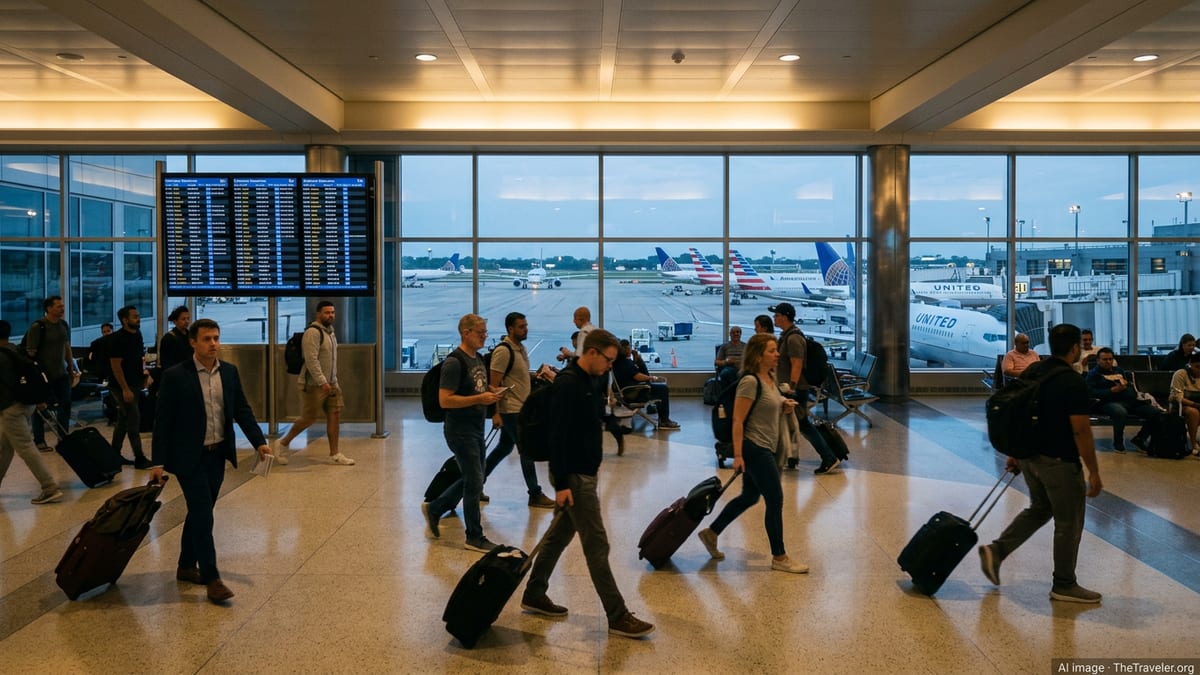
What the 2026 O’Hare Flight Cap Actually Does
The Federal Aviation Administration has begun a formal scheduling reduction process that will cap total daily takeoffs and landings at O’Hare at around 2,800 during the summer 2026 season, which runs from March 29 to October 25. Airlines had filed schedules exceeding 3,080 operations on peak days, far above what the agency believes the airfield, terminals, and air traffic systems can handle without unacceptable delays and safety risks.
The cap translates into a cut of roughly 9 to 10 percent from what carriers had planned to operate this summer. Importantly for travelers, those reductions are being targeted at the busiest time windows, from early morning departure banks through late evening arrivals, when O’Hare’s tightly packed schedule leaves little room to absorb thunderstorms, ground stops, or crew and equipment disruptions.
The order applies directly to U.S. airlines, which have been asked to scale back domestic schedules during designated peak periods. International and foreign carriers are being managed through a separate process, but they will still feel the knock-on effects as runway and taxiway capacity is rebalanced around the 2,800 daily movement ceiling.
Regulators stress that the move is not about shrinking O’Hare permanently, but about aligning 2026 schedules with what the airport can realistically accommodate while major construction projects and staffing constraints continue. The agency describes the current level of about 2,800 daily operations as manageable given today’s infrastructure and resources.
Why the FAA Is Stepping In Now
The intervention follows an aggressive expansion race at O’Hare led by United Airlines and American Airlines, both of which have been building up their hubs and vying for scarce gates. Published peak-day schedules for summer 2026 climbed more than 15 percent above the airport’s demonstrated capacity last year, raising alarms inside the Department of Transportation that the on-paper growth could translate into on-the-ground gridlock.
At stake is not just convenience but system resilience. In recent years, several U.S. hubs have struggled through summers marked by rolling delays and mass cancellations when optimistic schedules collided with storms, chronic staffing shortages, and tight turnaround times. O’Hare’s combination of intersecting runways, ongoing long term construction, and dense connecting banks makes it particularly vulnerable when every slot is sold and there is no slack left in the system.
The FAA is using its statutory delay-reduction authority to convene airlines and the Chicago Department of Aviation, set explicit reduction targets for the most congested 30 minute periods, and then lock those limits into a binding order. Officials argue that trimming the schedule now is preferable to allowing airlines to sell flights that are unlikely to operate on time once summer thunderstorms roll across the Great Lakes.
Safety is also central to the decision. Regulators say that volumes above the 2,800 operations level risk overloading controllers and ground crews during peak pushes. By capping activity, they aim to reduce runway queues, shorten taxi times, and leave more margin for safe spacing between arrivals and departures when conditions deteriorate.
How Airlines Are Adjusting Their Summer Schedules
Behind the scenes, carriers are now in intensive talks with the FAA to reshape their summer 2026 schedules around the new cap. United, the largest operator at O’Hare, and American, which had been planning its own substantial expansion, are both expected to trim frequencies rather than entire destinations wherever possible in order to preserve their core hub networks.
Industry analysts expect airlines to start by cutting the least profitable and most easily substituted flights, such as duplicate frequencies on short haul domestic routes and some regional jet services feeding the hub. By consolidating demand into fewer departures, carriers can continue to offer broad city coverage while reducing the number of individual movements that count against the cap.
Some of the adjustments may be invisible to casual travelers, such as shifting departures by 15 to 30 minutes to move them out of the most congested time blocks identified by the FAA. Others will be more noticeable, including the loss of certain midday or late night options as airlines focus on protecting their highest demand morning and evening banks that connect large volumes of passengers.
Foreign carriers are watching closely as well. While their schedules are administered through an international coordination process, any rebalancing of domestic feeder flights will ripple into connection patterns for long haul services to Europe, Asia, and Latin America. Airlines will be working to ensure that revised domestic banks still provide enough feed into transatlantic and transpacific departures.
What Travelers Should Expect at O’Hare This Summer
For passengers, the most immediate impact of the flight cap will be fewer available seats on some routes and slightly reduced choice of departure times, particularly on heavily traveled domestic corridors. Travelers who are used to having multiple hourly options between O’Hare and nearby Midwestern or East Coast cities may see that choice narrow to fewer, more heavily booked flights.
At the same time, aviation officials insist that the goal is to trade a bit of theoretical capacity for a much higher chance that scheduled flights will actually run on time. With fewer aircraft competing for runways, gates, and taxiways at the busiest hours, travelers should see shorter departure queues, less tarmac waiting, and fewer cascading delays when weather rolls through.
The cap may also subtly shift booking patterns. As airlines pare back duplicate frequencies, the most desirable morning and late afternoon departures are likely to fill earlier. Travel planners recommend locking in peak summer trips well ahead of time, especially for Fridays, Sundays, and holiday periods when demand is strongest and spare seats will be at a premium.
On the ground, passengers may notice a more measured pace around the terminals as construction continues on O’Hare’s modernization projects. With schedules realigned to a level regulators consider sustainable, there should be less of the intense crowding that can overwhelm security lines, boarding areas, and baggage belts during severe peak pushes.
How to Protect Your Trip if You Are Flying Through O’Hare
While the FAA’s move is designed to prevent full scale chaos, travelers connecting through O’Hare in summer 2026 should still plan with the new operating reality in mind. With airlines trimming frequencies, building a buffer into itineraries becomes even more important, particularly for those making international connections or heading to time sensitive events.
Experts suggest opting for slightly longer connection times to give yourself margin if your inbound flight encounters weather or ground delays. Early day departures remain a smart choice, as operations tend to deteriorate later in the day if thunderstorms, congestion, or equipment issues stack up. When possible, choosing routes with multiple daily frequencies can also provide more rebooking options if something goes wrong.
Travelers should pay close attention to schedule change notifications in the coming weeks and months as airlines finalize their revised O’Hare timetables. What looked like an ideal connection when first booked may shift by enough minutes to tighten a layover uncomfortably once the new caps are fully reflected in reservation systems.
Finally, flexibility will be a valuable asset. With a finite number of movements available under the cap, rebooking options on peak days may be more limited than travelers have been used to in past summers. Being open to alternative departure times, nearby airports, or even a different connecting hub can make the difference between a salvaged trip and an all day delay.