

More news on this day
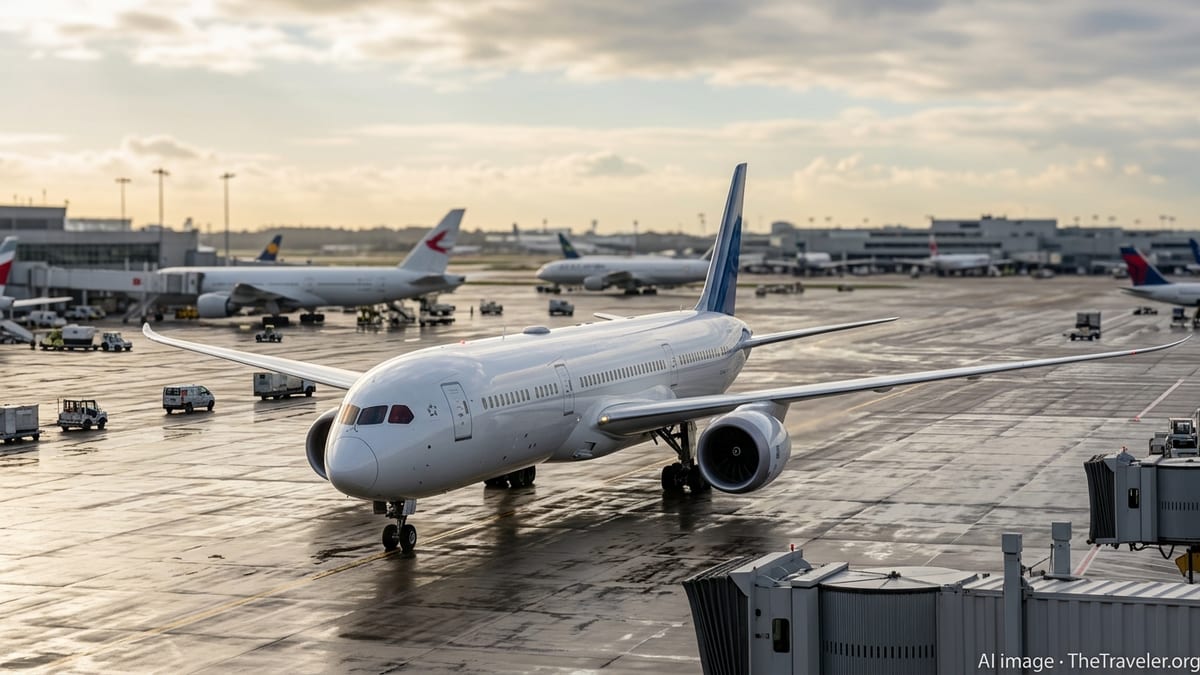
The Boeing 787 Dreamliner program has gained fresh momentum as the U.S. Federal Aviation Administration approves higher maximum takeoff weights for the 787-9 and 787-10, effectively unlocking hundreds of additional nautical miles of range for the widebody twinjet and widening its appeal on long-haul routes.
Get the latest news straight to your inbox!
What the New FAA Approval Actually Changes
Publicly available technical information indicates that the FAA has signed off on increased maximum takeoff weight options for the Boeing 787-9 and 787-10, creating what many in the industry are informally dubbing a "Dreamliner 2.0" capability package. The upgraded aircraft are often described as Increased Gross Weight, or IGW, variants, reflecting structural and systems changes that allow more weight at departure without compromising safety margins.
Data compiled in recent aircraft reference material shows that the 787-9 and 787-10 have both received approvals for higher certified weights, with the 787-10 gaining on the order of 14,000 pounds of additional maximum takeoff weight. For airlines, that extra weight can be traded for more payload, more fuel, or a mix of both, turning directly into extended reach or higher revenue on dense routes.
Industry analyses suggest that the range boost for the 787-10 is in the region of 400 nautical miles, while the 787-9 can also see meaningful gains once operators configure missions around the higher limits. The changes sit alongside earlier extended-operations approvals, including 330-minute ETOPS clearances for Dreamliner airframes and engines, reinforcing the aircraft’s role as a long-haul workhorse for transoceanic flying.
Although the airframe’s basic design remains the same, the certification milestone effectively refreshes Boeing’s long-haul portfolio at a time when widebody demand is rising, particularly for fuel-efficient jets capable of connecting secondary cities nonstop.
Range Boost and Route Maps: What Airlines Can Now Do
For airlines, the practical impact of the higher takeoff weight approvals is measured in route flexibility. The 787-9, already known for its ability to fly long sectors with strong economics, can now be scheduled on even more demanding city pairs while carrying a full passenger and cargo load. That allows carriers to consider thinner, farther-flung markets that previously sat at the edge of the type’s envelope, particularly during winter headwind seasons.
The 787-10, which was originally optimized for high-capacity routes of moderate length, stands to benefit even more from the new limits. Aviation trade coverage notes that the increase in certified weight translates into either several extra tons of payload or several hundred additional nautical miles of range, pushing the aircraft deeper into traditional Airbus A350 and A330neo territory on certain missions.
This added range gives network planners new tools. Airlines can contemplate nonstop services that previously required payload restrictions or a larger, less fuel-efficient aircraft. Examples discussed in industry commentary include longer transatlantic services from smaller hubs, extended North America to South America sectors, and selected transpacific routes where the added fuel capacity makes year-round, westbound operations more reliable.
In some cases, the extra performance can also be used simply to carry more cargo on existing routes, which is particularly attractive where belly freight is a critical revenue component. That flexibility matters for leisure-heavy airlines, global network carriers, and new widebody operators alike as they respond to robust long-haul demand.
Competitive Pressure on Airbus and the Long-Haul Market
The timing of the Dreamliner range enhancement is significant for the broader widebody market. Recent industry analyses portray a fragile duopoly between Boeing and Airbus, with both manufacturers managing large backlogs and navigating supply chain constraints. Boeing’s ability to unlock more range and payload from an in-service platform provides a competitive lever without requiring a clean-sheet design.
Market commentary has already highlighted that some airlines have favored the 787-10 over Airbus’s A350-900 for specific missions once the upgraded performance is taken into account. The combination of higher seating capacity and now improved range enables the largest Dreamliner variant to cover many of the same routes with lower trip costs, especially on high-density corridors where seat-mile economics are critical.
The 787-9, which competes most directly with mid-sized A350 and A330neo variants, also benefits. With the higher weight option, carriers can more confidently assign it to ultra-long-haul routes that might once have tilted toward larger aircraft, while still enjoying the fuel-burn advantages associated with composite structures and next-generation engines.
As travel demand on long sectors rebounds, especially across the North Atlantic and transpacific markets, the enhanced Dreamliner family positions Boeing to defend and potentially grow its share in airline fleet plans. The move also raises the bar for any future Airbus performance upgrades or next-generation concepts.
Implications for Passengers and Global Travel Networks
For travelers, the FAA-approved performance boost will be felt less in technical specifications and more in the routes that appear on airline schedules. With additional range and payload available, carriers can open nonstop city pairs that would previously have required at least one connection, particularly between secondary hubs and popular long-haul destinations.
This fits an emerging trend in global aviation where passengers increasingly favor point-to-point service over traditional mega-hub connections. The Dreamliner’s lower cabin altitude, larger windows, and improved air quality, frequently highlighted in airline marketing, combine with the new performance envelope to make the type attractive for ultra-long missions that were once the preserve of larger four-engine aircraft.
Expanded range capabilities also support the growth of seasonal and niche routes. Airlines can trial new long-haul services with relatively low risk, knowing that the aircraft can operate efficiently even when demand is highly directional or concentrated in peak travel periods. That could mean more winter sun services from Europe to distant leisure markets, or expanded summer connectivity from North America to secondary cities in Europe and Asia.
Passengers are likely to see a gradual proliferation of Dreamliner-operated flights in airline booking systems over the next several seasons, particularly as new aircraft are delivered with the higher-weight specification and existing orders are converted to the upgraded standard.
Production, Certification Context, and What Comes Next
The FAA’s approval of higher takeoff weights for the 787-9 and 787-10 comes against a broader backdrop of scrutiny and gradual normalization for Boeing’s production system. Public reporting in recent months notes that the regulator has restored aspects of Boeing’s delegated authority for certifying individual 787 airframes, following an extended period of quality inspections and delivery pauses earlier in the decade.
At the same time, industry reports indicate that Boeing is steadily increasing 787 output, with targets moving toward double-digit monthly production rates in 2026. As manufacturing stabilizes, the enhanced performance package effectively ensures that a growing proportion of new deliveries will carry the upgraded capabilities, helping airlines modernize their fleets with the most capable version of the type.
Looking ahead, the range-boosted Dreamliner variants are expected to play a central role in airline decarbonization strategies. The combination of improved payload-range performance, advanced composite airframes, and fuel-efficient engines such as the GEnx and Trent 1000 aligns with carrier commitments to lower emissions per passenger kilometer, even as they add new long-haul services.
For Boeing, the FAA’s decision provides a rare piece of positive momentum in the long-haul space without requiring a brand-new aircraft program. For airlines and travelers, it quietly redraws the map of what is possible nonstop, giving the 787 family a new chapter in the evolving story of global air travel.