

More news on this day
Growing evidence of a severe air traffic controller shortage across the United States is raising alarms that the federal aviation system is being pushed toward a breaking point, with mounting delays for travelers and renewed questions about whether the Federal Aviation Administration can maintain safety as the country’s skies grow more crowded.
Get the latest news straight to your inbox!
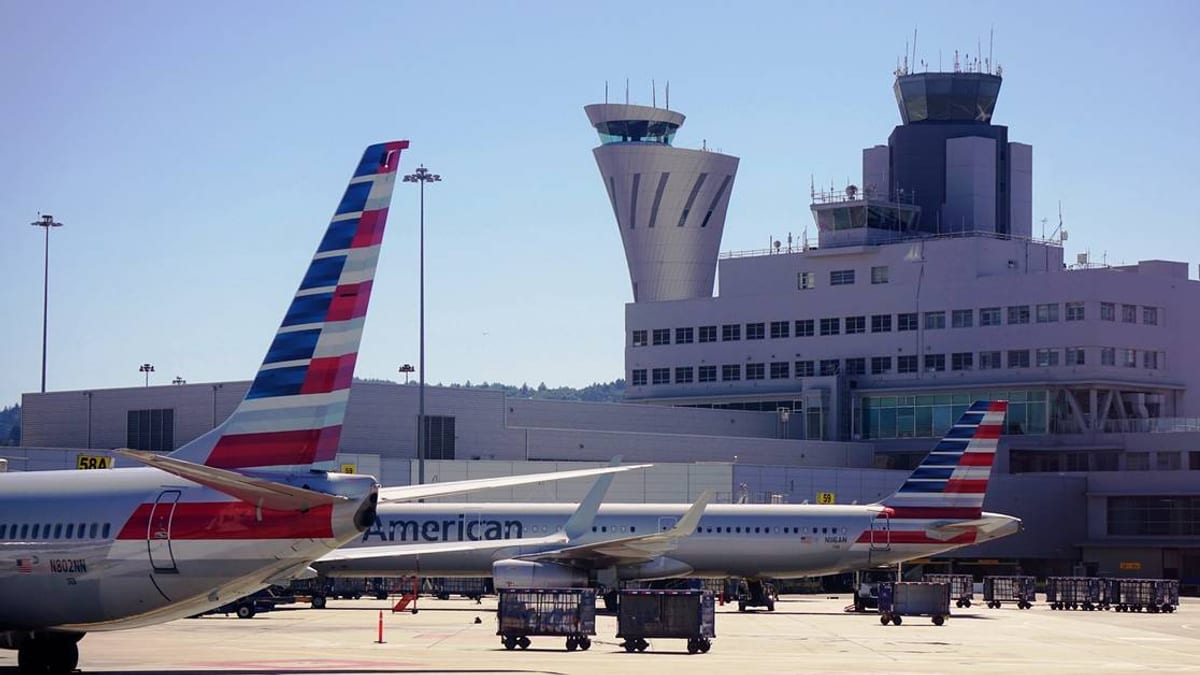
A System Running With Thousands Fewer Controllers Than Needed
Recent workforce data submitted to Congress indicates that the Federal Aviation Administration is operating with a shortfall of roughly 3,000 certified air traffic controllers compared with its own staffing targets, leaving about one in five positions vacant at the nation’s busiest facilities. Independent analyses of FAA figures describe the deficit as the steepest in at least two decades and the worst since the mass controller firings of the early 1980s.
Publicly available information compiled by policy researchers shows that overall controller employment has drifted downward from its 2016 peak, even as flight schedules have rebounded and surpassed pre‑pandemic levels. A background memo circulated in support of the Air Traffic Control Workforce Development Act of 2025 cited more than 2,300 certified professional controllers below FAA hiring goals, and more than 3,500 below an alternative staffing benchmark that labor groups argue better reflects operational demand.
The gap is most acute at large en route centers and high‑volume terminal radar facilities handling complex traffic around hubs such as New York, Chicago and Southern California. Trade publications report that some of these facilities are routinely scheduling fewer certified controllers per shift than internal staffing models recommend, forcing remaining controllers to absorb more positions and sectors than they would ordinarily manage.
Even as the FAA touts recent gains in hiring and training, its own multi‑year workforce plans acknowledge that impending retirements, promotions and attrition are likely to offset much of the progress. A workforce update released in late 2025 projected the loss of nearly 1,600 controllers in a single year, underscoring how hard it has become for new recruits to outpace departures.
Delays Spread as Staffing Squeezes Major Hubs
For travelers, the staffing gap has already translated into visible disruption. Industry outlets have documented a series of ground delay programs and traffic flow restrictions attributed primarily to controller shortages rather than weather or equipment failures. At Chicago O’Hare International Airport, passengers this spring watched departure boards fill with delays after the center responsible for managing high‑altitude traffic into the region was staffed below its target level for the day’s flight load.
Similar scenarios have played out across the country. During the federal government shutdown that began in October 2025, operational advisories from the FAA pointed to chronic understaffing at towers and centers in cities including Boston, Philadelphia, Atlanta, Houston, Las Vegas and Nashville. As controllers were required to work without pay, media coverage described rising sick calls and a spike in “staffing triggers” that forced the agency to slow or temporarily halt traffic at some of the nation’s busiest airports.
In Southern California, flights bound for Los Angeles International Airport were held at departure points nationwide during a brief ground stop last autumn after a key air traffic facility lacked enough personnel to handle normal volumes. FAA status reports for the day cited controller staffing as the primary driver of delays not only around Los Angeles, but also at airports in New Jersey, Washington and Southwest Florida.
Aviation data providers note that these staffing‑related constraints ripple far beyond the affected city. When a major hub is forced to meter departures or arrivals, aircraft and crews fall out of position, triggering follow‑on delays and cancellations across airline networks. Analysts warn that as the peak summer travel season approaches, a persistent controller deficit will leave the system with less margin to absorb thunderstorms, equipment outages or other routine disruptions.
Safety Concerns Intensify After Close Calls and a Deadly Crash
While commercial aviation in the United States remains statistically very safe, the controller shortage is sharpening scrutiny of near‑miss incidents and at least one recent fatal crash. Over the past two years, investigative reporting by national outlets has highlighted a rise in serious runway incursions and close calls, many of them occurring at congested airports where controllers have voiced concerns about thin staffing and mandatory overtime.
The issue drew even more attention after a midair collision over the Potomac River near Washington, D.C., on January 29, 2025, became the deadliest commercial aviation accident on U.S. soil in more than two decades. The final investigative report into the crash, released in February 2026, identified flaws in route design and oversight as primary causes but also pointed to the extraordinary workload imposed on controllers. Background materials noted that staffing shortfalls in the region had driven schedules of up to six days a week and 10‑hour shifts for many controllers.
Lawmakers backing new workforce legislation describe a pattern in which controllers are asked to manage overcrowding, long delays and increasing traffic with fewer colleagues on position, elevating fatigue and the risk of human error. Union statements emphasize that recent close calls were often averted only because experienced controllers were able to react quickly, a level of resilience that may be harder to sustain if staffing levels remain depressed.
Aviation safety researchers caution that a single incident rarely has a simple cause. However, they argue that persistent understaffing can weaken multiple layers of the safety net at once by eroding training capacity, increasing overtime and making it more difficult to build the deep team experience that complex airspace demands.
Policy Push: Hiring Surges, Pay Boosts and New Legislation
Under intensifying pressure from Congress and the traveling public, the federal government has unveiled an array of initiatives intended to stabilize the controller workforce. In early 2025, the Department of Transportation announced a “supercharged” hiring campaign that opened the FAA application window for several weeks and raised starting pay for academy trainees by about 30 percent. Subsequent briefings from the agency reported that more than 2,000 new controllers were hired in fiscal year 2025, surpassing annual goals for the first time in several years.
At the same time, the FAA and the Department of Transportation have introduced targeted recruitment and retention incentives focused on the highest‑stress facilities, as well as efforts to streamline training pipelines disrupted by the COVID‑19 pandemic. Agency workforce plans call for hiring at least 1,800 trainees in fiscal year 2026 and even larger classes in subsequent years, though internal projections acknowledge that it can take several years for new recruits to become fully certified at complex facilities.
On Capitol Hill, bipartisan legislation branded as the Air Traffic Control Workforce Development Act of 2025 seeks to tackle the shortage from multiple angles. A background summary for the bill cites the Reagan National Airport crash and a surge in near‑miss incidents as evidence that controller staffing must be treated as a national priority. The proposal outlines additional funding for training infrastructure, partnerships with colleges and universities, and incentives designed to keep mid‑career controllers from leaving the profession.
Despite these moves, independent experts remain cautious about how quickly the shortfall can be erased. Analysts point out that controller hiring has fallen short of modelled needs for much of the past decade, and that the long training timeline means today’s decisions will shape staffing levels well into the 2030s.
Travelers Face an Uncertain Summer in the Skies
For passengers, the implications of the controller shortage are likely to be felt most acutely during peak travel periods when demand nears or exceeds the system’s constrained capacity. Airlines have warned in earnings calls and public briefings that they are planning schedules and crew deployments around tight airspace bottlenecks at key hubs, where even modest staffing‑related flow restrictions can force last‑minute reroutes or cancellations.
Consumer advocates advise travelers to anticipate more ground delays initiated for “traffic management” reasons that may not be immediately apparent from airport weather or local conditions. When high‑altitude centers or approach facilities fall below staffing thresholds, traffic managers may be required to meter flights into those sectors, producing rolling backups that can cascade across multiple regions.
Industry observers note that the controller crisis comes at a time when aviation is under unusually intense scrutiny following high‑profile mechanical failures and manufacturing issues affecting some aircraft types. That convergence of safety questions, record passenger volumes and a constrained controller corps is prompting calls for a broader rethinking of how the United States funds, staffs and oversees its aviation infrastructure.
Absent a rapid expansion of the controller workforce, analysts warn that travelers should brace for a prolonged period in which delays, cancellations and occasional safety scares are a recurring feature of air travel in the United States, rather than an exception, even as the FAA and airlines work to keep the system operating within its limits.