

More news on this day
San Francisco International Airport is bracing for a sharp rise in flight delays after the Federal Aviation Administration significantly reduced the maximum number of planes allowed to land each hour, a move tied to both runway construction and new safety rules that limit side-by-side approaches.
Get the latest news straight to your inbox!
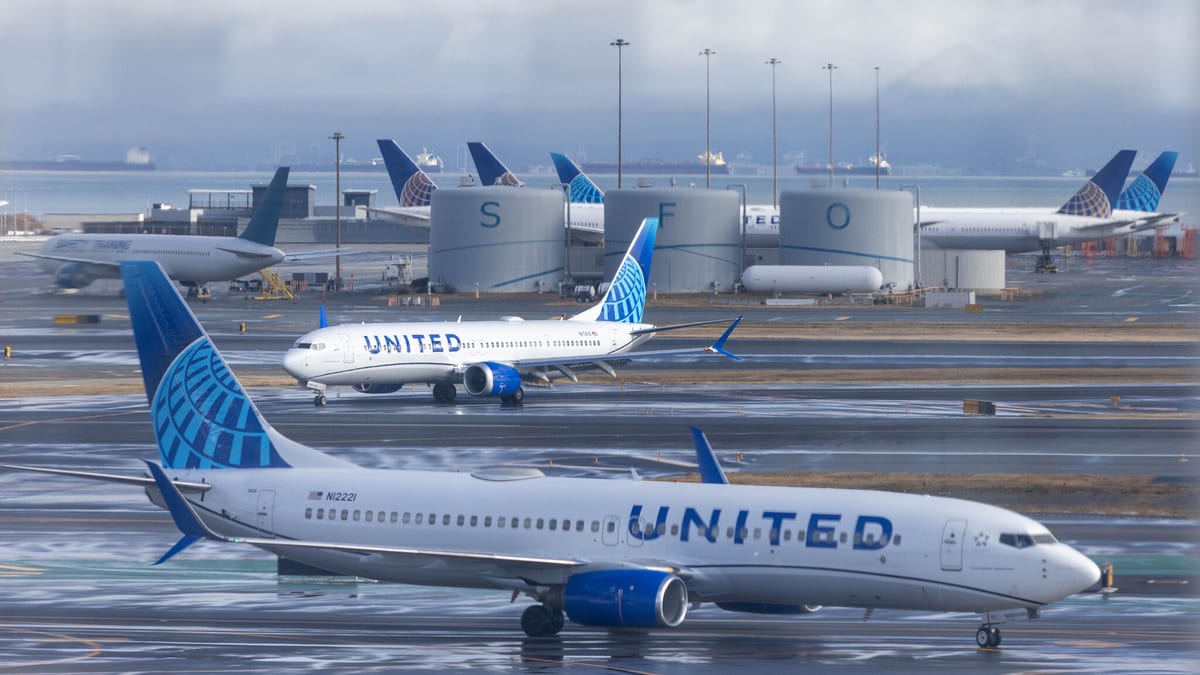
Image by SFGATE
Arrival Cap Tightened as Runway Work and Safety Rules Converge
Published coverage indicates that the FAA has imposed stricter limits on how many aircraft can land at San Francisco International Airport in a given hour while a major runway repaving project is underway. At the same time, the agency is restricting simultaneous visual approaches to the airport’s closely spaced parallel runways, a hallmark of SFO operations during clear weather. Together, the changes substantially reduce the airport’s effective arrival capacity.
Reports referencing FAA delay programs show that SFO has often operated with arrival rates in the high 20s per hour during poor weather. Under the new constraints, industry analysts and local aviation observers estimate that peak-hour arrival acceptance rates are being cut roughly in half compared with the airport’s typical fair-weather scheduling levels. This shift transforms what were once short, manageable holds into far longer waits for arriving flights.
The combination of runway closures and approach restrictions is particularly disruptive at SFO because the airport’s geometry already limits flexibility. The parallel east-west runways run close together, which has historically required special procedures to enable side-by-side landings. With those procedures now curtailed, more spacing is needed between aircraft, directly translating into fewer arrivals per hour even when skies are clear.
According to publicly available information, the FAA is continuing to study whether any procedural adjustments or technology upgrades could restore some of the lost throughput without compromising safety. For now, however, the agency is prioritizing conservative separation standards at SFO, accepting a higher level of delay as the trade-off.
Delays Nearly Double for Peak Arrivals
Airport forecasts prepared around the runway project had initially suggested that about 10 to 15 percent of SFO flights would face delays of 30 minutes or more during the construction period. Updated guidance cited in local coverage now indicates that the share of affected flights could climb to roughly one quarter of all arrivals, with average hold times stretching beyond half an hour in the busiest banks.
Travelers began to feel the impact as the latest phase of runway work took effect at the end of March. Flight-tracking data and airline communications referenced in online reports show a rising number of inbound flights placed into flow-control programs, where departure times from origin airports are pushed back to match a lower arrival rate at SFO. For passengers, this often appears as rolling delays at the gate or extended time waiting on the tarmac before takeoff.
The pattern is most pronounced during the mid-morning and evening peaks, when dense arrival banks feed SFO’s extensive network of domestic and international connections. Industry commentary suggests that what used to be modest schedule buffers are no longer sufficient to absorb the added spacing and runway constraints. As a result, missed connections and aircraft arriving late into the night are becoming more common.
While some delays can still be attributed to coastal fog and low ceilings, publicly available operational data indicate that a growing share is being coded as volume-related or flow-control driven. This distinction matters to airlines and regulators because it underscores that the bottleneck is not just weather, but a structural reduction in what the airport can handle each hour.
Airlines Trim Schedules and Rethink Bay Area Strategies
In response to the tighter FAA cap, major carriers at SFO are beginning to adjust their networks. Reports from airline briefings and schedule filings show that some peak-period flights are being retimed to off-peak hours, while others are consolidated onto larger aircraft to move the same number of passengers with fewer landings. These moves are intended to stay within the new hourly arrival limits while preserving as much connectivity as possible.
At the same time, analysts tracking schedule data note a gradual shift of some marginal routes and frequencies to nearby Bay Area airports. Oakland and San Jose, which are not subject to the same parallel-approach constraints, are emerging as pressure valves for point-to-point traffic that does not require SFO’s long-haul connections. Even modest shifts in capacity can change fare dynamics and route choices across the region.
Network planners are also reassessing connection times for itineraries that route through San Francisco. Published guidance from travel industry outlets increasingly recommends longer layovers at SFO to account for the more frequent and longer arrival delays. For airlines, that may mean redesigning bank structures, with wider gaps between arrival and departure waves to reduce the risk of missed onward flights.
However, schedule reductions and retiming only go so far when faced with an abrupt cut in arrival throughput. Aviation analysts caution that as long as the hourly cap remains at its current level, even optimized schedules will leave little room for recovery when unexpected disruptions such as weather or upstream delays occur.
Safety Pressures Drive Conservative Approach
The FAA’s move at SFO fits into a broader national pattern in which regulators are willing to trade some efficiency for additional safety margin at high-traffic airports. Recent federal documents and safety reviews have highlighted concerns about near-miss incidents and controller workload, prompting closer scrutiny of procedures that push capacity to its limits.
At San Francisco, the decision to tighten rules around parallel approaches reflects long-standing concerns about the complexity of monitoring multiple closely spaced arrivals, especially in busy visual conditions. Public discussions in aviation forums describe how even small deviations on final approach can leave little room for error when runways are close together and arrival streams are compressed into tight banks.
By effectively halving the rate of simultaneous arrivals in clear weather and layering that on top of a runway closure, the FAA is seeking to simplify the task of both pilots and controllers at SFO. Fewer aircraft inbound at once allows more time to manage spacing, respond to unexpected moves, and slot in departures without creating compressed queues on the ground.
Critics in the airline and business communities argue that the timing of the changes, coinciding with a major infrastructure project, amplifies disruption to travelers and commerce. Supporters counter that the recent national focus on runway incursions and airborne conflicts leaves little appetite for maximizing throughput at complex airports, especially when temporary construction already narrows operating margins.
What Travelers Can Expect in the Months Ahead
For passengers, the most immediate impact of the new arrival cap is unpredictability. Even on clear days, published coverage and traveler reports suggest that flights into SFO are more likely to be held at origin or slowed en route to fit into a constrained arrival stream. That can ripple through the rest of a trip, particularly for those relying on tight domestic or international connections.
Travel experts recommend building extra time into itineraries that connect through San Francisco, especially during the mid-morning and evening peaks that are most exposed to the compressed arrival rates. When possible, travelers with flexibility may find more reliable options by choosing early-morning flights, which often face lighter demand and less cumulative delay.
Airlines are expected to continue fine-tuning their schedules as the construction timeline and FAA policies evolve. Publicly available statements indicate that both the agency and airport are exploring options to safely restore some capacity once runway work is complete and new safety technologies and procedures are in place. Until then, the combination of a lower hourly arrival ceiling and complex runway layout means that SFO is likely to remain one of the nation’s more delay-prone hubs.
For now, the reality for Bay Area flyers is fewer planes per hour and longer average waits, even when the skies over San Francisco are clear. The bet from regulators is that this period of constrained capacity will pay dividends in a safer, more resilient operation in the years ahead.