

More news on this day
Travelers flying through San Francisco International Airport in the coming months are being urged to brace for longer waits, as a new Federal Aviation Administration safety rule and a major runway repaving project combine to significantly cut the airport’s arrival capacity.
Get the latest news straight to your inbox!
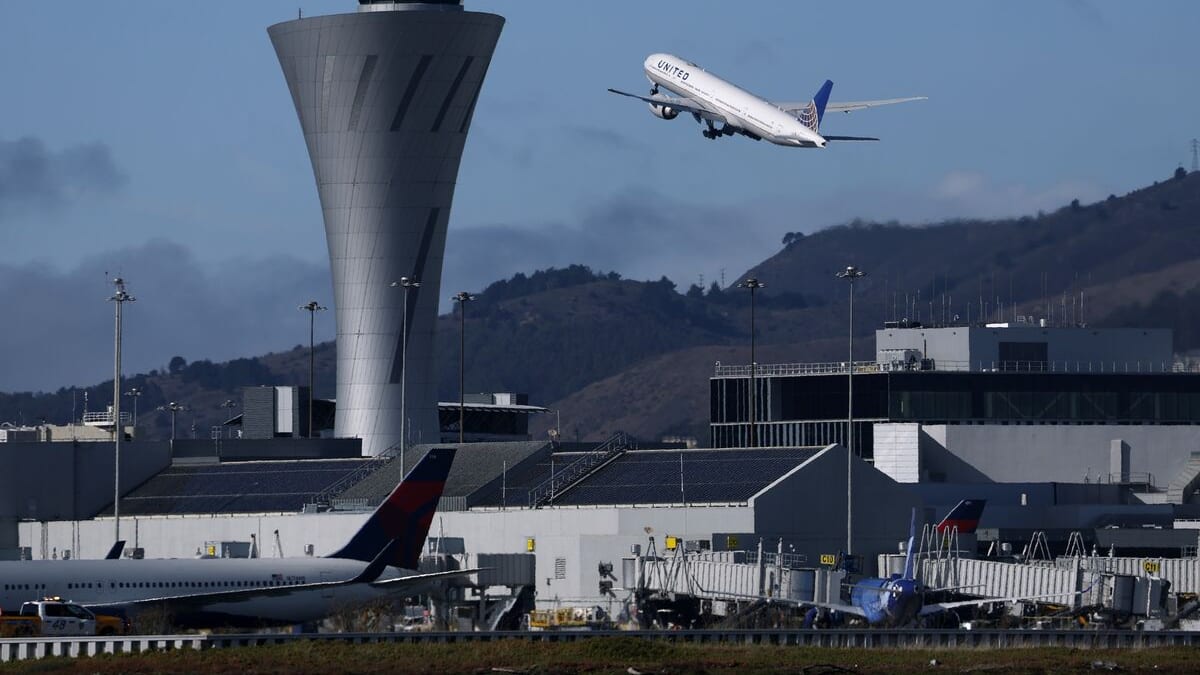
Image by Bloomberg
New FAA Safety Rule Limits Parallel Landings
Publicly available information shows that the Federal Aviation Administration has introduced a permanent safety measure at San Francisco International Airport that bans side-by-side visual landings on the airport’s closely spaced parallel east-west runways in clear weather. The change focuses on approaches to runways 28L and 28R, which sit only about 750 feet apart and have long required highly choreographed operations in busy airspace.
Reports indicate that under the new rule, simultaneous visual approaches in good visibility will be replaced by staggered approaches, with one aircraft offset from the aircraft on the parallel runway rather than flying directly alongside it. The adjustment is intended to create additional spacing and reduce the risk of runway incursions or misaligned approaches in one of the country’s most complex arrival environments.
San Francisco’s parallel runway layout has drawn scrutiny in the past because it leaves little margin for error when traffic is heavy. Aviation analysts note that any rule limiting parallel approaches at such a constrained field is likely to have an immediate effect on capacity, especially at peak hours when SFO typically runs close to its operational limits.
According to published coverage, the FAA has framed the move as a targeted safety step specific to San Francisco’s runway geometry and surrounding airspace, rather than as part of a broader nationwide overhaul of approach procedures.
Arrival Capacity Cut by a Third
The new safety rule is taking effect just as SFO embarks on a six-month repaving project that temporarily shuts one of its other key runway pairs. With the north-south runways out of service for construction, more traffic must funnel onto the remaining east-west pair, amplifying the impact of the FAA restriction on parallel arrivals.
Recent reports indicate that the combined effect of the rule change and runway work will reduce San Francisco’s maximum arrival rate from about 54 flights per hour to roughly 36. In practical terms, that represents a cut of roughly one third in hourly arrivals, a reduction that is expected to ripple across airline schedules and connection banks.
Airport officials have previously forecast some disruption tied to the repaving alone, but updated estimates suggest that delays will be more widespread under the new operating limits. The capacity squeeze will be most acute during morning and evening peaks, when transcontinental and international arrivals typically converge.
Industry observers say airlines will now have to decide whether to proactively trim schedules, retime flights, or maintain current plans and risk more frequent holding patterns and late arrivals when demand exceeds the new hourly cap.
Delays Expected for One in Four Arrivals
Public statements from the airport and carriers point to a noticeable jump in delays as the new regime settles in. Earlier projections around the runway project suggested that about 10 to 15 percent of flights could see delays. Updated expectations now put that figure closer to a quarter of arriving flights, with delays of at least 30 minutes anticipated for many affected services.
Because the change primarily constrains arrivals, experts expect knock-on effects for departures as well, particularly for aircraft and crews scheduled for quick turnarounds. Longer inbound delays can cascade through the day, stretching out departure banks and complicating crew scheduling and aircraft rotations.
Major airlines with large operations at SFO are reviewing timetables and may adjust schedules, swap aircraft types, or re-route some traffic through other West Coast hubs to absorb the impact. Some carriers have indicated that delay levels are fluctuating day by day as they test revised operating plans under the new constraints.
For passengers, the most visible consequence is likely to be increased gate holds, longer in-flight holding patterns near the Bay Area, and a higher risk of missed connections, particularly on tightly timed domestic links.
Safety Context and Recent Close Calls
The FAA’s renewed focus on runway and approach safety comes amid heightened attention to near misses across the national airspace system. Recent high-profile incidents at major U.S. airports, including runway incursions and close calls involving commercial jets and other aircraft, have spurred broader reviews of procedures and traffic patterns.
San Francisco’s configuration and traffic mix have long been viewed as demanding for both pilots and air traffic controllers. Historical incidents involving misaligned approaches in the area, along with complex operations in low visibility and strong crosswinds, have contributed to the perception that SFO requires particularly precise flying and vigilant traffic management.
While there has been no single recent accident at SFO prompting the new rule, aviation specialists note that the ban on side-by-side visual landings aligns with a wider safety push to add redundancy and margin wherever parallel approaches leave little room for error. The repaving project provides a natural window to reset operating assumptions before traffic returns to pre-construction levels.
Runway safety remains one of the FAA’s stated top priorities, and the agency has been rolling out additional monitoring tools, data analysis, and procedural updates nationwide. The San Francisco measure is emerging as one of the more visible examples of that broader campaign.
What Travelers Should Expect in the Months Ahead
For travelers planning to fly through San Francisco, the next several months are likely to require more flexibility. Travel advisories and airline communications are encouraging passengers to build extra time into itineraries, especially when connecting to long-haul international flights or last departures of the day.
Industry guidance suggests favoring earlier flights, allowing longer connection windows, and monitoring flight status closely on the day of travel, since capacity constraints can quickly translate into rolling delays when weather or other disruptions arise. Same-day rebooking may become more challenging at peak times as spare seats are absorbed by displaced passengers.
Airport planners expect some relief once the north-south runway pair returns to service at the end of the repaving period, currently projected several months from now. Even then, the new safety rule on parallel landings is set to remain in place, meaning arrivals will not simply snap back to previous maximum levels.
As SFO and the FAA adapt to the new operating environment, the airport’s experience is likely to be watched closely by other busy hubs with constrained runway layouts. For now, San Francisco travelers face a period in which safety-driven changes, while welcomed by many in the aviation community, come with a clear trade-off in convenience and punctuality.