

More news on this day
Travelers using San Francisco International Airport are being warned to brace for longer waits after federal regulators sharply reduced the number of planes allowed to land each hour, combining with a major runway repaving project to constrain capacity and raise the risk of extended delays.
Get the latest news straight to your inbox!
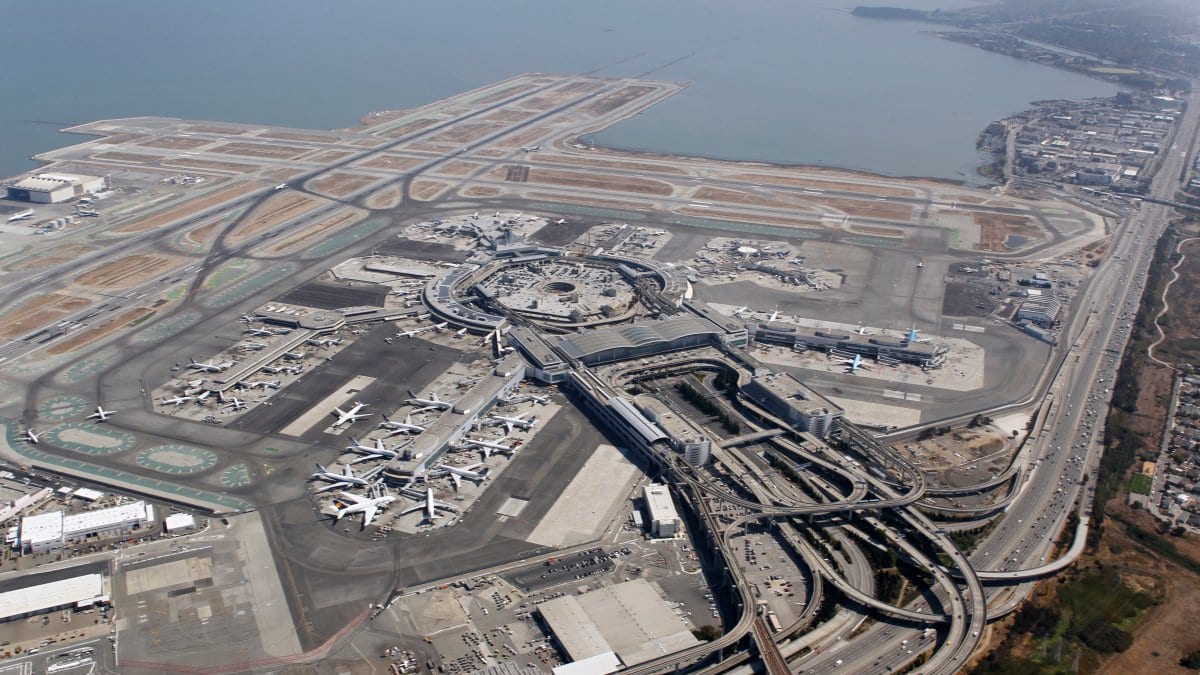
Image by NBC Bay Area
Arrivals Cut from 54 to 36 Per Hour
According to recent coverage from national and local outlets, the Federal Aviation Administration has lowered San Francisco International Airport’s maximum arrival rate from about 54 aircraft per hour to 36. The change took effect this week, just as the airport begins a six-month rehabilitation of one of its primary runways, creating a dual squeeze on the already busy Bay Area hub.
Publicly available information indicates that the new cap is tied both to the construction schedule and to a permanent shift in how arrivals are sequenced at San Francisco. The airport will continue operating but with a substantially reduced ability to absorb peak-time surges, especially in the morning and evening waves that typically see the heaviest traffic.
While airlines are still assessing the impact, the reduced arrival rate means that flights which once could be funneled into short, dense banks of landings will now need to be spread out. Industry scheduling analysts note that this typically translates into slower recovery from disruptions caused by weather, crew timing issues, or upstream congestion at other airports.
Reports indicate that federal planners modeled the new hourly limit around what controllers can safely manage when one runway is closed and more conservative spacing is required between aircraft. That analysis suggests San Francisco will operate with significantly less slack in the system during the peak summer and early autumn travel periods.
Runway Repaving to Last Until Early October
The capacity reduction is being compounded by a long-planned construction project on one of San Francisco’s north-south runways, which closed on March 30 and is scheduled to remain out of service until October 2. Airport construction documents describe the work as a comprehensive repaving intended to extend the life of the pavement and support future traffic growth.
During the project, all arrivals and departures are being funneled primarily onto the airport’s pair of east-west runways. That configuration is not unusual during shorter maintenance windows, but maintaining it for six months significantly limits the flexibility available to air traffic controllers and airport operators as traffic ebbs and flows through the day.
Earlier forecasts from the airport suggested that repaving alone might have pushed delays to roughly 10 to 15 percent of flights, with most disruptions concentrated in a few busy hours. With the federal arrival cap layered on top, publicly available statements from airport representatives now anticipate that about 25 percent of arriving flights could face delays of 30 minutes or more.
Construction impacts of this length and magnitude are often planned years in advance, with the airport, FAA and airlines attempting to balance safety, long-term infrastructure needs and the economic importance of maintaining as much capacity as possible. In this case, the timing means that much of the peak summer travel season will coincide with a constrained runway layout and a more cautious approach to sequencing arrivals.
Safety Focus on Closely Spaced Parallel Runways
The new limits are rooted in how traffic uses San Francisco’s closely spaced parallel runways, long known in aviation circles for requiring careful management and coordination. Public descriptions from federal regulators highlight concerns about side-by-side visual approaches to parallel runways separated by roughly 750 feet, a configuration that has allowed high throughput in clear weather but leaves little room for error in crowded skies.
Recent reports indicate that the FAA is now restricting those simultaneous visual approaches, even when visibility is good and pilots can see the other aircraft. Instead, arrivals are being required to follow staggered profiles that keep more distance between planes landing on the two parallel runways. That adjustment naturally trims the number of aircraft that can safely be handled in a given time period.
The heightened attention follows a series of serious incidents across the national airspace system, including a deadly runway collision at New York’s LaGuardia Airport in March involving an Air Canada jet and a fire vehicle. Coverage of the San Francisco decision notes that regulators characterize the new rule as specific to the local runway geometry and airspace complexity rather than a blanket response to that accident, but it comes amid a broader scrutiny of runway safety and near misses.
Aviation safety specialists point out that closely spaced parallel operations can offer high efficiency when conditions are ideal, yet even small deviations can compress safety margins. The Bay Area’s layered airspace, shared among San Francisco, Oakland, San Jose and several smaller airports, adds to the challenge, making conservative spacing more attractive to regulators at a time when safety metrics across the system are under the microscope.
What Passengers Can Expect in the Months Ahead
For travelers, the practical effect is likely to be felt in longer arrival queues and more frequent holding patterns, particularly during busy morning and evening banks and on days when coastal weather slows operations. Publicly available data and modeling referenced in recent coverage suggest that ground delay programs, in which flights are held at their departure airports to meter flow into San Francisco, could become more common.
Airlines can respond in several ways, including trimming schedules, upgauging aircraft to carry more passengers on fewer flights, or shifting some services to nearby airports such as Oakland and San Jose. Early statements from major carriers with large operations at San Francisco indicate that they are still reviewing potential schedule adjustments in light of the new constraints.
Travelers with connections through San Francisco may see longer scheduled layovers built into itineraries as airlines attempt to absorb the increased risk of missed connections. Those planning trips over the next six months are likely to encounter more advisories to allow additional time in their journeys, particularly on routes that are heavily reliant on San Francisco as a west coast gateway.
Consumer advocates caution that, while many delays will be attributed to air traffic restrictions and construction, passengers will still need to check individual carrier policies on rebooking and compensation. The interplay between weather, mandated safety measures and airline-controlled scheduling often determines whether disrupted travelers are offered hotel stays, meal vouchers or alternative routing.
Wider Implications for U.S. Airspace and Summer Travel
The San Francisco changes arrive as the federal aviation system navigates a broader period of strain, with staffing challenges in some control facilities, high summer demand, and renewed attention on runway incursions and near-collisions at major hubs. Recent government documents and public statements outline a push to prioritize safety margins, even when that means accepting more congestion and slower recovery during peak travel periods.
Analysts following the industry note that San Francisco is not the only airport facing schedule reductions tied to construction or safety reviews, but its role as a key transpacific and domestic hub makes the ripple effects potentially larger. Delays on transcontinental routes into the Bay Area can cascade across carriers’ networks, affecting flights far from California.
For the travel sector more broadly, the situation underscores how infrastructure upgrades and evolving safety standards can collide with pent-up demand for flying. Tour operators, hotels and regional tourism boards may see more variability in arrival times and a higher incidence of late-night check-ins, especially on days when marine layer fog or storms further slow the flow of aircraft.
With San Francisco’s runway project not expected to wrap up until early October, the combined impact of construction and tightened arrival rules is poised to shape the experience of summer and early fall air travel for millions of passengers. Industry observers suggest that the coming months will serve as a test of how well airlines and airports can adapt schedules, staffing and customer communication when safety-driven capacity constraints take center stage.