

More news on this day
Travelers using San Francisco International Airport are being warned to brace for delays after the Federal Aviation Administration reduced permitted arrivals by a third, combining a months-long runway repaving project with new restrictions on closely spaced parallel landings.
Get the latest news straight to your inbox!
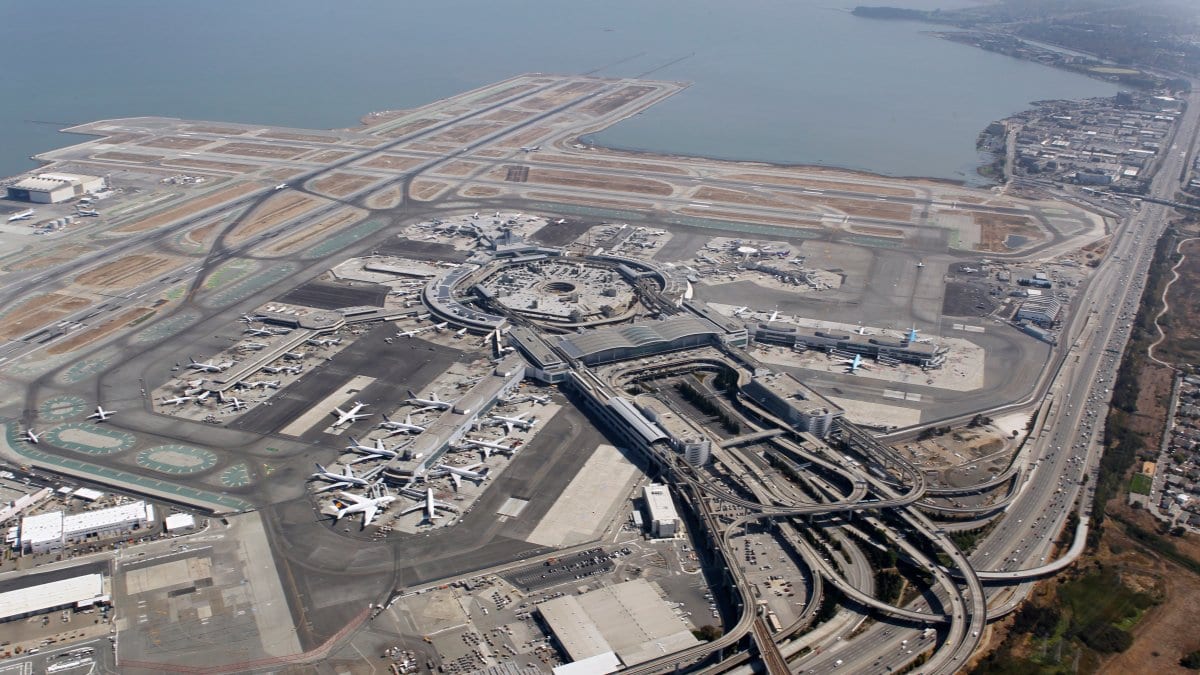
Image by NBC Bay Area
Capacity Cut From 54 to 36 Arrivals an Hour
Publicly available information shows that San Francisco International Airport’s maximum arrival rate dropped this week from 54 flights per hour to 36. The change reflects both an ongoing construction program and a permanent adjustment to how the airport’s east-west runways can be used for simultaneous approaches.
Reports indicate that one of SFO’s north-south runways has been taken out of service for a six-month rehabilitation project that began March 30, 2026. During this period, nearly all traffic is being funneled onto the main east-west pair, Runways 28 Left and 28 Right, concentrating operations on fewer pieces of pavement and limiting flexibility when traffic backs up.
According to recent coverage from national and local outlets, the temporary construction-related limit has been layered on top of a longer-lasting Federal Aviation Administration rule change that curbs how many arrivals can be sequenced to SFO’s closely spaced parallels. Together, these moves are expected to have tangible effects on peak travel periods throughout the spring and summer.
SFO remains one of the country’s busiest international gateways, and schedule data reviewed by aviation analysts suggest that even a one-third reduction in hourly arrivals can translate into knock-on delays across airline networks, particularly for carriers that use the airport as a transpacific hub.
Runway Repaving Compresses Traffic Onto Parallel 28L and 28R
The construction work now underway centers on one of SFO’s north-south runways, part of a broader, multi-year program to rehabilitate aging pavement and upgrade taxiway geometry. Industry bulletins indicate that the project will keep the runway closed for about six months, with reopening currently projected for early October 2026.
During the closure, arrivals and departures are being consolidated on Runways 28 Left and 28 Right, the two long east-west runways that handle the bulk of SFO’s traffic. Operational summaries from the airport describe a “28/28 configuration” in which the parallel pair carries nearly all movements, while an adjacent north-south runway functions primarily as a taxiway to reduce ground congestion.
Construction impact reports published by federal agencies highlight SFO as a key example of how runway work can ripple through the national airspace system. When a major runway is temporarily removed from service, the combination of shifted flight paths, revised taxi routes and tighter sequencing windows tends to amplify minor disruptions into broader delays, especially in complex regional airspace like the Bay Area.
Project documents emphasize that the upgrades are intended to improve long-term reliability and safety, even as they introduce short-term constraints. For travelers, that means months of potential inconvenience now in the hope of more resilient operations in future storm seasons and peak holiday periods.
Heightened Scrutiny of Closely Spaced Parallel Approaches
Alongside the construction, the Federal Aviation Administration has moved to restrict SFO’s longstanding practice of running simultaneous visual approaches to its closely spaced parallel runways in clear weather. The airport’s two main east-west runways are separated by roughly 750 feet, a configuration that has historically allowed side by side arrivals under specific procedures.
According to published coverage citing federal rule changes, regulators concluded that existing procedures at SFO did not fully align with the agency’s current aircraft separation standards. The new rules effectively ban or sharply limit side by side visual approaches on the parallels and instead require staggered arrival streams, cutting the number of aircraft that can be safely sequenced per hour.
The shift comes amid a broader national focus on runway safety and near misses. Recent data analyses and investigative reporting describe an uptick in serious runway incursions and near midair collisions in the United States since 2019, prompting a series of targeted initiatives at busy hubs where intersecting runways, dense traffic and challenging geography intersect.
Industry commentators note that SFO presents a particularly demanding environment, with converging traffic from transpacific routes, domestic hubs and nearby regional airports in Oakland and San Jose. Limiting simultaneous visual approaches on the closest-spaced parallels narrows the margin for error but also reduces the airport’s ability to quickly absorb surges in arrival demand.
What Travelers Can Expect in the Coming Months
Forecasts shared by airport representatives in recent briefings suggest that roughly one quarter of arriving flights could experience delays of 30 minutes or more during the most constrained periods. Early data from local television and online travel coverage point to fluctuating impacts, with some days seeing noticeable congestion and others moving more smoothly depending on weather and schedule loads.
Major carriers are reviewing their schedules into SFO to determine whether adjustments or select flight reductions are needed to keep operations reliable. United Airlines and Alaska Airlines, the airport’s two largest tenants, have signaled through public statements and email updates that they are monitoring the new arrival cap and construction timeline as they plan for the busy summer travel season.
Travel experts recommend that passengers connecting through SFO build in longer layovers, particularly for late afternoon and evening banks when the arrival push and lingering morning delays can collide. Travelers on time-sensitive itineraries are also being advised, in media segments and advisories, to consider early-day departures, which historically have a better chance of leaving on schedule before the system is fully loaded.
For now, there is no firm indication that broad waves of cancellations will accompany the new arrival limits. Instead, observers expect a pattern of chronic minor delays that can escalate on days with low clouds, strong crosswinds or air traffic disruptions elsewhere in the system that feed into SFO.
Longer-Term Questions for Bay Area Air Travel
The decision to permanently reduce SFO’s maximum arrival rate as part of the new safety rules raises broader questions about capacity planning in the Bay Area. Regional planning documents and public forums have long identified the constrained runway layout at SFO, hemmed in by the bay and nearby communities, as a structural limitation on growth.
With the airport now operating on a lower arrival cap that regulators do not intend to lift when the repaving is complete, airlines, local businesses and travelers may need to adjust expectations about how many flights SFO can realistically handle at peak times. Analysts suggest that some demand could shift toward Oakland or San Jose, or be redistributed across different times of day to fit within the new envelope.
Community groups that track aircraft noise and environmental impacts are also watching the evolving situation. Some neighborhood advocates have previously pushed for fewer late-night operations and more predictable flight paths, while business leaders emphasize the importance of maintaining strong international connectivity. The new arrival limits add another variable into an already complex conversation about growth, quality of life and regional competitiveness.
In the meantime, construction cranes and resurfacing crews will remain a visible presence at SFO through at least early October, and the tighter arrival regime will continue to shape the daily rhythm of operations. For travelers planning trips in and out of the Bay Area, the message from recent public reporting is simple: expect fuller planes, leave extra time, and be prepared for schedules that are more fragile than usual while the runways and rules are in transition.