

More news on this day
San Francisco International Airport is bracing for months of heavy disruption after the Federal Aviation Administration reduced permitted arrivals by roughly one third, a move linked to major runway repaving work and new safety rules that restrict parallel landings.
Get the latest news straight to your inbox!
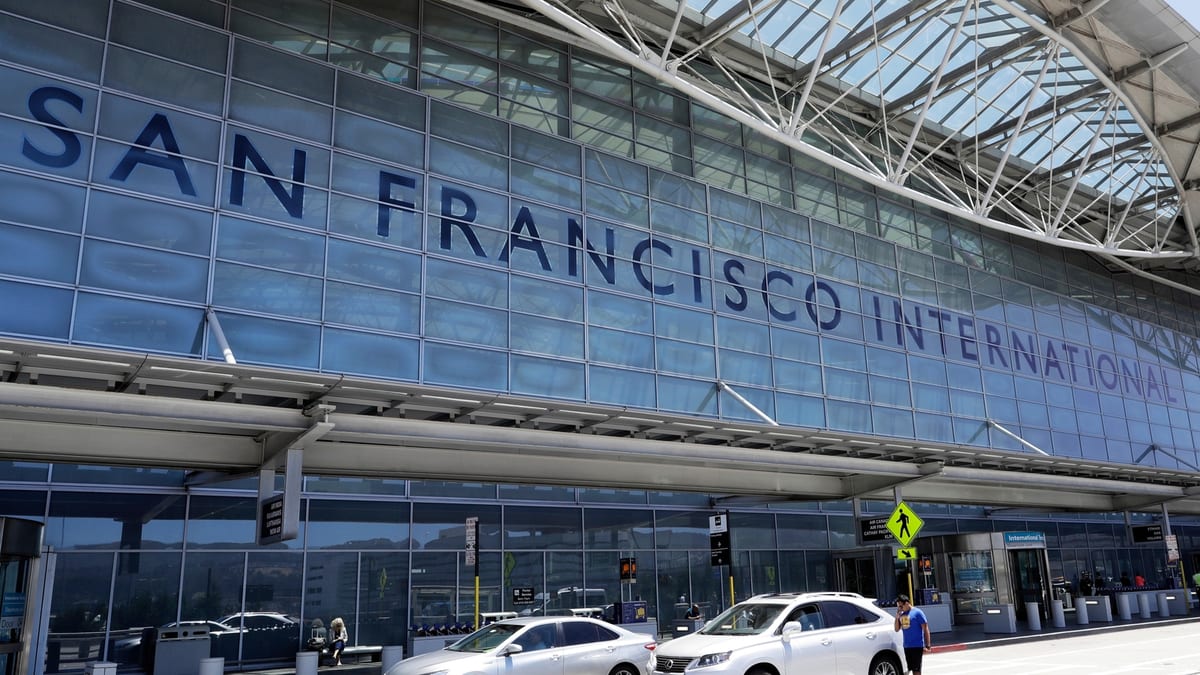
Image by ABC7 San Francisco
Arrival Capacity Cut from 54 to 36 Flights Per Hour
Publicly available FAA and airport information indicates that San Francisco International Airport’s maximum arrival rate has been reduced from about 54 flights per hour to 36. The change took effect this week, just as a six-month runway repaving project began, and is expected to ripple through the busy spring and summer travel seasons.
According to recent national and local coverage, the reduced rate stems from a combination of temporary and permanent measures. The temporary factor is the closure of one of SFO’s north-south runways for repaving, while the permanent change is a new FAA rule that curbs side-by-side visual approaches on the airport’s closely spaced parallel runways in clear weather.
Reports describe the move as one of the most significant capacity adjustments at a major U.S. hub in recent years, effectively removing 18 arrival slots each hour. For a schedule built around tight connection banks and peak transcontinental waves, that loss is expected to translate into chronic congestion during busy periods.
Travel outlets note that SFO’s airspace is already among the most complex in the country, sharing the Bay Area with Oakland and San José airports and several general aviation fields. The new constraints effectively narrow the funnel into San Francisco just as airlines enter one of the busiest travel periods of the year.
Runway Repaving Project to Last Six Months
The capacity reduction is tied in part to a long-planned repaving and upgrade program on one of SFO’s north-south runways, which closed on March 30 and is scheduled to remain out of service for roughly six months. Airport materials describe the project as essential maintenance intended to extend pavement life and modernize lighting and markings.
Before the FAA’s additional safety measures were announced, airport planning documents and briefings suggested the runway closure alone would likely cause delays for fewer than 10 to 15 percent of flights, concentrated around peak morning and evening periods. Airlines and passengers had been warned to expect some holding patterns and minor schedule adjustments, but not a wholesale change to the airport’s arrival rate.
With the new federal restrictions now layered on top of the construction, the impact has grown considerably. Only the east-west pair of runways remains fully available for arrivals and departures, and the runway parallel to the construction area is being used primarily as a taxiway to manage ground congestion. That configuration leaves less flexibility when weather or traffic surges create bottlenecks.
Airport communications emphasize that the construction is temporary and that the affected runway is currently slated to return to service in early October. When that happens, some of the lost arrival capacity could be restored, although the new rules on simultaneous approaches are expected to remain in place.
New Safety Rules Target Parallel Approaches
The FAA’s latest safety measure focuses on SFO’s long-standing practice of conducting side-by-side visual approaches to its closely spaced parallel east-west runways in clear weather. Aviation trade publications report that the new rule sharply restricts those operations, citing concerns about the complexity of the airspace and the limited distance between runways.
According to recent analyses, San Francisco’s parallel runways are separated by about 750 feet, which has historically required special procedures and pilot training to support simultaneous visual landings. The new restrictions effectively treat the pair more like a single runway during certain conditions, cutting arrival throughput even when skies are clear.
Safety has been under intense scrutiny across the U.S. aviation system following a series of high-profile runway incursions and near-collisions. National runway safety statistics show that serious incidents remain rare but have drawn renewed attention to situations where aircraft operate in close proximity on intersecting or parallel paths.
Industry commentators note that the FAA’s decision at SFO follows broader efforts to tighten margins around complex runway configurations and to reduce reliance on visual approaches where aircraft separation depends heavily on pilot vigilance. While the agency has characterized the San Francisco changes as specific to that airport’s geometry and airspace, many analysts see them as part of a wider recalibration of risk around the busiest hubs.
Impact on Travelers and Airlines
For travelers, the most immediate effect is time. Local broadcast and national news reports indicate that around a quarter of arriving flights at SFO could now face delays of at least 30 minutes during the six-month construction window, a significant jump from earlier projections tied solely to the repaving project.
Even when flights are not officially delayed, the reduced arrival rate is likely to mean more holding patterns in the air and longer waits on the ground for gates and taxi clearances. Travel analysts warn that connections through San Francisco will be particularly vulnerable, with missed onward flights cascading through airline networks and potentially leading to overnight disruptions during severe congestion.
Major carriers with hubs and focus-city operations at SFO are reviewing schedules and adjusting aircraft routings in response to the new constraints, according to airline statements cited in recent coverage. Some flights may see minor retimings to smooth demand across the day, while others could be consolidated if demand and slot availability no longer align.
Consumer advocates are urging passengers to build extra buffer time into itineraries that involve San Francisco, especially when traveling for events or cruises that cannot be easily rescheduled. Same-day turns, tight layovers and late-night arrivals are seen as higher-risk choices while the measures are in place.
Regional Ripple Effects Across the Bay Area
The disruption at SFO is also expected to reverberate across the wider Bay Area aviation market. Travel media and local commentary point to Oakland International and San José Mineta International Airport as potential pressure valves, with some travelers already shifting bookings to avoid anticipated congestion at San Francisco.
Airlines with flexibility in their networks may move a limited number of flights to neighboring airports, particularly point-to-point routes that do not depend on SFO’s long-haul connectivity. However, analysts caution that neither Oakland nor San José has the runway configuration, gate capacity or international infrastructure to fully replicate San Francisco’s role as the region’s primary global gateway.
Ground transportation patterns could also shift as more passengers consider driving to alternate airports or arriving earlier at SFO to navigate potential check-in and security queues during peak hours. Ride-hailing services, airport shuttles and regional transit providers may see uneven surges depending on how quickly travelers adjust their habits.
For now, public-facing guidance from travel outlets consistently advises passengers to monitor flight status closely, stay in contact with airlines through apps and text alerts, and be prepared for longer-than-normal travel days when itineraries involve San Francisco International Airport over the coming months.