

More news on this day
Travelers passing through San Francisco International Airport are being warned to expect longer waits after the Federal Aviation Administration sharply reduced the number of flights allowed to land each hour, a change tied to an extended runway repair project and heightened concern over closely spaced parallel approaches.
Get the latest news straight to your inbox!
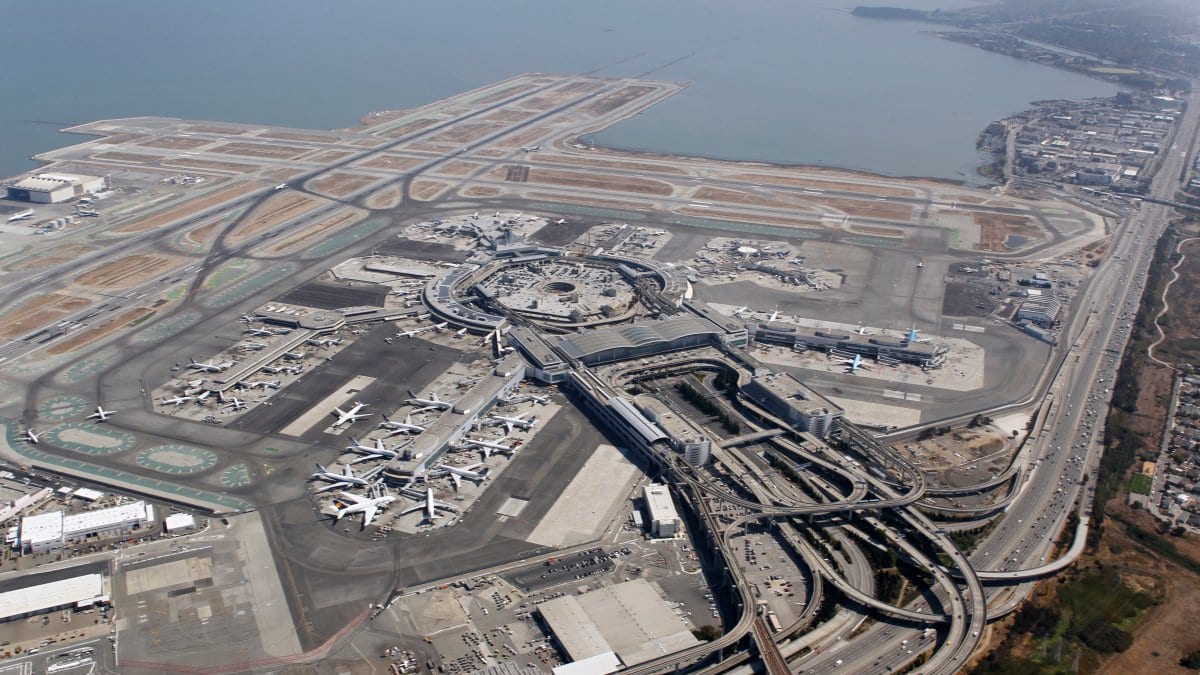
Image by nbcbayarea.com
Arrival Rate Cut From 54 to 36 Flights Per Hour
According to recent coverage from national and Bay Area outlets, the FAA has lowered San Francisco International Airport’s maximum arrival rate from about 54 flights per hour to 36. Reports indicate that the change took effect this week, coinciding with the closure of Runway 1 Right for an intensive six month repaving and taxiway upgrade program that began March 30, 2026.
Publicly available information shows that SFO traffic is now being funneled primarily onto its main 28 Left and 28 Right runways. The reduced arrival rate is expected to ripple through peak travel periods, particularly in the late morning and afternoon, when schedules are typically packed with short haul domestic flights and key connections to long haul services.
Airport planning documents previously suggested that runway construction alone could lead to roughly 10 to 15 percent of flights experiencing delays of 30 minutes or more. New FAA limits on how many aircraft can land at SFO each hour are now projected to push that figure much higher, with the airport warning that roughly a quarter of arriving flights could face delays of at least half an hour.
The revised capacity figure effectively represents a one third cut in the airport’s arrival throughput. Analysts note that even small reductions can have outsized effects on actual passenger experience when bad weather or upstream congestion compounds the constraints already built into the schedule.
Runway 1R Closure Adds Pressure to SFO’s Complex Layout
San Francisco International has long been considered a challenging airfield from a capacity and weather standpoint, with intersecting and parallel runways set in a narrow footprint beside the bay. Airport planning materials and construction notices describe the current project on Runway 1 Right as a major resurfacing and taxiway improvement effort funded in part by federal grants and valued at around 180 million dollars.
The project timetable calls for Runway 1 Right to remain closed until early October, concentrating all arrivals and most departures on the remaining runway pair. The adjacent Runway 1 Left is being used primarily as a taxiway to manage ground congestion, rather than as an active runway, which further tightens the operational envelope.
Construction impact briefings prepared for airlines and regulators characterize the work as fast paced and highly sensitive, requiring long closure windows and careful sequencing to preserve safety margins. With fewer pieces of pavement available, any disruption from coastal fog, crosswinds, or low clouds is more likely to trigger formal traffic management programs that hold flights at their departure airports and stretch out arrival banks into the late evening.
Past construction cycles at SFO have already demonstrated how quickly delays can build when one runway is out of service. Recent flight performance data shows that even single day closures linked to weather or maintenance can slow the system enough to affect hundreds of flights, and the current work extends that pressure over many months.
New Limits on Parallel Approaches Reflect Safety Focus
In parallel with the construction program, the FAA has introduced permanent constraints on side by side landings at SFO’s closely spaced parallel runways. Aviation industry reports state that regulators are curbing the airport’s long standing practice of allowing simultaneous visual approaches to two runways separated by only about 750 feet, a configuration that has drawn scrutiny as national attention to runway incursions and near misses has intensified.
Published coverage of the new rules describes a shift toward staggered arrivals, with one aircraft offset from the other instead of both descending in lockstep toward adjacent runways. While such techniques are a familiar response during poor weather or reduced visibility, making them the baseline standard effectively lowers the number of landings controllers can safely sequence in a given time period.
Regulatory filings and safety briefings indicate that the adjustments are framed as a location specific response to SFO’s combination of tight runway geometry and dense regional airspace, which includes major airports in Oakland and San Jose along with several busy general aviation fields. The FAA has signaled through public documents that it does not intend to relax the added safeguards once the current runway work is finished.
For airlines and schedule planners, that stance means the new arrival cap is more than a short term construction constraint. It represents a structural change to how much traffic the Bay Area’s largest airport can reliably process in peak periods under the latest interpretation of national safety priorities.
Airlines Brace for Schedule Adjustments and Missed Connections
Carriers that rely heavily on San Francisco as a hub are now assessing how to adapt. Reports from travel industry publications and local media note that United Airlines, SFO’s largest operator, and Alaska Airlines, another key player, are reviewing the updated arrival rate and modeling whether to trim schedules, retime flights, or shift some services to other airports in the region.
Early data from the first days of the change show a mix of outcomes, with some banks operating close to plan and others showing clusters of late arrivals when weather or upstream congestion coincide with the new caps. Industry observers point out that East Coast and Midwest flights bound for SFO may be held at their departure points more often, as the FAA’s national traffic control center works to keep inbound flows aligned with the lower acceptance rate.
Travel analysts caution that the biggest impact is likely to fall on connecting passengers, particularly those linking short hop West Coast flights with long haul departures to Hawaii, Asia, or Europe. Once a late arriving feeder flight slips beyond a narrow connection window, rebooking options out of SFO may be limited, especially during holidays and peak summer travel when alternative seats are scarce.
Some coverage suggests that airlines could respond by scheduling slightly longer block times into SFO, effectively baking anticipated delays into ticketed itineraries. While this can improve on time statistics, it can also lengthen overall journey times and reduce aircraft utilization, which in turn may influence fares and capacity decisions on certain routes.
What Travelers Can Expect in the Months Ahead
For individual passengers, the most visible effect of the FAA’s decision and SFO’s runway work will likely be longer lines at departure airports, more frequent gate holds, and arrival times that drift later into the evening. Historical delay patterns at SFO already show that afternoon and evening operations are vulnerable when morning banks run long, and the new constraints increase the odds of that kind of cascading effect.
Travel planning guides and airport advisories are urging passengers with critical connections, cruises, or events to build extra time into their itineraries, particularly if they are flying through SFO between now and early October. Suggested strategies include choosing earlier flights in the day, favoring nonstop options when possible, and avoiding very tight connections on itineraries that rely on SFO as a transfer point.
Regional alternatives may also see greater interest. With Oakland and San Jose airports unaffected by the specific SFO arrival cap, some travelers and corporate travel managers may look at shifting point to point trips to those facilities, especially when schedules and fares are comparable.
While the long running runway project and new safety rules introduce months of near term inconvenience, airport planning documents emphasize that the repaving and taxiway improvements are intended to preserve SFO’s long term reliability. Once the construction wraps up, executives will still need to navigate the permanent federal limits on closely spaced parallel approaches, but they will do so with upgraded infrastructure that is expected to support safer and more predictable operations over the coming decades.