

More news on this day
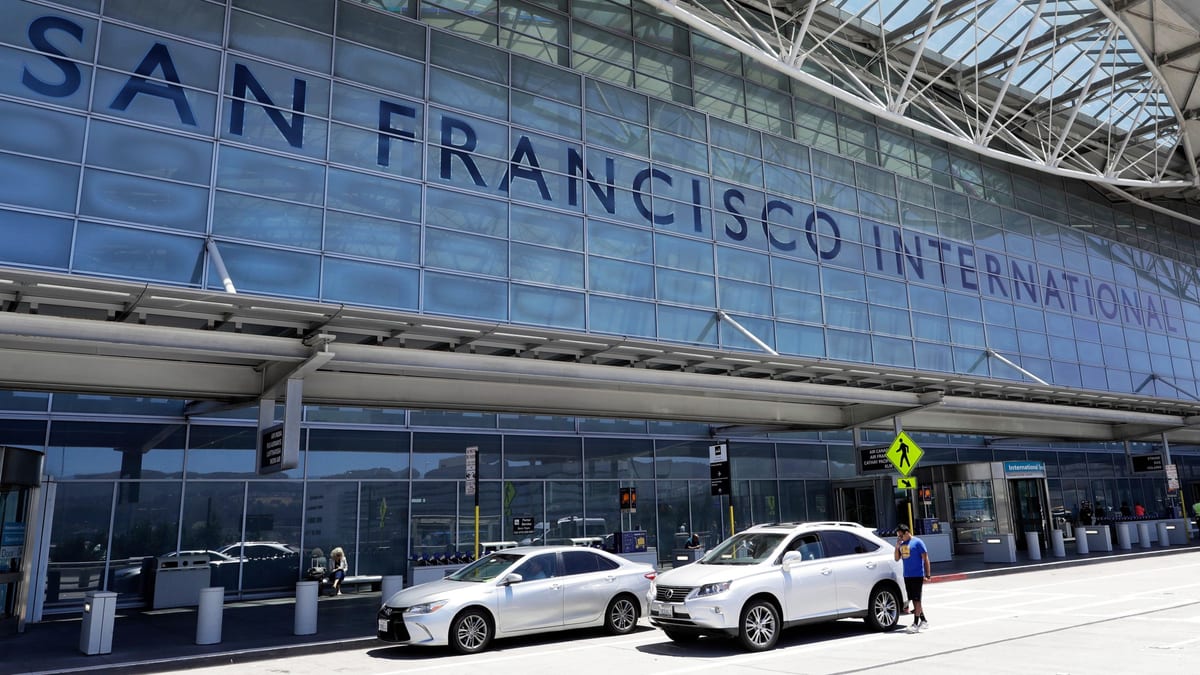
San Francisco International Airport is bracing for significant schedule disruption after federal regulators reduced permitted arrivals by roughly one third, citing a combination of runway construction and heightened concerns about closely spaced approaches in the Bay Area’s crowded airspace.
Get the latest news straight to your inbox!
Arrival Rate Slashed From 54 to 36 Flights Per Hour
Publicly available information shows that the Federal Aviation Administration has reduced San Francisco International Airport’s maximum arrival rate from about 54 flights per hour to 36. The change represents a one third cut to landing capacity at one of the West Coast’s busiest hubs and is expected to ripple across domestic and international schedules.
Reports indicate that the new limit is already in effect as of early April 2026. The adjustment affects peak banks in particular, when SFO routinely handled dense arrival waves that depended on simultaneous use of its parallel runways. With fewer slots available each hour, airlines may be forced to stretch their schedules across a wider time window or trim frequencies on some routes.
Travelers connecting through SFO are likely to feel the impact first in the form of longer ground holds at origin airports, missed connections and tighter seat availability on popular corridors. While it remains unclear how many flights, if any, will ultimately be canceled, analysts note that constrained runway capacity typically translates into more chronic delays rather than dramatic schedule cuts.
According to published coverage, preliminary modeling by airport planners suggests that roughly one in four arriving flights could face delays of at least 30 minutes during the busiest periods. Those disruptions would be layered on top of any weather related slowdowns that have long been a feature of flying into the fog prone Bay Area.
Runway Repaving Project Removes Key North–South Pair
The rate reduction coincides with a long planned, six month repaving project on SFO’s north–south runways, which normally provide critical flexibility during wind shifts and peak demand. Publicly available project descriptions indicate that the north–south pair is out of service for much of the construction window, pushing nearly all traffic to the longer east–west runways 28 Left and 28 Right.
With that shift, SFO effectively becomes a two runway airport for both arrivals and departures, and air traffic managers lose one of their main tools for balancing flows during busy morning and evening banks. Construction plans show that one of the north–south runways is also being repurposed temporarily as a taxiway to help ease ground congestion while the work proceeds.
The runway work alone accounts for about half of the 18 flight per hour reduction, according to aviation trade coverage, with the remainder tied to the safety related rule change. The construction phase is expected to last roughly six months, with a tentative completion date in early October, at which point some capacity could return if the project stays on schedule.
Maintenance driven closures have periodically constrained SFO operations in the past, especially when combined with low ceilings or crosswinds that limit available configurations. However, observers note that the current project is unusual in its duration and in the fact that it coincides with sweeping changes to arrival procedures that are expected to outlast the construction itself.
End of Simultaneous Side by Side Approaches
At the center of the safety debate is SFO’s long standing practice of using side by side visual approaches to closely spaced parallel runways under clear weather conditions. Aviation analysts explain that those procedures allowed two aircraft to land almost simultaneously on runways separated by about 750 feet, significantly boosting hourly throughput during peak demand.
According to multiple aviation news reports, the FAA has now moved to prohibit those paired visual approaches at SFO, requiring greater spacing or staggered tracks between arriving aircraft on the parallel runways. The decision follows a series of high profile runway and surface safety incidents at major U.S. airports over the past two years, which have drawn increased scrutiny to operations where small margins for error exist.
In public guidance and policy documents, the agency has emphasized a systemwide push to reduce runway incursion risk and tighten safety buffers at complex fields. While the recent deadly crash involving an Air Canada jet and an emergency vehicle at New York’s LaGuardia Airport did not occur at SFO, coverage of the latest changes frames them as part of a broader effort to address hazards during periods of intense traffic and mixed operations on the ground.
For SFO, the loss of side by side visuals removes one of the airport’s few levers for pushing hourly arrival rates above the effective capacity of a single runway. Combined with construction related closures, the change makes the new, lower arrival cap appear less like a short term inconvenience and more like the starting point for a new normal in how traffic is managed in and out of the Bay Area’s primary international gateway.
Delays Likely to Ripple Across Airlines and Routes
San Francisco International serves as a key connecting hub for major U.S. carriers, particularly United Airlines and Alaska Airlines. With arrival capacity reduced, schedule planners for those and other airlines face difficult trade offs over where to absorb the impact, from trimming frequencies on marginal routes to padding block times on core transcontinental and transpacific services.
Published coverage from industry outlets notes that early delay statistics have varied day to day, with some periods showing modest disruption and others registering clusters of late arrivals as the system adjusts. Airlines also have the option of rerouting some connecting traffic through alternate hubs, although that can complicate crew and aircraft rotations already under strain from staffing and fleet constraints.
Bay Area travelers could see more pronounced crowding on flights into and out of Oakland and San Jose as some demand shifts away from SFO, particularly among passengers with flexibility on departure times or airport choice. Regional business groups have expressed concern that persistent congestion at SFO could undermine the reliability of long haul links that support the technology and life sciences sectors that rely heavily on international connectivity.
Travel analysts suggest that passengers with near term plans to fly through SFO build in extra time for connections, consider earlier departures on the same day and monitor their flight status closely in the 24 hours before travel. Some carriers may also adjust waiver policies if delays mount during the busiest parts of the summer season and the new rules prove more disruptive than initially forecast.
What Travelers Can Expect in the Months Ahead
Looking ahead, the next several months are likely to serve as a stress test for the combination of construction activity and procedural changes at SFO. If the runway repaving finishes on time in early October, the airport should regain some operational flexibility, but the permanent restrictions on parallel visual approaches suggest that pre 2026 arrival rates will be difficult to fully restore.
Airport briefings and planning documents indicate that SFO is working with federal regulators and air traffic facilities to refine arrival procedures, explore alternative sequencing strategies and make fuller use of performance based navigation to thread more predictable paths through the region’s already congested skies. Any such refinements, however, are expected to offer incremental rather than dramatic gains.
For travelers, the practical reality is that SFO may behave more like a weather sensitive airport even on clear days, with longer average taxi and waiting times built into the schedule. Industry observers point out that similar rate reductions at other major airports have tended to become semi permanent, especially when tied to safety initiatives that enjoy broad institutional support.
As the busy summer travel period approaches, airlines, airport managers and regulators are likely to face sustained scrutiny over on time performance at SFO and the wider Bay Area network. For now, the combination of runway work and tighter safety margins has firmly reset expectations about how many flights can land in San Francisco each hour, and how reliably they can do so during peak demand.