

More news on this day
San Francisco International Airport is bracing for months of disruption after the Federal Aviation Administration reduced the number of permitted arrivals by about one-third, citing runway safety concerns and ongoing construction.
Get the latest news straight to your inbox!
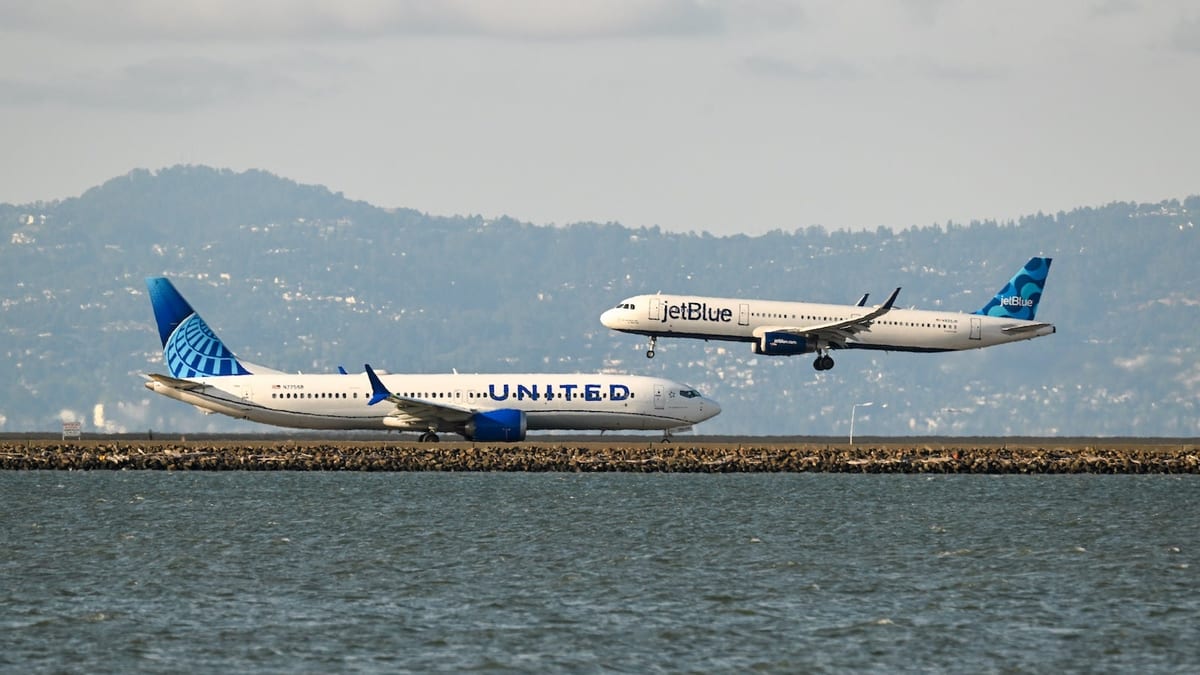
Arrival Capacity Cut from 54 to 36 Flights an Hour
Publicly available information indicates that the FAA has lowered San Francisco International Airport’s maximum arrival rate from 54 flights per hour to 36. The change follows a review of how aircraft are sequenced onto the airport’s closely spaced parallel runways and is being introduced at the same time a major repaving project is under way on one of the runway pairs.
Reports describe the move as a significant operational shift at one of the country’s busiest West Coast hubs. By cutting roughly a third of incoming flight slots, the new limits alter how airlines can schedule arrivals during peak periods and reduce the margin available to recover from weather or air traffic disruptions.
The change applies to both a temporary reduction driven by construction and a more lasting adjustment in how arrival capacity is calculated. Coverage of the decision notes that the revised limits are being layered on top of long-standing congestion in Bay Area airspace, where multiple airports compete for the same arrival and departure corridors.
Early data from aviation tracking and airline operations tools show knock-on effects across domestic and international networks, with aircraft and crews arriving later into San Francisco and then leaving late for onward legs.
Runway Safety and Parallel Operations Under Scrutiny
According to recent coverage of the decision, the FAA’s concerns center on San Francisco’s configuration of closely spaced parallel runways and the longstanding practice of handling simultaneous arrivals during busy periods. The airport has two sets of parallel runways, and the northern pair is undergoing a months-long resurfacing program that already restricts available capacity.
Publicly available information highlights that the revised arrival rate is linked to a fresh examination of how aircraft approach and land side by side on runways separated by a relatively short distance. The current focus on parallel operations follows a series of high-profile near misses and runway incursions across the national airspace system over the past two years, which have drawn attention to tight margins at complex airports.
Analysts note that the safety rationale is twofold. First, lowering the arrival rate provides controllers with more room to space aircraft during peak periods and in marginal weather. Second, it reduces the reliance on visual procedures that had allowed tighter spacing under good visibility, but which leave less buffer for unexpected events or pilot deviations.
The move fits within a broader pattern of regulators reassessing procedures at busy hubs where traffic volume has grown faster than infrastructure. Industry observers point out that, while San Francisco’s geography and runway layout are uniquely challenging, similar questions about parallel approaches and spacing are being raised at other major airports.
What Travelers Can Expect in the Coming Months
Estimates cited in recent reports suggest that roughly one quarter of arriving flights at San Francisco could experience delays of 30 minutes or more while the new regime is in place. The effect is expected to be most visible during the morning and evening peaks when demand historically presses against the upper limits of the airport’s runway capacity.
Travel-industry coverage indicates that the six-month runway repaving project is scheduled to run into early October, with some of the arrival cuts directly tied to having one runway pair out of service. Once that work concludes, some relief is expected, but the longer term impact of the more conservative arrival rules is still being evaluated.
For passengers, the practical implications are likely to include longer scheduled block times, more frequent holding patterns during busy periods, and a higher risk of missed connections when inbound flights run late. Because San Francisco is a major connecting hub for transcontinental and transpacific itineraries, delays on the West Coast can ripple into overnight flights to Asia and onward journeys across the United States.
Travel planners advise allowing extra time for connections through San Francisco, particularly on itineraries that involve tight layovers. Some industry commentators also anticipate that airlines may adjust fares and capacity on certain routes if the reduced arrival rate persists, in order to align schedules with the airport’s new constraints.
Airlines and Airport Operators Adjust Schedules
Major carriers at San Francisco are reviewing their timetables in response to the FAA’s decision, based on information shared in airline statements and operations updates. United Airlines and Alaska Airlines, the two largest players at the airport, are expected to fine-tune schedules, swap aircraft types, or consolidate lower-demand flights to stay within the new hourly cap.
Airport representatives have indicated through public briefings and media comments that they are working with carriers and air traffic specialists to smooth out the transition. That work includes identifying which time periods are under the most pressure and exploring whether small schedule shifts can prevent bottlenecks without cutting a large number of flights.
Industry analysis suggests that some adjustments may take time to become visible in booking systems, as airlines weigh customer demand, crew availability, and the economics of operating from a constrained hub. In the near term, observers expect more use of ground-delay programs and preemptive rebooking in order to manage congestion before it builds up in the airspace around the Bay Area.
Regional and low cost carriers using San Francisco as a spoke rather than a hub may see disproportionate impacts if prime arrival slots are prioritized for long haul and banked connections. That dynamic could gradually shift some traffic to Oakland or San Jose, where available capacity and pricing allow.
Broader Debate Over Capacity, Safety and Bay Area Demand
The cut in arrivals has reignited discussion about whether the Bay Area’s aviation infrastructure can keep pace with long-term demand. Commentators note that San Francisco, Oakland and San Jose share a tightly constrained airspace, and that major expansions at any one airport are difficult because of geography, environmental limits and community concerns.
Safety advocates argue that the FAA’s more conservative stance reflects lessons from recent runway incidents and near collisions nationwide, emphasizing that maintaining wider margins is preferable to pushing airports to their theoretical maximum throughput. They point out that delays and schedule reshuffling, while inconvenient, are a manageable trade-off when compared with the potential consequences of a serious accident.
On the other side, some business and tourism interests worry that sustained capacity limits could erode San Francisco’s competitive position as an international gateway. If the reduced arrival rate effectively becomes a new normal, airlines may find it harder to add new routes or increase frequencies, potentially nudging travelers to connect through other West Coast hubs.
For now, the changes at San Francisco International Airport illustrate the delicate balance between safety, reliability and growth across the United States air travel system. As the construction phase progresses and the revised rules bed in, the experience of handling fewer arrivals per hour at one of the country’s most complex airports is likely to inform similar debates elsewhere.