

More news on this day
San Francisco International Airport is bracing for a sustained period of disruption after the Federal Aviation Administration cut its maximum hourly arrivals by one third, citing runway safety concerns and overlapping construction that are expected to ripple through flight schedules for months.
Get the latest news straight to your inbox!
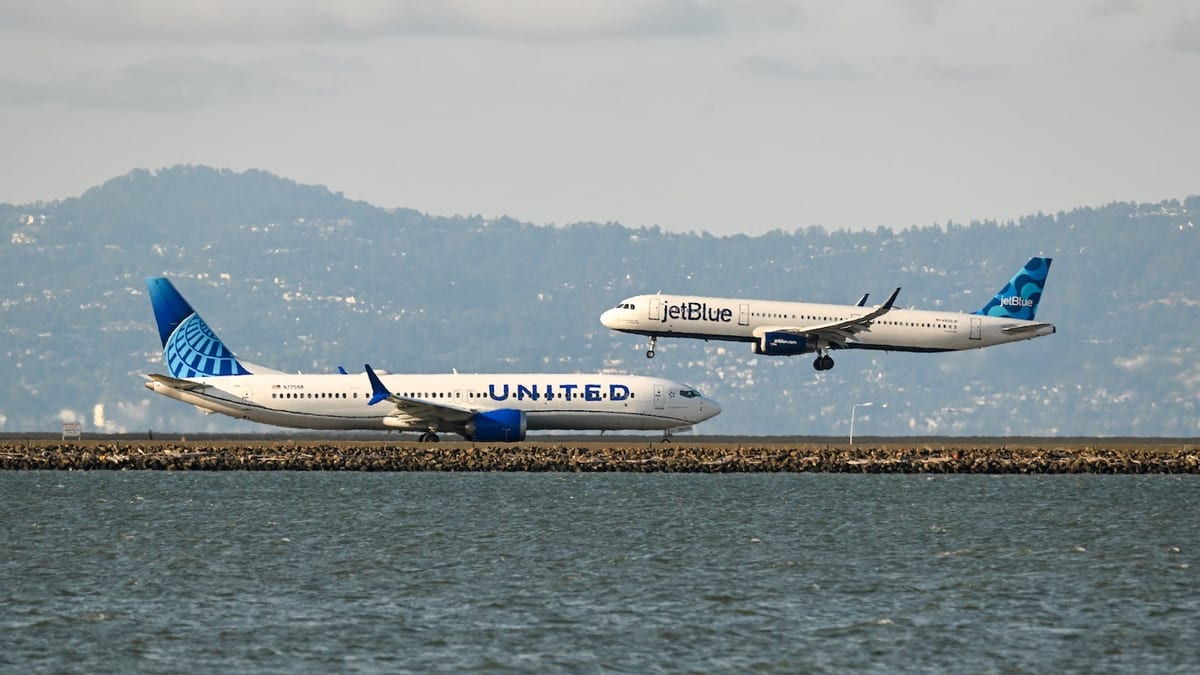
New Safety Rules Slash Hourly Arrivals
Publicly available information shows that the FAA has reduced San Francisco International Airport’s maximum arrival rate from 54 flights per hour to 36. The change stems from an agency review of long standing procedures that allowed aircraft to land simultaneously on closely spaced parallel runways during clear weather. Regulators concluded that the practice no longer met current safety expectations, triggering an immediate cap on arrivals.
The airport’s parallel east west runways, which sit just 750 feet apart, have long been a defining feature of operations at San Francisco. Reports indicate that the configuration, combined with heavily used Bay Area airspace and multiple nearby airports, has become a focal point in broader efforts to tighten margins around runway and approach safety. The new rule effectively prohibits side by side visual approaches on those runways when pilots are responsible for maintaining visual separation.
Aviation industry coverage describes the measure as a permanent policy shift specific to San Francisco rather than a nationwide rule. While the revised procedures are framed as a proactive safety step, they immediately reduce the airport’s theoretical capacity even before weather or other day to day constraints come into play.
The decision follows a series of high profile runway incidents nationwide that have kept attention on approach and surface operations. Although the San Francisco rule change is not formally tied to any single recent event at the airport, safety specialists have increasingly scrutinized complex approach profiles and parallel runway layouts at busy hubs.
Runway Construction Collides With Capacity Cut
The timing of the FAA action coincides with a major runway repaving project at San Francisco International Airport, compounding the impact on arrivals. One pair of north south runways has been taken out of service for roughly six months, concentrating nearly all traffic onto the remaining east west pair while construction crews work.
Before the new safety restrictions, the construction already required the airport to accept fewer arrivals per hour. According to local reporting, interim limits tied to the project had brought the cap down to 45 arrivals. The latest FAA decision carves that figure back further to 36, with nine of the reduced slots attributed to the long term safety rule and the remainder to the temporary closure.
Airport projections cited in regional outlets suggest that about one quarter of arriving flights could face delays of 30 minutes or more while the repaving continues. The construction schedule currently calls for the affected runway to return to service in early October, which would allow capacity to climb part of the way back toward pre rule change levels, but not fully restore the previous 54 arrivals per hour.
The combination of a hard federal cap, fewer usable runways and often challenging coastal weather leaves limited room to absorb peak demand. When fog, wind or low ceilings reduce the ability to land aircraft in tight succession, schedules may need to be thinned further, intensifying the knock on effects for passengers and airlines.
Impact on Airlines and Passenger Experience
The arrival cuts are expected to be most visible to travelers in the form of longer waits, missed connections and shifting timetables rather than large scale cancellations in the short term. Analyses of schedule data in local media show that a significant share of San Francisco arrivals in 2025 operated during hours that exceeded the new 36 flight cap, indicating that airlines will need to spread operations across a broader window or trim frequency on some routes.
San Francisco serves as a major hub for United Airlines and an important base for several other carriers. Public comments from airlines and airport representatives suggest that schedules are now under review, with adjustments likely to focus on smoothing out banks of arriving flights and building in more buffer time between operations. That strategy can help reduce cascading delays but may also lengthen connection times and narrow options for tight itineraries.
Travel industry outlets report that passengers have already begun to see uneven effects, with some days passing with minimal disruption and others marked by widespread delays. Because the cap is hourly, pain points tend to cluster around morning and evening peaks when both business and long haul international flights converge on the airport.
Advisories directed at travelers emphasize familiar strategies: checking flight status frequently, allowing extra time for connections, and considering earlier departures when schedules permit. With the constraints expected to last at least through the completion of runway work, many observers expect the summer and early autumn travel seasons to be particularly sensitive to weather and operational hiccups.
Wider Safety Context at a Busy West Coast Hub
San Francisco International Airport has long operated near the limits of its runway geometry, particularly during clear weather when airlines and controllers have taken advantage of parallel approaches to boost throughput. Previous near miss incidents at the airport and at other U.S. hubs have prompted ongoing debate in the aviation community over how much complexity is appropriate in crowded terminal areas.
Aviation specialists note that the Bay Area’s layered airspace, with commercial operations at Oakland and San Jose and a collection of busy general aviation fields nearby, places added pressure on arrival and departure corridors into San Francisco. By curbing side by side landings on the closest set of parallel runways, the FAA is effectively trading some efficiency for a higher margin of safety in this environment.
Publicly available data from federal transportation reports already show that San Francisco’s on time arrival performance tends to lag many other large U.S. airports because of weather, runway layout and airspace saturation. The new restrictions are likely to reinforce that pattern in the near term, even as they aim to lower the risk of rare but serious runway and approach incidents.
Local analyses have also raised questions about how the changes might shift demand around the region. Oakland and San Jose airports may see additional interest from travelers and airlines seeking alternatives with fewer flow constraints, although those facilities have their own capacity and route network limits. For now, the most immediate effect remains centered on San Francisco, where the intersection of safety policy and infrastructure work is reshaping what the airport can handle during its busiest hours.
What Travelers Should Expect in the Months Ahead
For passengers planning trips into or out of San Francisco, the new normal is likely to involve more variability and less slack in the system. Industry forecasting points to a sustained period in which delays are common but unevenly distributed, with some days heavily affected and others relatively smooth depending on weather, time of day and airline scheduling choices.
Travel publications and local outlets advise that those with critical connections or time sensitive itineraries consider building in extra margin, especially during peak travel months and around weekends. Early morning and late night departures may offer a slightly better chance of avoiding the busiest arrival banks, though that advantage could narrow as airlines reshuffle schedules.
As the repaving project moves toward its planned October completion, observers will be watching to see how much relief the reopening of an additional runway can provide under the permanent 36 arrivals per hour cap. Any longer term improvements in punctuality could depend on how aggressively airlines reshape their schedules and whether further procedural refinements emerge from ongoing safety reviews.
Until then, San Francisco International Airport stands as a prominent example of how safety driven policy shifts can reverberate through an already crowded aviation system, altering the travel experience for millions while regulators and operators seek a new equilibrium between capacity and caution.