

More news on this day
Travelers passing through San Francisco International Airport in the coming months are being warned to brace for longer waits, as new Federal Aviation Administration restrictions and a long-planned runway repaving project combine to sharply reduce the number of flights that can arrive each hour.
Get the latest news straight to your inbox!
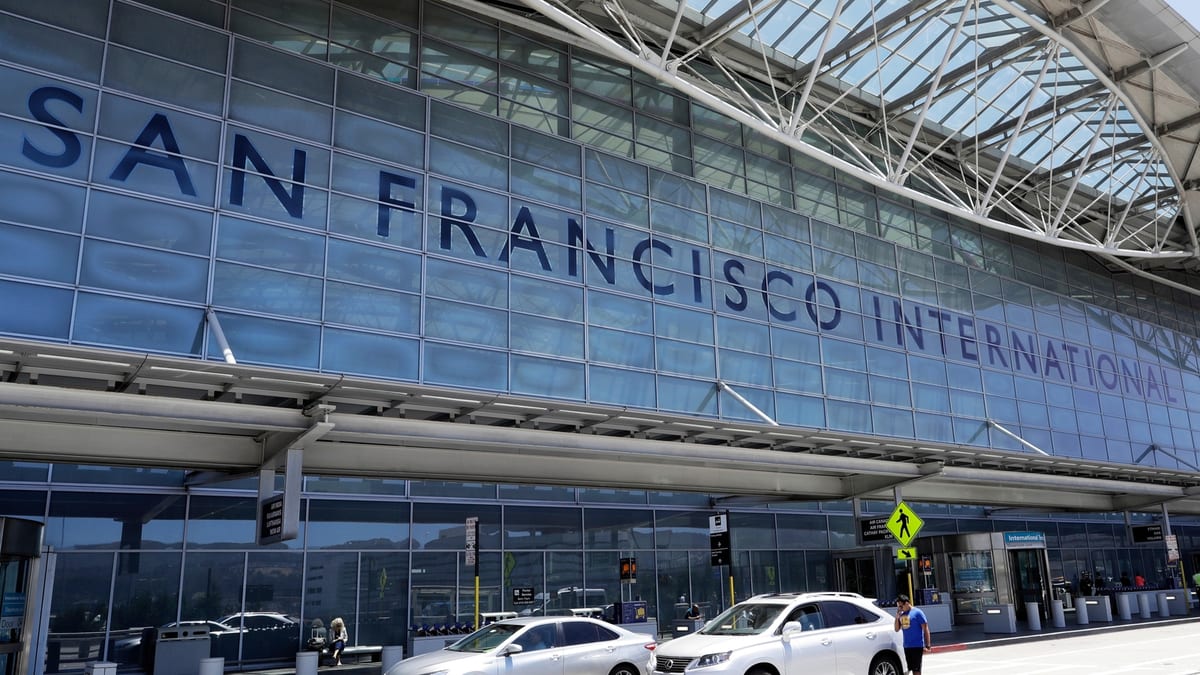
Image by abc7news.com
Arrivals Cut by One Third as Capacity Tightens
Publicly available information shows that the Federal Aviation Administration has reduced San Francisco International Airport’s maximum arrival rate from about 54 incoming flights per hour to 36. The adjustment represents roughly a one-third cut in capacity and is expected to ripple across domestic and international schedules into the fall.
The change took effect this week, following a review of operating procedures at SFO and the launch of a major runway rehabilitation project. Reports indicate that the new limit will remain in place throughout the six-month construction period and that some elements of the policy will outlast the work itself as a permanent safety measure.
Early modeling reported by outlets such as the Associated Press and regional media suggests that about one quarter of arriving flights could experience delays of 30 minutes or more while the restrictions are in force. The precise impact will vary day to day, depending on airline scheduling decisions, weather and broader traffic conditions across the national airspace system.
While no widespread wave of cancellations has been announced, airlines are reviewing schedules into and out of SFO, and travelers are already seeing longer blocks of arrival time baked into itineraries. Industry coverage notes that the effect could be particularly noticeable during peak transcontinental and transpacific arrival banks.
Runway Repaving Compresses Operations
At the heart of the disruption is a long-planned repaving project on one of SFO’s north-south runways. Airport documentation and local coverage describe a roughly six-month closure that began at the end of March, taking a key piece of infrastructure out of service through early October.
During the project, traffic that would normally be spread among multiple runway pairs is being funneled primarily onto SFO’s main east-west runways. To ease ground congestion, the runway adjacent to the work area is being used mainly as a taxiway rather than for takeoffs and landings, further concentrating operations.
Construction-related delays had already been anticipated. Prior to the FAA capacity decision, SFO’s own projections suggested that about 10 to 15 percent of flights could be delayed, often by less than half an hour and primarily during morning and evening peaks. With the new federal limits layered on top of the closure, airport representatives now indicate that the share of affected arrivals is likely to climb toward 25 percent.
The runway under construction is currently scheduled to return to service around October 2, which should ease some of the pressure. However, aviation-focused outlets report that even after the paving is complete, the FAA does not intend to fully restore SFO’s pre-project arrival rate because of lasting safety concerns tied to how the airport’s closely spaced runways are used.
Safety Focus on Parallel Approaches
The FAA’s move is rooted in its reassessment of side-by-side visual approaches on SFO’s parallel east-west runways, which are separated by about 750 feet. For years, those procedures allowed controllers to sequence two aircraft to land simultaneously in clear weather when pilots could see and maintain spacing from one another.
According to summaries in aviation trade publications and mainstream news outlets, regulators now view that combination of close runway spacing, heavy traffic and complex surrounding airspace as presenting an unacceptable safety margin, particularly in light of recent national incidents involving runway and approach procedures. The new rules prohibit these side-by-side visual arrivals even in good visibility, effectively removing one of SFO’s key tools for handling heavy inbound flows.
Publicly available FAA statements emphasize that the agency had already barred such simultaneous operations during poor weather and low visibility. With the change, the more conservative standard now applies at all times, meaning that SFO’s theoretical maximum arrival rate is permanently lower than before, regardless of conditions.
While the FAA has said in published materials that the rule change is specific to San Francisco’s layout and traffic patterns, the decision is being closely watched across the industry as part of a broader push to reduce the risk of runway incursions, misaligned approaches and other high-severity but low-frequency events at busy hubs.
What Travelers Can Expect in the Months Ahead
For passengers, the most immediate impact is likely to be longer journey times and less predictable arrival windows. Information compiled from airline and airport briefings indicates that many carriers are padding schedules to account for anticipated holding patterns and metering on the way into San Francisco, especially during peak periods.
Travel coverage and aviation forums suggest that flights inbound to SFO may spend more time in ground delay programs at their origin airports when demand outstrips the reduced arrival rate. That can mean extended waits at the gate before departure and, at times, holding in the air as traffic is spaced out on final approach.
United Airlines and Alaska Airlines, SFO’s two largest carriers, have both acknowledged in public comments that they are analyzing the new rules and monitoring delay patterns. Early indications from airline communications show that day-to-day impacts can fluctuate, with some days seeing clusters of delayed flights and others operating closer to schedule depending on weather and network conditions.
Travel experts quoted across multiple outlets are advising passengers to build in additional connection time at SFO, especially for international onward journeys, and to pay close attention to alerts from carriers, which may retime flights or swap aircraft as the summer and early autumn seasons progress.
Regional and Airline Operations Under Strain
The San Francisco Bay Area’s aviation system is also expected to feel knock-on effects. With SFO constrained, industry observers anticipate that some discretionary traffic, particularly on domestic routes, could shift toward nearby Oakland and San Jose airports, which are not subject to the same capacity limits.
However, SFO remains the region’s primary long-haul and international gateway, and most intercontinental services are likely to continue operating from the airport despite the delays. Publicly available route data shows that carriers rely on SFO’s extensive network of connections for transpacific and cross-country traffic, making wholesale moves to other airports unlikely.
Airline planning analysts quoted in business and aviation media describe a period of adjustment in which carriers may fine-tune schedules, adjust aircraft sizes or consolidate frequencies to make better use of the reduced arrival slots. Those changes would unfold over the summer 2026 schedule as airlines react to actual delay statistics and passenger demand.
For now, the combination of runway construction and a more conservative safety posture has put SFO in a period of heightened operational stress. How effectively the airport, regulators and airlines manage that pressure over the next six months will play a major role in shaping traveler perceptions of one of the West Coast’s most important hubs.