

More news on this day
San Francisco International Airport is facing a prolonged period of disruption after federal regulators sharply reduced the number of hourly arrivals, citing safety concerns linked to its runway layout and an extended construction project.
Get the latest news straight to your inbox!
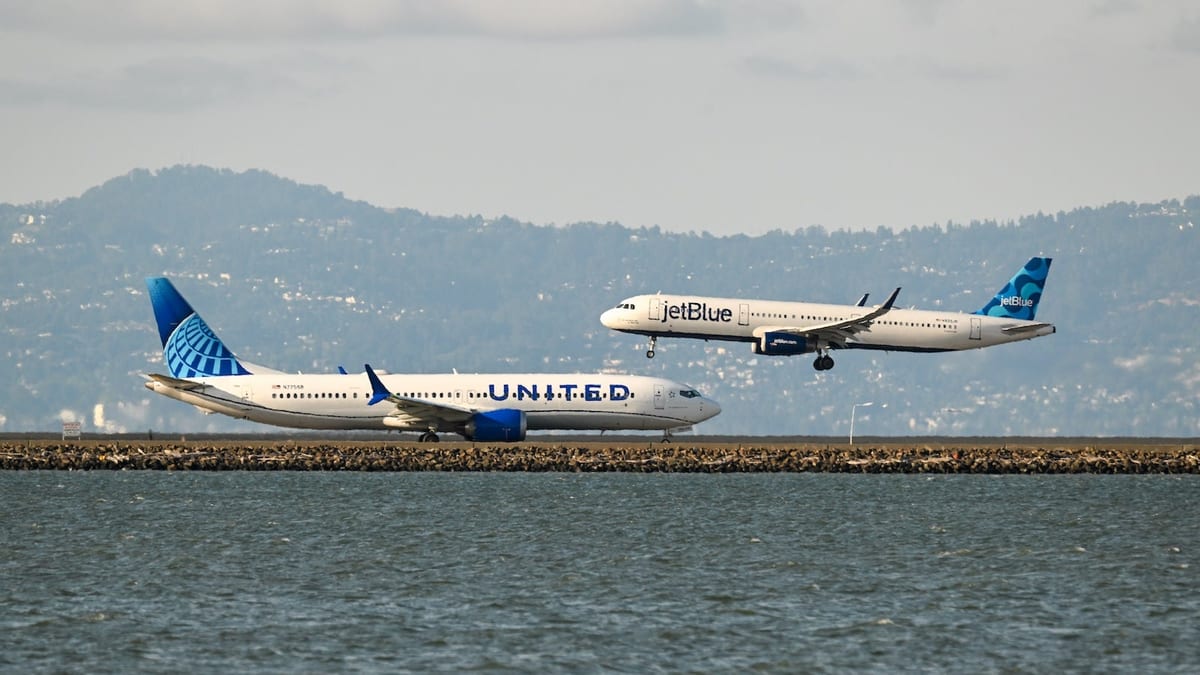
New Limits Slash San Francisco Arrival Capacity
Publicly available information shows that the Federal Aviation Administration has cut San Francisco International Airport’s maximum arrival rate from 54 planes an hour to 36, a reduction of one third. The change combines a temporary construction constraint with a permanent shift in how aircraft are allowed to approach the airport’s closely spaced runways.
The move follows an FAA review of long-standing procedures that permitted simultaneous visual approaches on parallel east-west runways separated by roughly 750 feet. Reports indicate that regulators determined this configuration, combined with the Bay Area’s dense and complex airspace, no longer met current safety expectations for side-by-side arrivals in clear weather.
At the same time, one pair of north-south runways is closed for about six months for a repaving project, further reducing operational flexibility. Before the new rules took effect, construction alone had already trimmed authorized arrivals to 45 per hour. The additional safety-driven cap has now pushed that figure down to 36.
Coverage from multiple outlets notes that the measure is being described as a safety adjustment specific to San Francisco’s runway geometry and approach patterns, rather than part of a broader nationwide clampdown. Nonetheless, the timing of the cut, coinciding with major runway work, is expected to intensify its impact on passengers.
Delays Expected to Rise Through Peak Travel Months
Analysis of flight operations data reported in regional media suggests that a substantial share of San Francisco arrivals historically landed during periods when more than 36 flights per hour were scheduled. With the new ceiling in place, those peak times will no longer be possible, creating a queue of aircraft both in the air and on the ground.
Airport communications summarized in recent coverage indicate that roughly one quarter of arriving flights could face delays of 30 minutes or more while the construction project is under way. The pattern is likely to be uneven, with the worst congestion occurring in late afternoons and evenings, when many long-haul and connecting flights converge on the hub.
Travel-industry reporting notes that the repaving work is expected to continue for about six months, with a tentative reopening date in early October. At that point, capacity could improve, but the permanent safety rule that limits side-by-side approaches is expected to remain, meaning arrival rates would still be lower than the pre-construction maximum.
Seasonal trends may offer some limited relief. Historical data cited in local coverage indicate that winter and late autumn have fewer hours exceeding the new cap than the busy summer period, suggesting that the most intense delays are likely to coincide with high-season travel rather than shoulder months.
Runway Geometry and a History of Safety Scrutiny
San Francisco’s arrival procedures have been under heightened scrutiny for years because of the unusual proximity of its parallel runways and the airport’s role as a gateway for long-haul international traffic. Aviation-focused publications point out that the runways’ close spacing leaves smaller margins for error during simultaneous approaches, especially when visibility is good and pilots are cleared to follow each other visually.
The surrounding airspace adds another layer of complexity. The Bay Area is served not only by San Francisco International Airport but also by major airports in Oakland and San José, as well as several busy general aviation fields. Aircraft approaching from multiple directions must be sequenced carefully to avoid conflicts as they converge on the same limited set of arrival paths.
Recent federal documentation has also identified both San Francisco and nearby Oakland as locations with ground “hot spots,” where complicated taxiway layouts and runway crossings can increase the risk of close calls. While the latest arrival cuts are tied specifically to airborne approach procedures, they come at a time when regulators are closely examining risk across the entire airport environment.
Safety specialists quoted in trade coverage describe the San Francisco changes as part of a broader trend in which long-accepted practices are being revisited in light of recent near misses at large U.S. airports. In this context, the curbs on parallel arrivals are seen as an effort to build in more margin before an incident occurs.
Airlines Adjust Schedules as Travelers Weigh Options
Major carriers that rely heavily on San Francisco as a hub now face the task of rebalancing schedules built around higher arrival capacity. Reports indicate that airlines are reviewing flight timings, connection banks and aircraft assignments to determine whether some services must be retimed or consolidated to fit within the reduced hourly limit.
Coverage focused on the local market notes that United Airlines, San Francisco’s largest carrier, had been planning record operations at the airport in 2026. With fewer arrival slots available during peak periods, analysts expect airlines to stretch connections over longer windows, potentially lengthening layovers but lowering the risk of misconnected passengers when delays ripple through the system.
Short-haul routes within California and the West Coast may also see adjustments. Industry observers suggest that when capacity is constrained, airlines sometimes prioritize longer-haul and higher-yield flights, particularly on transcontinental and international sectors, while trimming frequencies on shorter trips that can be served from nearby airports.
Travel publications are advising passengers headed to or through San Francisco to monitor schedules closely, allow extra time for connections, and consider alternate Bay Area airports when possible. Even when flights are not canceled, small shifts in departure and arrival times can affect onward travel plans, including ground transportation and hotel check-in.
What Travelers Should Expect in the Months Ahead
For travelers, the practical effect of the FAA’s decision is likely to be felt most acutely as longer taxi times, holding patterns near San Francisco, and a greater risk of missed or tight connections. Consumer-focused outlets emphasize that the change is structural rather than weather-related, meaning it will apply on clear days that historically saw higher throughput.
Experts cited in aviation and travel coverage recommend that passengers booking trips into San Francisco build in more buffer time than usual, especially when connecting to international services or last flights of the day. Early-day departures and arrivals may offer slightly better odds of operating on time, before delays accumulate across the network.
As construction progresses, the airport and airlines are expected to continue refining how they use the remaining runway capacity, potentially easing some bottlenecks. However, with the safety rule on parallel approaches described as permanent, travelers and carriers alike will have to adapt to a new normal of reduced arrivals at one of the West Coast’s busiest gateways.
The coming months will provide a clearer picture of how resilient the system is under the new constraints. For now, publicly available information points to a sustained period of schedule pressure at San Francisco International Airport as the FAA’s safety-focused arrival cuts ripple through domestic and international travel plans.