

More news on this day
Travelers using San Francisco International Airport are being warned to expect longer waits on the ground and in the air after new federal rules cut the airport’s hourly landing rate by a third, a change that is projected to keep delays elevated through at least the end of the 2026 construction season.
Get the latest news straight to your inbox!
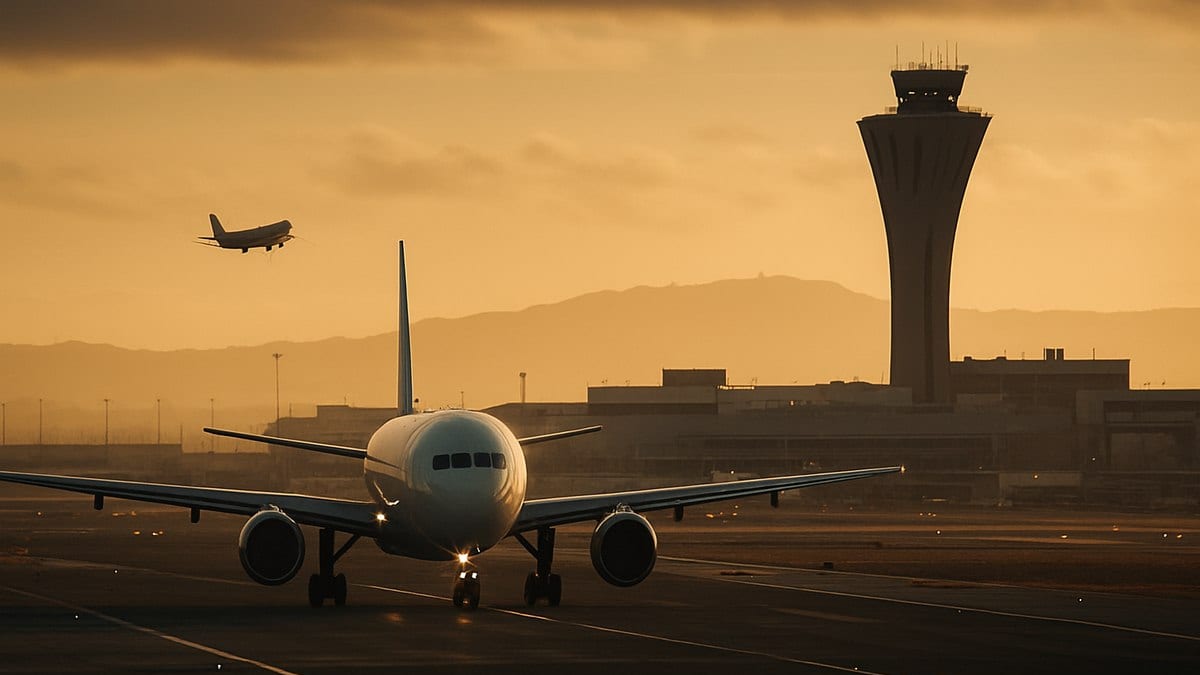
New Rules Slash Hourly Arrivals at a Major West Coast Hub
Publicly available information shows that the Federal Aviation Administration has reduced San Francisco International Airport’s maximum arrival rate from about 54 landings per hour to 36. The change took effect in late March 2026 and applies during periods when the new operating procedures are in use, substantially lowering the number of aircraft that can be sequenced into the airport in any given hour.
The reduction is tied to updated approach and spacing standards for closely spaced parallel runways, which limit how many jets can descend toward San Francisco at the same time. Under the new regime, side by side visual approaches to the airport’s east west parallels are no longer permitted in the same way they were in the past, and controllers must build in more distance between successive arrivals, particularly when a smaller aircraft follows a heavier one.
A review of scheduling data for 2025 indicates that SFO regularly operated at or above the former 54 arrivals per hour benchmark during peak periods. With the new cap set at 36, any attempt to maintain similar schedules through 2026 will translate directly into delays, with more flights being held on the ground at their departure airports or placed into airborne holding near the Bay Area when demand exceeds the available arrival slots.
Published coverage from national and local outlets notes that the long term FAA rule change sits on top of the airport’s existing weather related constraints. San Francisco is already known for afternoon marine layers and low ceilings that can limit capacity; the new landing rate means there is less buffer when conditions deteriorate, making it more likely that minor disruptions will ripple across the national network.
Safety, Wake Turbulence and Parallel Runway Concerns
The revised arrival rate is rooted in an evolving federal approach to managing risk on closely spaced parallel runways. Technical documentation and safety studies referenced in recent coverage describe how wake turbulence, cockpit workload and the challenge of maintaining precise visual separation between aircraft on adjacent finals have all contributed to tightening the rules at certain airports, with SFO a prominent example.
San Francisco’s main east west runways are separated by roughly 750 feet, a configuration that has long required specialized procedures and close coordination between pilots and controllers. Industry analyses point to several near miss incidents over the past decade, including a widely discussed event in which an arriving jet misidentified its landing surface at night, as factors that helped prompt regulators to revisit the balance between capacity and safety.
Under the updated framework, simultaneous side by side visual approaches to the closely spaced parallels are being phased out in favor of staggered operations and more conservative spacing. That effectively turns what once behaved like two near independent arrival streams into something closer to a single, more tightly controlled flow, with the practical outcome of fewer aircraft landing each hour.
Experts cited in aviation industry reporting note that the move aligns SFO more closely with how other complex hubs manage parallel runways, particularly where terrain, weather and surrounding airspace already make operations challenging. While the change does not reflect a new incident at San Francisco itself, it formalizes a risk posture that emphasizes additional separation and predictability over maximum throughput.
Runway Construction Adds a Temporary Capacity Squeeze
Compounding the regulatory shift is a major runway rehabilitation project scheduled to run through early October 2026. Airport planning documents and local news coverage describe a months long closure of one of SFO’s north south runways for repaving and infrastructure upgrades, taking an important piece of pavement out of service during the height of the summer and early autumn travel periods.
Operationally, the construction removes some of the flexibility controllers normally have to switch traffic between runway complexes in response to wind, weather or surges in demand. With fewer configurations available, the system becomes more brittle, and any reduction in arrival capacity on the remaining runways is felt more acutely across the schedule.
Analyses of historical traffic patterns indicate that the runway closure accounts for roughly half of the 18 flight per hour reduction now in place, with the rest attributable to the FAA’s permanent rule changes. Once the repaving wraps up around October 2026, SFO is expected to regain some operational headroom, but the underlying safety driven limits on closely spaced parallel approaches will continue to shape how many flights can land per hour.
Airport statements cited in regional reporting suggest that work is ongoing with airlines and air traffic planners to smooth schedules around the most constrained periods. However, the combination of construction and federal rules means that, at least through the end of the 2026 project window, there is little room to restore the kind of peak arrival volumes the airport handled in previous years.
Delays Likely to Peak in Summer Travel Banks
Publicly available delay forecasts indicate that the risk of late arrivals into San Francisco will be highest during traditional peak travel waves, particularly the morning and late afternoon banks when transcontinental and international flights converge with short haul West Coast traffic. With only 36 arrival slots per hour during constrained periods, any over scheduling will have to be absorbed through ground delay programs or airborne holding.
Industry reporting notes that airlines are still adjusting their schedules and may trim some frequencies, upgauge aircraft to larger types, or reroute connecting passengers through other hubs to manage the capacity squeeze. Until those adjustments fully take hold, travelers can expect more frequent departure holds from origin airports bound for SFO, especially on busy Fridays, Sundays and holiday periods through late 2026.
Historical performance data already show that San Francisco tends to experience compounding delays when the system becomes saturated. Once inbound aircraft begin arriving late, the same constraints make it harder to “catch up,” and missed connections, crew timeouts and aircraft rotations can quickly cascade. The new landing rate and construction project increase the odds that those pressure points will be reached more often.
Travel focused outlets emphasize that even days with relatively benign weather could see disruption if demand is heavy enough to brush against the 36 arrivals per hour cap for sustained periods. For passengers, that means planning for a wider range of potential outcomes, particularly if trips involve tight connections or time sensitive events in the Bay Area.
What the Change Means for Bay Area Travelers
For individual travelers, the cut in SFO’s landing rate translates into a higher likelihood of schedule changes, longer journeys and more time spent waiting either onboard or in terminals. Advisories circulated by airlines and travel publications recommend building in extra connection time when routing through San Francisco, especially in the summer and early autumn of 2026, and considering alternative Bay Area airports when possible.
Oakland and San José, both served by major domestic carriers, are expected to play a larger supporting role as airlines rebalance their networks. While neither airport can fully substitute for SFO’s international connectivity, they offer options for point to point travelers within the western United States and could help absorb some of the demand displaced by San Francisco’s tighter constraints.
Business travelers who depend on reliable same day returns may feel the effects most acutely. With fewer arrival slots and extended recovery times after disruptions, the risk profile for early morning departures and late evening returns will shift, and companies may need to revisit travel policies or meeting schedules that once assumed SFO’s pre change capacity.
Looking beyond the 2026 construction window, analysts note that the FAA’s updated rules represent a structural change in how San Francisco’s air traffic is managed. Even after the repaved runway reopens, the lower landing rate and restrictions on parallel approaches are expected to remain, embedding a new, more conservative capacity ceiling that travelers and airlines alike will need to factor into their long term plans.