

More news on this day
Travelers using San Francisco International Airport in the coming months are being warned to expect longer waits and more missed connections as new Federal Aviation Administration limits on hourly arrivals take effect alongside a major runway construction project.
Get the latest news straight to your inbox!
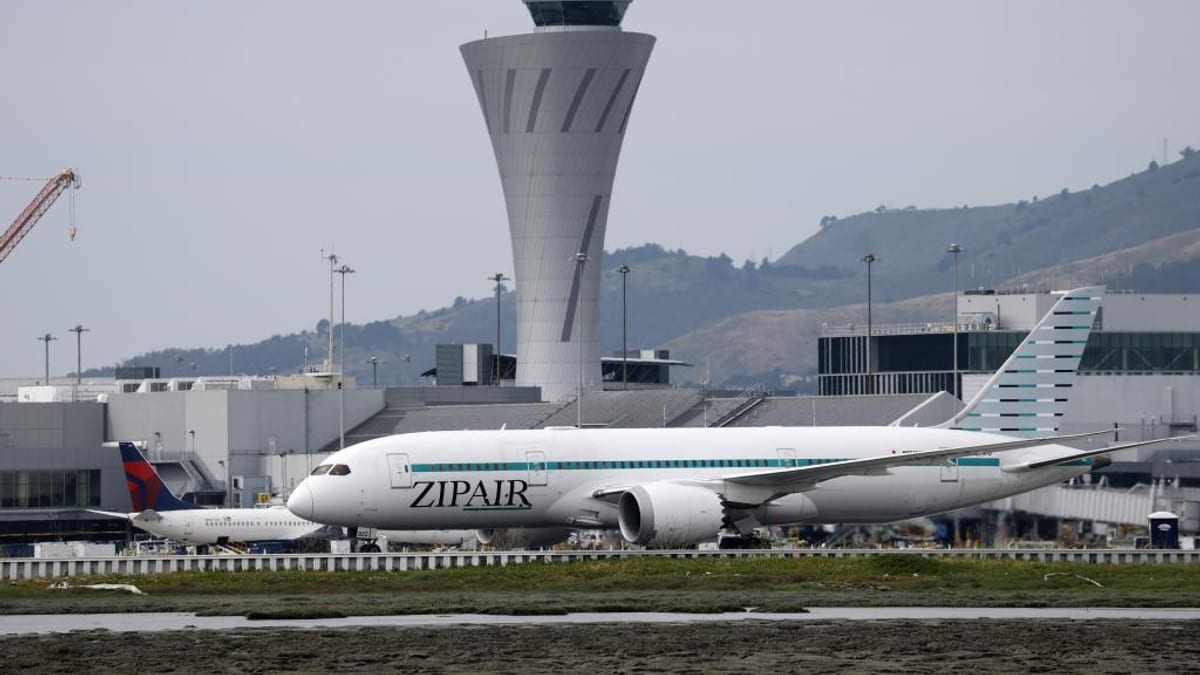
Image by New York Post
New FAA Limits Sharply Reduce Hourly Arrivals
Publicly available information indicates that the Federal Aviation Administration has reduced the maximum number of planes allowed to arrive at San Francisco International Airport each hour, cutting into the airport’s capacity just as the busy spring and summer travel period gets underway. Recent coverage describes the change as a shift from roughly 54 scheduled arrivals per hour to about 36, a reduction of one third.
The new cap is part of a broader effort by the agency to manage congestion and reduce the risk of gridlock across the national airspace system. At San Francisco, however, the practical effect is expected to be an increase in individual flight delays as airlines continue to operate dense schedules into a facility that now has less room to absorb disruptions.
Unlike seasonal schedule adjustments that carriers sometimes make voluntarily, the limits at San Francisco are described in regulatory filings and news reports as FAA driven. The approach is similar in concept to existing caps at other constrained hubs, where the agency has used hourly limits to balance safety, runway capacity and chronic congestion.
For passengers, the immediate impact is likely to show up in longer arrival queues, airborne holding patterns and ground delay programs that push back departure times at origin airports bound for San Francisco.
Runway Closure Compounds Capacity Crunch
The new FAA arrival limits coincide with a six month closure of one of San Francisco’s main runway pairs for resurfacing, further tightening the airport’s operating room. Reports from local travel media note that all arrivals and departures are being funneled onto the remaining pair of parallel runways during the construction window.
Airport forecasts cited in recent coverage initially suggested that the construction alone could delay roughly 10 to 15 percent of flights, with most holdups expected during peak morning and evening periods and typically lasting under 30 minutes. With the added federal restrictions on simultaneous arrivals, that estimate has been revised sharply upward.
According to figures shared in regional reporting, about one quarter of all arriving flights may now experience delays of at least half an hour while the combined constraints are in place. That would represent a noticeable deterioration from San Francisco’s already modest on time performance, which has long lagged many other major U.S. airports due to weather and airspace complexity.
The construction project is expected to last roughly through early October 2026, meaning the compounded impact of runway work and FAA flight caps will stretch across the peak summer season and into the early autumn travel period.
Safety and Airspace Complexity Drive Policy Shift
Accounts of the new policy link the FAA’s decision to longstanding safety questions around San Francisco’s closely spaced parallel runways and the intricate airspace over the Bay Area. The airport’s primary arrival runways are only about 750 feet apart, and the airspace is crowded with traffic to and from Oakland and San José, along with several smaller fields.
For years, San Francisco relied on a procedure that allowed two aircraft to land side by side on the adjacent runways under certain conditions. The FAA’s rule change curtails that practice, effectively limiting the number of simultaneous approaches and reducing the sustainable arrival rate, particularly during periods of reduced visibility common along the Northern California coast.
National reporting also places the San Francisco restrictions in the context of a broader focus on runway safety after a series of high profile close calls and incursions at U.S. airports. While coverage emphasizes that the new rule is specific to San Francisco’s layout and operations, it reflects the agency’s increasing willingness to trade some efficiency for wider safety margins.
Industry analysts quoted in open sources suggest that, taken together with construction work, the safety driven limits will leave airlines and air traffic managers with less flexibility to recover from ordinary disruptions such as low clouds, fog or minor equipment outages.
Airlines Adjust Schedules and Reroute Traffic
Major carriers with large operations at San Francisco, including United Airlines and Alaska Airlines, are reviewing their schedules and making tactical adjustments in response to the new constraints, according to published coverage. Airlines typically respond to such caps by retiming flights, consolidating frequencies or shifting some routes to nearby airports.
Some reports indicate that carriers are already monitoring delay patterns day by day and may trim or retime peak hour arrivals to avoid excessive holding. In the short term, though, many flights are likely to continue operating into the newly restricted windows, creating the conditions for rolling delays until schedules are fully realigned.
With the Bay Area also served by Oakland and San José airports, observers note that airlines have the option of redirecting some capacity away from San Francisco. Early indications suggest that any such shift will be gradual, as airlines weigh passenger demand for San Francisco’s extensive long haul network against the operational advantages of less congested alternatives.
Regional carriers and business aviation operators are also expected to feel the effects of the new limits, especially during periods when arrival slots are tightest. Industry groups have previously urged operators to consider alternate airports in other cities where FAA driven flight reductions are in place, a strategy that may now spread further in Northern California.
What Travelers Can Expect in the Months Ahead
For passengers planning trips through San Francisco in the coming months, publicly available guidance from airlines and travel experts points to a need for more buffer time and flexibility. With roughly one in four arrivals projected to face delays of 30 minutes or more, tight connections become riskier, especially on international itineraries and last flights of the day.
Travel industry commentary recommends booking earlier flights when possible, as morning departures are more likely to leave on time before delays accumulate across the network. Allowing longer layovers at San Francisco, monitoring flight status closely, and being prepared to rebook through Oakland or San José are also described as prudent steps.
The experience at other federally constrained hubs, such as Newark and Chicago O’Hare, suggests that conditions may gradually stabilize as airlines fine tune schedules to fit within the new limits. However, the added complication of runway construction at San Francisco means that meaningful improvement may not arrive until after the repaving project is completed and the full runway system is back online.
Until then, travelers can reasonably anticipate a higher chance of queueing in the sky or waiting on the ground as air traffic controllers meter arrivals into a system operating with less capacity than in previous years, even as demand for flights to and from the Bay Area remains strong.