

More news on this day
The Boeing 777X program has cleared a crucial regulatory hurdle in the United States, with the Federal Aviation Administration authorizing the next phase of certification testing as major customers Lufthansa and Emirates intensify planning for a possible 2027 entry into commercial service.
Get the latest news straight to your inbox!
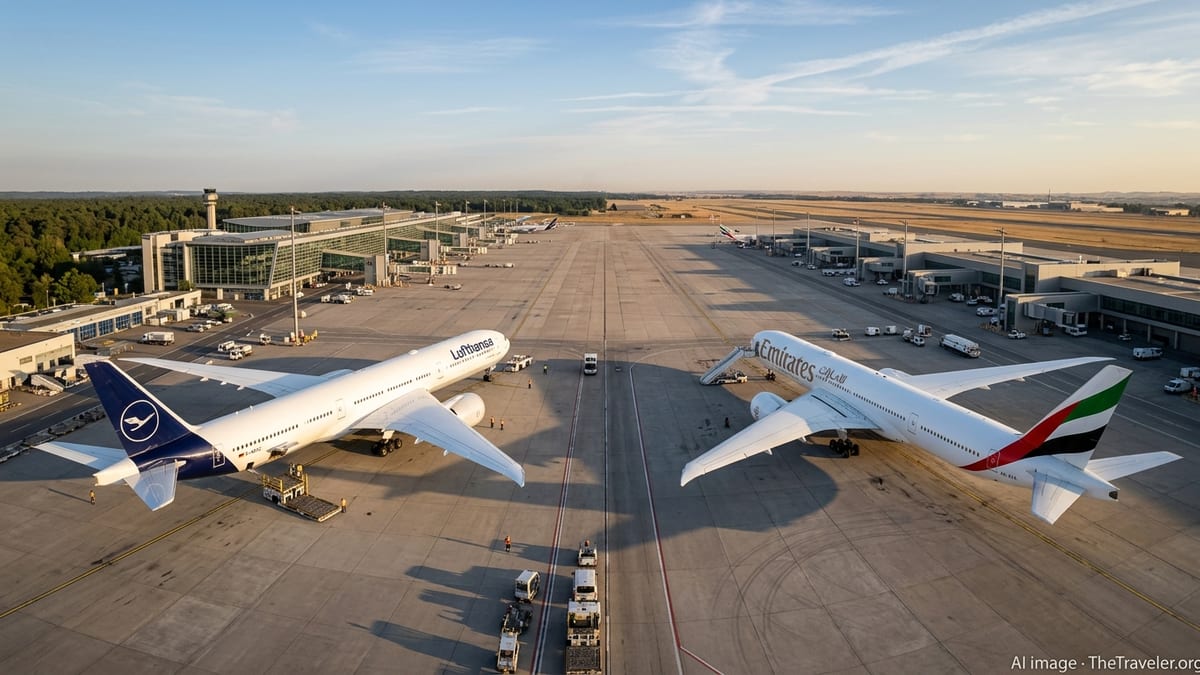
FAA Approval Marks a Pivotal Step for the 777X Program
Recent industry coverage indicates that the FAA has allowed Boeing’s 777-9, the first variant in the 777X family, to move into a new stage of its certification campaign focused on more advanced system demonstration and verification flights. The decision follows earlier Type Inspection Authorization steps and signals that regulators are prepared to observe the aircraft in increasingly complex, operationally representative testing.
Reports suggest that the current phase, often described as part of the multi-stage TIA structure, expands the envelope of test scenarios, including work on avionics, flight controls, and integrated aircraft systems. This places the 777X closer to the point at which U.S. regulators can consider final type certification, although the overall schedule remains subject to test outcomes and ongoing oversight.
Boeing’s updated guidance in public filings and earnings presentations points to first 777-9 deliveries shifting toward 2027, after earlier targets of 2025 and then 2026. Industry analysts note that the FAA’s progressive authorizations are a necessary precondition for that timeline, but not a guarantee, as remaining testing, documentation, and production approvals must still be completed.
The 777X, featuring new composite wings with folding wingtips and GE9X engines, is Boeing’s flagship long-haul twin intended to succeed and complement earlier 777 models. Its performance promises have been a key factor in long-term fleet strategies at Lufthansa and Emirates, which are planning for growth and renewal in their intercontinental networks.
Lufthansa’s Strategy: Germany Positions for Launch Role
Publicly available information consistently shows Lufthansa as the launch operator of the 777-9, with firm orders that place Germany at the center of the aircraft’s commercial debut. After several schedule resets, reporting over the past year indicates that the airline now frames the aircraft’s arrival as a mid-to-late decade event, with internal fleet planning aligning more closely to a 2027 entry into service.
Analysts following Lufthansa’s disclosures say the carrier has gradually shifted its expectations from an initial mid-2020s delivery window to a more conservative stance, reflecting the prolonged certification process. Recent aviation industry coverage notes that Lufthansa has avoided building the 777X into near-term capacity calculations, instead treating the widebody as a post-2026 growth and replacement platform.
The German flag carrier is expected to deploy the 777-9 on cornerstone long-haul routes from Frankfurt and Munich, linking Europe with North America, Asia, and the Middle East. The aircraft is viewed as a successor to parts of the existing 747-8 and older 777 fleet, with higher seat counts and improved fuel efficiency intended to support both premium-heavy business markets and high-volume leisure flows.
Lufthansa’s role as launch customer also places Germany at the forefront of early operational experience with the new type. Aviation observers anticipate that German hubs will become key proving grounds for airport compatibility, turnaround processes, and maintenance routines as the airline works to integrate the aircraft into daily schedules.
Emirates and the UAE: Managing Risk While Targeting 2027
In the United Arab Emirates, Emirates remains the largest customer for the 777X family and a central player in the program’s commercial narrative. The Dubai-based carrier holds a substantial order book for both 777-9 and 777-8 variants, and has repeatedly described the aircraft as a backbone for its future long-haul network.
However, published interviews and financial reporting over the past year show Emirates leadership adopting a measured tone about the timing of deliveries. The airline has referenced 2027 as a realistic window for the first aircraft to join its fleet, aligning with recent updates from Boeing that push the expected entry into service toward the late 2020s.
Industry coverage describes Emirates as using the extended timeline to optimize its existing widebody operation, stretching the life of its current 777-300ER and A380 fleets while planning cabin product upgrades that can later be mirrored on the 777X. For the UAE, this approach supports Dubai’s role as a global connecting hub, ensuring capacity stability even as the new aircraft remains in testing.
Analysts suggest that the combination of the FAA’s latest certification approval and Emirates’ public reference to 2027 helps narrow the planning horizon for Gulf and South Asian markets. Once the 777X arrives, the airline is expected to focus the type on high-density trunk routes linking Dubai with key cities in Europe, North America, and the Asia-Pacific region.
What the New Test Phase Means for Global Certification
The FAA’s clearance for the next round of 777-9 trials is viewed by aviation specialists as an important signal to other regulators, even though each authority conducts its own review. As the U.S. certification program progresses, agencies in Europe and the Middle East are expected to draw on common technical data sets, simulator results, and in-service readiness assessments.
For Germany, coordination between U.S. and European regulators is essential to placing Lufthansa’s first aircraft into commercial operation from Frankfurt and Munich. Public analyses of the program note that synchronizing approvals will be critical to avoid a gap between initial deliveries and full route deployment, particularly on transatlantic services where U.S. airspace access is central.
In the UAE, regulators are similarly monitoring the U.S. process while preparing for their own evaluations related to Emirates’ future fleet. Reports indicate that authorities in key aviation markets generally rely on extensive cross-recognition of technical findings, but may layer additional operational and environmental requirements on top of core type certification.
Progress into the new testing phase also allows Boeing to gather more data under conditions that mirror real-world airline use, including high-cycle operations, long-range flights, and varied climate scenarios. Observers state that this information is crucial not only for certification, but also for finalizing performance guarantees and maintenance planning that airlines such as Lufthansa and Emirates will depend on when scheduling the aircraft from 2027 onward.
Implications for Passengers and Long-Haul Travel Networks
For travelers, the combination of FAA progress and airline planning around a 2027 launch sets expectations for a new generation of long-haul flights linking Germany, the UAE, and the wider world. The 777X is positioned as a quieter, more fuel-efficient twinjet with larger windows and next-generation cabin systems, which airlines are expected to pair with upgraded business and premium economy products.
In Germany, passengers flying from Frankfurt or Munich to North America and Asia are likely to be among the first to experience the new aircraft in Lufthansa colors, particularly on routes with strong premium demand. Aviation enthusiasts have closely followed the test campaign, and the FAA’s latest authorization is seen as a tangible step toward seeing the aircraft on regular passenger services.
From the UAE, Emirates’ anticipated deployment of the 777X on major trunk routes through Dubai is set to reinforce the city’s role as a global connecting hub. For leisure and business travelers across Europe, Asia, Africa, and the Americas, the aircraft is expected to offer more consistent cabin products and potentially improved schedules as the airline reshapes its long-haul network around the new twinjet.
While the 2027 target remains dependent on the completion of certification and production milestones, publicly available information now points to a more defined pathway. As the FAA clears further test phases and Boeing works through remaining technical tasks, Germany’s Lufthansa and the UAE’s Emirates appear increasingly aligned on a late-decade entry into service that could reshape high-capacity international travel corridors.