

More news on this day
San Francisco International Airport is bracing for months of disruption after the Federal Aviation Administration imposed new limits on hourly arrivals at the hub, a move that, combined with a major runway repaving project, is expected to cause significant delays for travelers.
Get the latest news straight to your inbox!
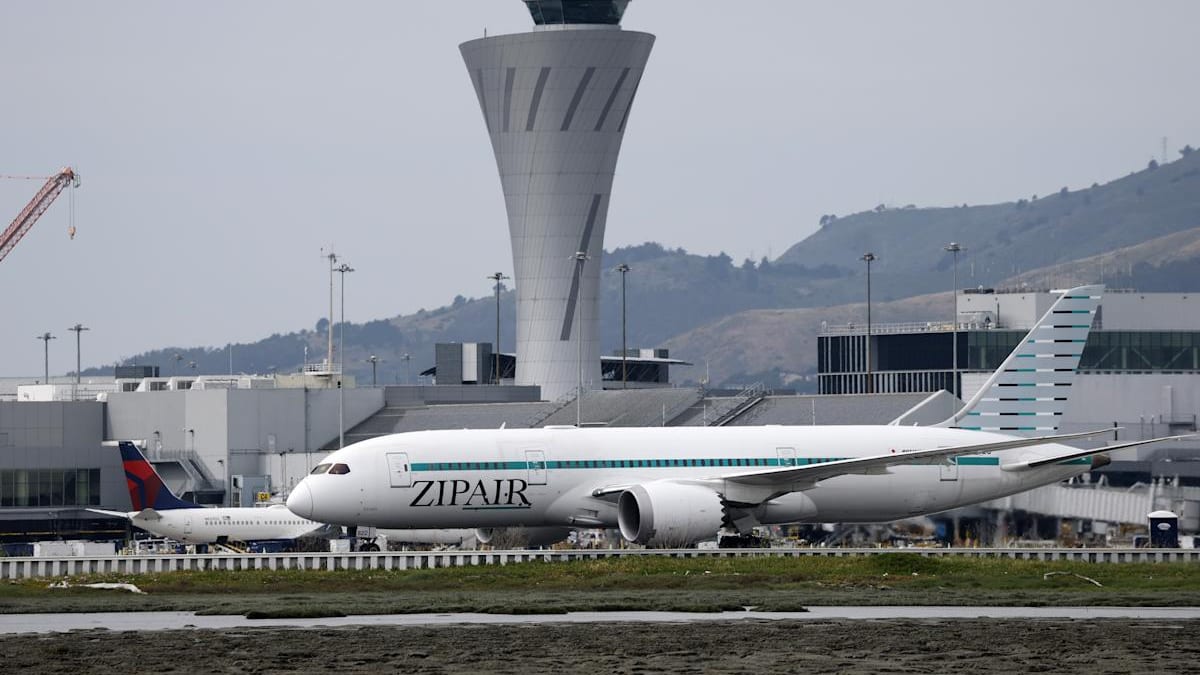
Image by AOL.com
New FAA order cuts SFO arrivals by a third
Publicly available information shows that the Federal Aviation Administration has reduced the maximum number of hourly arrivals at San Francisco International Airport from 54 to 36. The change took effect this week and represents roughly a one third cut in landing capacity at one of the country’s busiest West Coast gateways.
According to published coverage, the order follows a review of so called side by side approaches to the airport’s closely spaced parallel runways. Those procedures have long allowed two jets to land almost simultaneously in good weather, helping SFO accommodate heavy traffic within a tight airspace shared with Oakland and San José.
The new limits are described as permanent, meaning that even after construction projects wrap up, the airport will not be able to return to its previous peak arrival rate under current rules. Analysts note that the reduction effectively lowers the ceiling on how many flights airlines can reliably schedule into SFO during busy periods.
Industry reports indicate that departures are also likely to feel a knock on effect, as arrival constraints ripple through aircraft and crew rotations throughout the day. While airlines are still reviewing schedules, timetable adjustments and potential trimming of frequencies are widely expected if delays mount.
Runway repaving compounds disruption through early October
The FAA order lands just as SFO begins a six month resurfacing project on one of its main runway pairs, removing a key north south configuration from daily use. Airport statements describe the work as a necessary upgrade intended to extend the runway’s life and improve long term safety and reliability.
During the construction window, all arrivals and departures are being funneled onto the remaining pair of runways that run along San Francisco Bay. That concentration of traffic, combined with the new arrival cap, sharply reduces the system’s ability to absorb late flights, minor weather shifts or airspace congestion without cascading delays.
Local broadcast reports indicate that the runway under construction is scheduled to return to service around October 2. At that point, some of the bottleneck created by the physical closure should ease, but the lower FAA arrival limit is expected to remain in place. Observers suggest that the combination of temporary and permanent constraints will make the coming spring and summer particularly challenging for the airport.
Previous FAA construction impact analyses have shown that when major hub runways are closed, typical knock on effects include extended taxi times, holding patterns in the air and missed connections. SFO’s geography, surrounded by water and nearby airports, leaves limited room for rerouting arrivals during peak rushes, making the current project especially sensitive.
Delay forecasts rise as airlines study schedules
San Francisco airport representatives initially projected that roughly 10 to 15 percent of arrivals might face delays during the repaving period. More recent briefings cited in local media have revised that outlook sharply upward after the federal limits were finalized.
Current estimates indicate that about one quarter of arriving flights could now be delayed by 30 minutes or more while the runway work and new arrival cap overlap. Aviation outlets report that the greatest pressure is likely during morning and evening banks, when transcontinental and international arrivals converge with regional traffic.
United Airlines, the dominant carrier at SFO, along with other major operators, is reviewing flight schedules in light of the new constraints. Public statements so far suggest airlines are weighing whether to thin out frequencies at the margins, retime certain flights to less congested hours, or accept a higher day to day risk of delay.
Travel industry analysts point out that even modest schedule reductions can have outsized effects on connectivity at a hub airport. Fewer options may translate into longer connection times, reduced same day return possibilities for business travelers and greater competition for seats on popular routes, particularly during the busy summer holiday period.
Safety concerns around parallel approaches under scrutiny
The FAA’s decision is tied to a broader reexamination of approach and landing procedures at complex airports, according to national transportation coverage. SFO has long relied on simultaneous landings on two runways set just 750 feet apart, a configuration that has drawn attention from safety advocates because of its tight margins in crowded skies.
Recent high profile runway incidents at other U.S. airports, including collisions involving emergency vehicles and near misses between airliners, have intensified the national focus on surface and approach safety. While reports indicate that the SFO rule change is not directly attributed to any single event at the airport, regulators are increasingly using modeling to reduce the potential for rare but catastrophic scenarios.
Aviation specialists note that shifting from parallel approaches to more staggered sequences can significantly cut the number of planes that can land each hour, particularly in visual conditions where controllers previously relied on pilots to maintain separation. In the Bay Area’s already constrained airspace, such adjustments can quickly translate into ground delay programs that ripple across the national network.
Publicly available FAA documents and performance reviews also show that San Francisco has historically been vulnerable to knock on delays due to its coastal weather, with low clouds, wind shifts and nearby traffic flows sometimes forcing runway configuration changes with little warning. The new arrival caps are expected to make the system more predictable from a safety modeling standpoint, but at the cost of operational flexibility.
What travelers can expect in the months ahead
For passengers planning to use San Francisco International Airport, the interplay of new FAA limits and runway construction is likely to be most visible in longer travel days rather than widespread flight cancellations. Industry reports emphasize that airlines typically prefer delaying flights to outright scrapping them, especially at major hubs where aircraft feed onward connections.
Travel experts quoted in recent coverage advise that those connecting through SFO in the coming months consider longer layovers, particularly on itineraries that pair regional arrivals with long haul departures. Morning and late evening banks, traditionally busy periods at the airport, may present the greatest risk of missed connections if arrival banks bunch up due to upstream delays.
Passengers starting or ending trips in the Bay Area may also find that alternative airports in Oakland or San José look more attractive for certain routes, especially when schedules offer comparable total travel times. However, capacity at those airports is limited compared with SFO, suggesting they can absorb only a portion of displaced demand.
With the runway project scheduled to last into early October and the new FAA arrival limits set on a longer horizon, the disruptions at San Francisco International Airport are expected to stretch across at least two peak travel seasons. How quickly airlines and federal planners can adjust operations to find a new equilibrium will likely shape the travel experience at the region’s largest airport well into 2027.