

More news on this day
Travelers heading to San Francisco International Airport in the coming days and weeks are being urged to brace for longer travel times, as new Federal Aviation Administration limits on arrivals converge with a major runway project to sharply increase the risk of delays.
Get the latest news straight to your inbox!
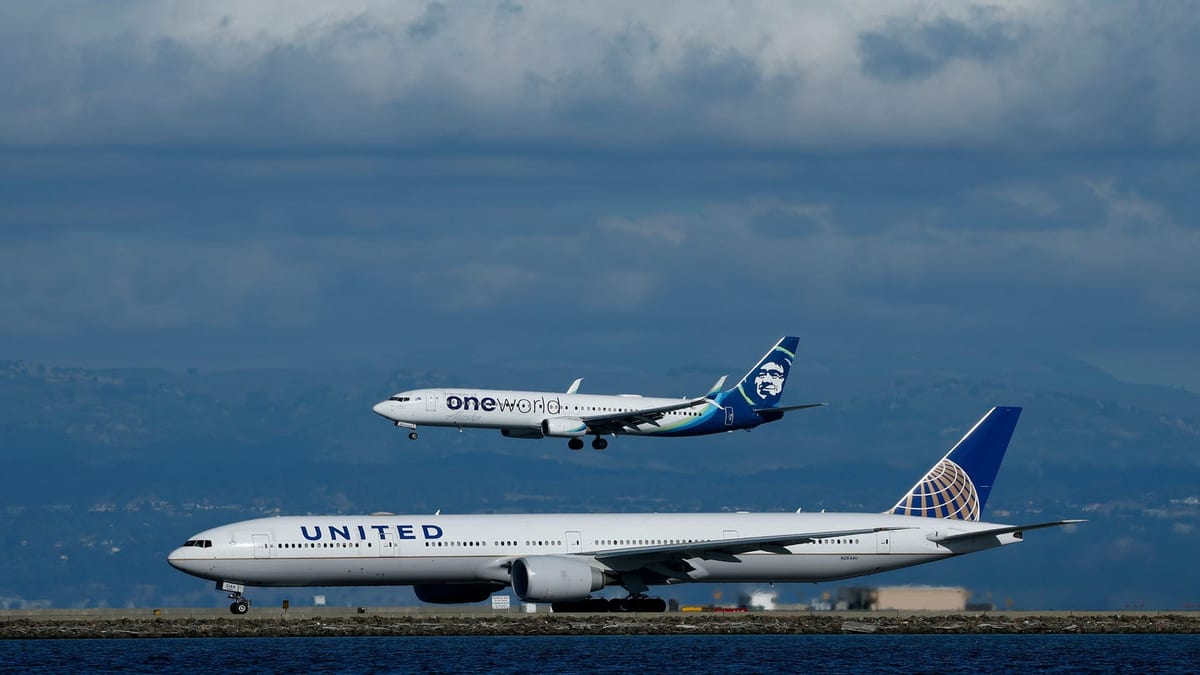
Image by USA Today
New safety restrictions cut SFO arrival capacity
According to publicly available information, the Federal Aviation Administration has introduced new restrictions on how aircraft can land at San Francisco International Airport, reducing the number of arrivals that can be safely handled each hour. Coverage of the decision indicates that tighter rules on approaches to SFO’s parallel east–west runways are at the center of the change.
Reports indicate that the agency is moving away from some forms of side by side visual landings in favor of staggered approaches, with one aircraft offset from another on the parallel runway. That adjustment increases spacing between aircraft on final approach and is described in multiple aviation reports as a safety enhancement, but it also reduces the rate at which flights can land during busy periods.
Aviation tracking discussions circulating online suggest that SFO’s effective arrival rate is being capped at roughly two thirds of its previous peak throughput in good weather. In practice, that means fewer landing slots are available each hour, pushing some flights into holding patterns or later time bands and creating a ripple effect of delays across airline schedules.
Publicly available statements from airport representatives indicate that SFO already expected some impact from runway work this year, but the new federal limits on arrivals are now projected to amplify those disruptions. The combined effect is expected to be most visible during peak bank periods in the morning and evening.
Runway construction amplifies delay risk
The timing of the FAA’s move coincides with a long planned runway rehabilitation project at SFO. Local coverage in the Bay Area describes a six month period in which traffic is consolidated on the airport’s main pair of runways, 28 Left and 28 Right, while other infrastructure is upgraded.
Airport planning documents and prior briefings have highlighted that concentrating all arrivals and departures on the same runway pair would, by itself, tighten capacity and lead to more frequent minor delays. Earlier forecasts cited in regional travel reporting pointed to a relatively modest share of flights seeing schedule impacts, typically framed as short waits during the busiest hours.
However, more recent public comments from airport spokespeople, as cited in news and aviation forums, point to a higher ceiling on disruption now that the FAA has communicated a reduced arrival rate. Those updated estimates suggest that roughly a quarter of arriving flights could see delays of at least half an hour while the combined measures are in effect.
Industry analysts note that delay statistics at SFO have long been sensitive to runway configuration, weather and traffic management initiatives. With fewer physical options available during the construction project, the new federal arrival limits leave less flexibility for controllers and airlines to recover when operations start to back up.
What travelers can expect in the weeks ahead
Early reaction from airline passengers and aviation enthusiasts on public forums portrays a picture of longer holding patterns into SFO, extended time on the ground before takeoff at origin airports, and tighter connections for itineraries that rely on San Francisco as a hub. Several widely shared posts describe SFO as likely to face chronic congestion during the peak summer travel period if schedules are not adjusted.
Travel industry reports suggest that airlines are already working SFO specific buffers into their operations, in some cases building extra time into block schedules or retiming certain flights away from the busiest arrival waves. These behind the scenes adjustments may not be immediately obvious to travelers scanning departure boards, but they are designed to absorb some of the predictable delay generated by the new constraints.
Passengers connecting through San Francisco may experience the impact less as a dramatic single disruption and more as a steady pattern of modestly late arrivals and departures. Travel data providers often classify these as minor delays, but for passengers with short layovers they can be enough to jeopardize a connection or force an unplanned rebooking.
Publicly available guidance from airlines and airport travel advisories continues to emphasize standard preparedness: arrive early, monitor flight status frequently and allow generous connection times when routing through congested hubs. With SFO now operating under both infrastructure limits and new FAA arrival rules, those precautions may be especially relevant.
Regional and national ripple effects
San Francisco is one of the country’s busiest international gateways and a key transcontinental hub, so any structural reduction in its arrival capacity is likely to be felt beyond the Bay Area. Network planning coverage indicates that carriers may respond by shifting some traffic to nearby airports such as Oakland and San Jose, particularly for domestic routes that can be more easily reassigned.
Analysts note that when a major hub faces chronic arrival constraints, downstream effects can include increased use of secondary airports in the same region, more point to point flying that bypasses the constrained hub, or schedule reductions during the periods of tightest capacity. Each of those responses can change the mix of nonstop and connecting options available to travelers, at least temporarily.
Nationally, traffic management initiatives at one hub frequently interact with weather systems and staffing patterns at others. Air traffic flow tools used by the FAA, such as ground delay programs, are often deployed when an airport’s hourly arrival demand exceeds its safe capacity. With SFO’s ceiling now formally lower during certain periods, those programs may be triggered more quickly on busy travel days, potentially affecting flights and passengers far from the Bay Area.
Some aviation commentators have suggested that the San Francisco situation could become a test case for how the national airspace system copes with long lasting local constraints layered on top of broader operational pressures. The experience may influence how similar capacity and safety trade offs are managed at other complex hub airports in the future.
How to plan if you are flying through SFO
For travelers who already hold tickets into or out of San Francisco, publicly available advice from airlines and travel professionals centers on building resilience into their plans. That can start with choosing earlier flights in the day whenever possible, as morning departures are more likely to leave before delay programs stack up, and disruptions then compound throughout the afternoon and evening.
Passengers booking new trips may also want to consider longer connection times when using SFO as a connecting point, particularly for itineraries that involve international segments with more rigid check in and boarding cutoffs. While airlines are responsible for rebooking missed connections on a single ticket, longer buffers can reduce stress and improve the chance of a smooth journey.
Some Bay Area bound travelers may opt to price out alternative routings that arrive at Oakland or San Jose, both of which are connected to regional transit and can be practical substitutes for certain destinations in the greater metropolitan area. Travel media coverage notes that these airports are unlikely to be affected by the specific arrival limits now in place at SFO, although they remain subject to broader national air traffic conditions.
Regardless of the airport, regular checks of flight status through airline apps and alert services remain a crucial tool. With SFO’s arrival rate temporarily constrained by both construction and new FAA requirements, schedules are likely to remain fluid, and travelers who stay informed in real time will be better positioned to adjust when delays occur.