

More news on this day
Travelers flying through San Francisco International Airport face a new wave of potential disruptions after the Federal Aviation Administration introduced a safety-driven change to landing procedures that is expected to cut arrival capacity and increase delays.
Get the latest news straight to your inbox!
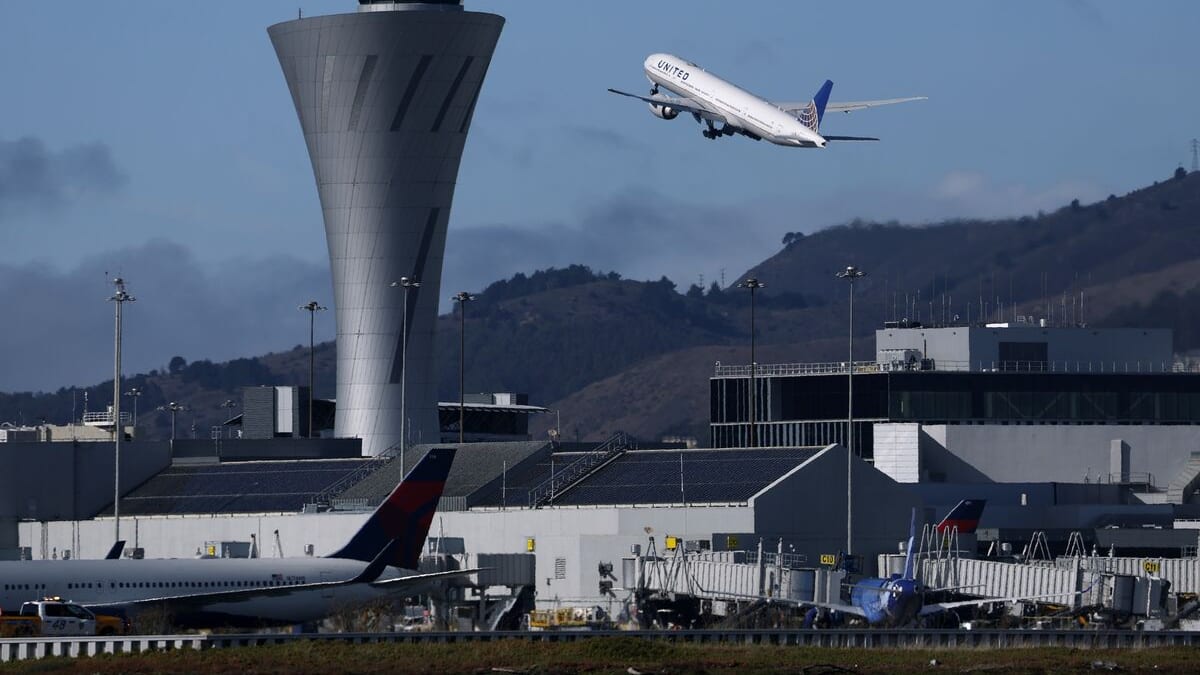
Image by Bloomberg.com
New Safety Rule Targets Side-by-Side Approaches
Publicly available information indicates that the Federal Aviation Administration has moved to restrict certain parallel landing procedures at San Francisco International Airport, one of the country’s busiest West Coast hubs. The change focuses on side-by-side approaches to the airport’s closely spaced east–west runways during clear weather, a configuration that has long allowed SFO to accommodate a high volume of arrivals in peak periods.
According to recent national news coverage, the FAA decision effectively prohibits simultaneous independent approaches that bring two aircraft in on adjacent runways at the same time under visual conditions. The measure is being described as a precautionary step intended to reduce the risk of runway incursions and other close calls at a complex airport layout that operates near capacity for much of the day.
Reports indicate that the new rule is part of a broader push by federal regulators to tighten safety margins at large U.S. airports following a series of high-profile near-miss incidents across the country. By narrowing the range of approach procedures available to air traffic controllers at SFO, the FAA is prioritizing additional buffer between aircraft even when visibility is good and demand for arrivals is highest.
Industry observers note that side-by-side approaches have been a key factor in SFO’s ability to maintain throughput despite frequent marine-layer fog and wind shifts. Limiting that option, even partially, is expected to reverberate through airline schedules, particularly during busy morning and evening banks when many long-haul flights arrive.
Arrival Capacity Cut as Runway Project Begins
The timing of the FAA safety move coincides with a major runway repaving program at San Francisco International Airport, compounding the impact on the airport’s ability to handle traffic. Local airport communications and secondary reporting describe a six-month construction project that requires the closure or partial use of one of SFO’s primary runways, reducing operational flexibility even before the safety rule is factored in.
Recent coverage summarizing airport forecasts indicates that SFO’s maximum arrival rate is expected to drop from about 54 flights per hour to roughly 36 under the combined effect of the repaving work and the new landing restrictions. That reduction represents a substantial cut in capacity at a facility that already contends with chronic congestion during peak periods and weather disruptions common along the Northern California coast.
Before the FAA change, airport planners had anticipated moderate impacts, projecting that around 10 to 15 percent of flights might see delays tied primarily to the runway project. With the new safety rule layered on top, updated internal estimates cited in local reporting now point to a significantly higher share of affected operations.
The decrease in hourly arrivals means that relatively small disruptions could cascade more quickly, as there will be less slack in the system to absorb late departures from other airports or minor slowdowns in sequencing. For travelers, this could translate into longer taxi times before takeoff, holding patterns in the air, and missed connections when banks of inbound flights bunch up.
Delays Expected to Affect One in Four Arrivals
Based on figures shared through airport-facing communications and reported in regional outlets, SFO now expects roughly a quarter of arriving flights to experience notable delays during the construction and safety-rule period. The working estimate is that about 25 percent of inbound operations could be held up by 30 minutes or more, particularly during the busiest hours of the day.
While those numbers are projections rather than guarantees, they underscore how sharply the operating environment at SFO may tighten in the months ahead. The combination of a long-duration airfield project and stricter approach rules effectively shifts the airport into a lower-capacity mode, even on days when weather is clear and demand is strong.
Travel analysts note that knock-on effects are likely to be felt well beyond the Bay Area, as SFO functions as a key transpacific gateway and domestic connecting hub. Delays into San Francisco can disrupt onward travel to other U.S. cities and international destinations as aircraft and crews arrive late and depart out of sequence.
Published coverage suggests that airlines serving SFO are already revisiting schedules, connection times, and aircraft assignments in anticipation of the constraints. However, with limited ability to quickly add flights at nearby airports or substantially reroute long-planned international services, carriers may have to rely heavily on real-time operational adjustments once the new regime is fully in effect.
What Travelers Passing Through SFO Should Expect
For passengers, the practical impact of the FAA’s safety rule and the ongoing runway work is likely to be felt most acutely in longer and less predictable journey times. Industry guidance and recent news reports suggest that fliers with connections at SFO may need to build in more generous buffers between flights, especially on itineraries involving evening transcontinental or international departures.
Travel experts cited in consumer coverage are encouraging passengers to pay close attention to airline notifications, as carriers will continue to adjust schedules, aircraft swaps, and rebooking options as the situation evolves. Same-day changes, gate shifts, and rolling delays could become more common as air traffic controllers sequence arrivals into the reduced-capacity pattern.
Passengers beginning their trips at SFO may also encounter busier departure halls and longer waits if early-morning or late-afternoon departure banks are reshuffled to accommodate constrained arrival windows. With fewer slots available, airlines have limited flexibility to recover from incoming delays, making it more important for travelers to arrive at the airport early and monitor real-time flight status.
Despite the inconvenience, safety specialists interviewed in prior national reporting on similar FAA initiatives point out that added margins in approach and landing procedures are intended to guard against rare but high-consequence events. In that sense, the changes at SFO reflect a trade-off between short-term disruption and longer-term risk reduction, a balance that regulators increasingly emphasize across the U.S. air transportation system.
Broader Context in U.S. Aviation Safety Efforts
The situation at San Francisco International Airport comes amid a wider federal focus on tightening safeguards at busy airports following multiple runway incursions and near-collision incidents nationally in recent years. Advisory panels, congressional hearings, and technical reviews have all highlighted the need for more conservative spacing standards and procedure design at complex airfields.
According to recent policy and aviation industry analyses, the FAA has been exploring new requirements around approach spacing, controller workload, and use of advanced surveillance tools at major hubs. Adjustments like the SFO landing rule fit into this pattern, representing localized changes that may eventually inform broader system-wide standards.
Observers note that implementing such measures at an already congested airport is particularly challenging, as the safety gains must be weighed against the economic and operational costs of reduced capacity. The San Francisco case is likely to be closely watched by airlines, airport operators, and regulators as they assess how well traffic can be managed under tighter constraints without triggering widespread disruption.
For travelers planning trips through SFO over the coming months, the evolving situation illustrates how infrastructure upgrades and regulatory shifts can intersect in ways that reshape the experience on the ground. While many details may be refined as the runway project progresses and airlines adapt, one point appears clear from current forecasts: passengers using San Francisco as an origin, destination, or connecting point should be prepared for a period of elevated delay risk.