

More news on this day
The Boeing 777X program has cleared another critical hurdle in the United States, with the Federal Aviation Administration authorizing the next major phase of certification testing, a step that reinforces plans by Germany’s Lufthansa and the United Arab Emirates’ Emirates airline to target a 2027 launch of the long-delayed widebody jet on their networks.
Get the latest news straight to your inbox!
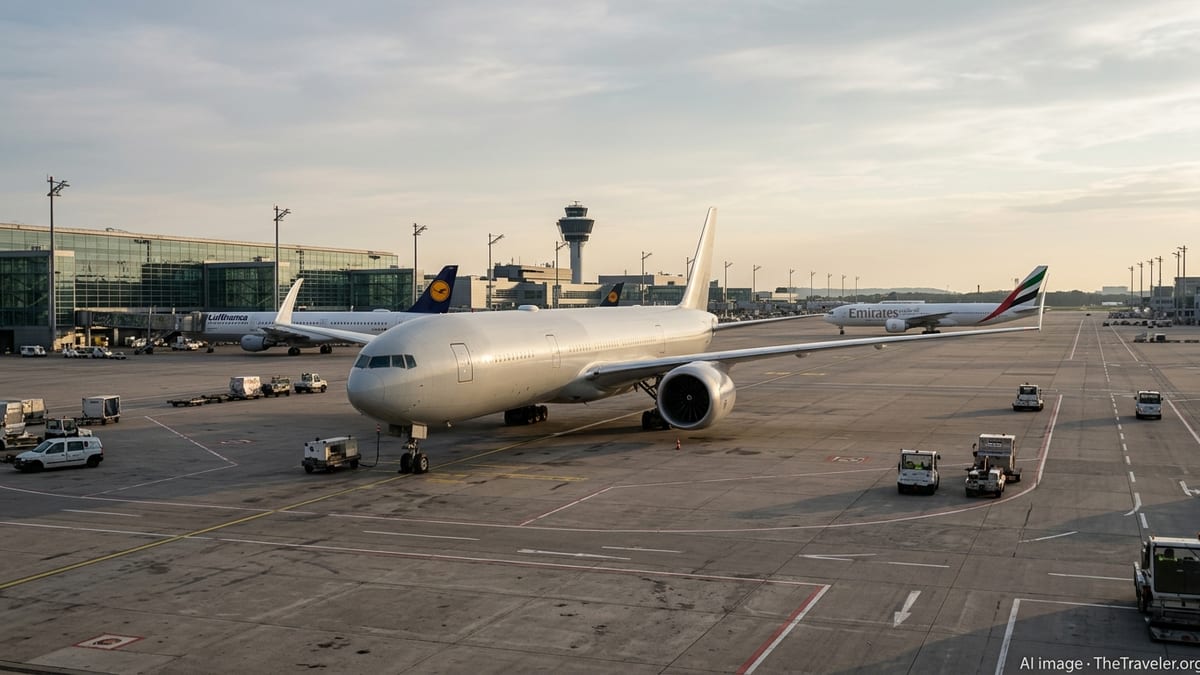
Fresh FAA Approval Marks Turning Point for 777X
Publicly available industry coverage indicates that the FAA has now allowed Boeing’s 777-9, the first variant of the 777X family, to move into a new stage of its Type Inspection Authorization testing. This phase is focused on system demonstrations and more comprehensive certification trials, building on earlier test work that began after partial approvals in 2024 and 2025. The new clearance is seen within the sector as a sign that regulators are increasingly comfortable with the jet’s revised development roadmap following a series of delays.
Reports suggest that the latest authorization opens the door to a broader range of flight profiles and system evaluations, including advanced fly-by-wire controls, wing-fold mechanisms and cabin systems that differentiate the 777X from previous 777 generations. The step-up in activity is being closely watched by airlines that have committed to the aircraft, particularly launch customer Lufthansa in Germany and Dubai-based Emirates, the program’s largest buyer.
The move comes after years of schedule revisions tied to evolving certification requirements, test issues and changing market conditions. Industry analysts note that each incremental FAA clearance reduces uncertainty around the aircraft’s timeline, even as they caution that further technical or regulatory findings could still influence the pace of remaining tests.
Lufthansa Positions Germany as Launch Hub for the 777X
Germany’s flag carrier Lufthansa has long been identified as the launch operator for the 777-9, and company fleet planning updates cited in aviation reporting point to an entry into service in early 2027. That target reflects a shift from earlier expectations of first deliveries in 2025 and then 2026, as Boeing and regulators worked through more stringent certification requirements and unexpected test setbacks.
Public briefings and planning documents indicate that Lufthansa is preparing to integrate the 777X into its long-haul network from hubs such as Frankfurt and Munich, with the aircraft expected to replace older four‑engine jets and some earlier twin‑aisle types. The airline has highlighted the importance of lower fuel burn and quieter operations for meeting European environmental and noise regulations, both of which are core selling points for the new model.
Germany’s aviation sector views the 777X as part of a broader fleet renewal that includes new-generation twin‑aisle and single‑aisle aircraft. For Lufthansa, bringing the 777X into service is expected to support high‑demand intercontinental routes to North America, Asia and the Middle East, where additional capacity and improved premium cabins are central to its competitive strategy.
Emirates Prepares for New Flagship on Germany–UAE Corridors
Emirates, based in Dubai, holds the largest order book for the Boeing 777X and has repeatedly emphasized the jet’s role in refreshing its long‑haul fleet. Public comments from the airline in recent years have shifted expectations from mid‑decade entry into service to a later timeframe, and more recent coverage links Emirates’ planning to the emerging 2027 horizon that now anchors many forecasts for the program.
The carrier is expected to deploy the 777X on flagship routes between the United Arab Emirates and major European gateways, including German cities such as Frankfurt, Munich and Düsseldorf, where it already operates multiple daily services with the current 777 and Airbus A380. The new jet’s combination of range, capacity and improved fuel efficiency is seen as central to maintaining dense schedules on these trunk routes while managing operating costs and emissions.
Sector observers note that the simultaneous preparations by Lufthansa and Emirates effectively position Germany–UAE links as one of the first major intercontinental corridors to benefit from the 777X. The pairing of a European network carrier and a Gulf super‑connector on the same new aircraft type is expected to intensify competition on premium travel, corporate contracts and connecting traffic between Europe, Asia and Africa routed through their respective hubs.
Certification Timeline Still Tight Ahead of 2027 Target
Despite the encouraging signal from the FAA’s latest approval, the 777X program still faces a compressed schedule. Publicly available data and expert commentary describe a multi‑stage certification campaign in which the current phase is only one part of a broader test and documentation effort that must be completed before full type certification and, subsequently, a production certificate are granted.
Technical issues identified in earlier testing, including concerns around flight control software and components such as engine thrust links, led to temporary pauses and design adjustments. Boeing has since reported applying hardware and software fixes, and the resumption of a more intensive test tempo under FAA oversight is widely interpreted as evidence that regulators are willing to see the program advance, provided performance and safety requirements are demonstrably met.
Analysts point out that even if the aircraft secures type certification around 2026, additional time is required for finalizing cabin configurations, crew training, route‑proving flights and the ramp‑up of production. These steps underpin the increasingly common view in industry reporting that widespread commercial service, particularly with major operators like Lufthansa and Emirates, is most realistically aligned with 2027.
Strategic Implications for Global Long-Haul Travel
The alignment of a 2027 target between Boeing, regulators and cornerstone customers in Germany and the UAE carries broader implications for global long‑haul networks. For airlines, the 777X promises a combination of high capacity, long range and reduced fuel consumption compared with older widebodies, which is central to meeting tightening sustainability goals while preserving connectivity on lengthy routes.
For Germany, the aircraft supports efforts to maintain Frankfurt and Munich as primary European gateways, reinforcing their role in linking Europe with Asia, the Americas and the Middle East. For the UAE, the 777X extends the hub‑and‑spoke model that has turned Dubai into a major global transit point, particularly on flows between Europe and the Asia‑Pacific region.
Travelers stand to see changes in cabin products as well, as both Lufthansa and Emirates are expected to introduce refreshed interiors, new business‑class concepts and potentially enhanced premium economy offerings on the 777X. While specific route allocations and cabin layouts will be finalized closer to delivery, the aircraft’s progress through FAA certification has become a leading indicator of when these passenger‑facing innovations are likely to reach the market.