

More news on this day
The U.S. Federal Aviation Administration has moved to cap peak summer 2026 flight operations at Chicago O’Hare International Airport, responding to aggressive schedule increases by United Airlines and American Airlines that regulators say would push the busy hub beyond its safe operating capacity.
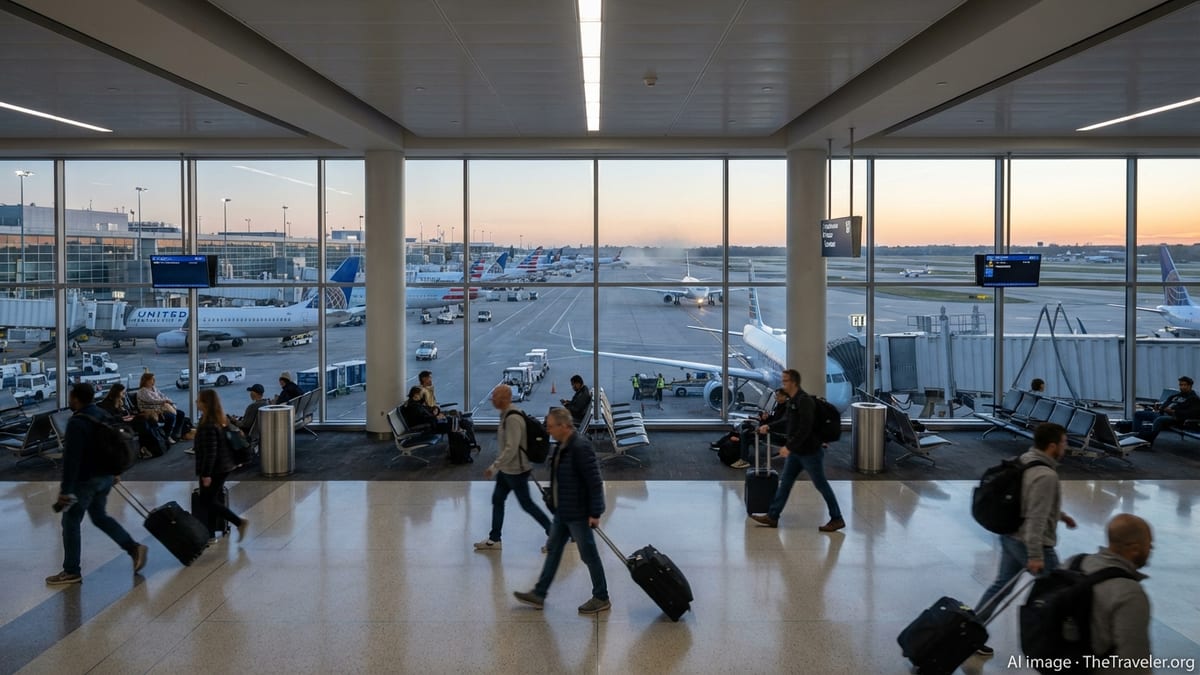
Regulators Step In as Schedules Outrun Capacity
Federal documents released this week show the FAA intends to limit operations at O’Hare to about 2,800 takeoffs and landings per day during the 2026 summer scheduling season, which runs from late March through late October. Published airline timetables currently project more than 3,080 daily movements on peak days, a level the agency says would overwhelm the airport’s runways, terminals and air traffic control resources.
O’Hare is already one of the busiest hubs in the United States, typically handling around 100 departures and 100 arrivals per hour. According to the FAA, that level has proved “manageable” given existing infrastructure and staffing, particularly as construction continues on a multibillion-dollar modernization program that is reconfiguring runways and terminals.
By contrast, the proposed summer ramp-up would exceed last year’s peak of roughly 2,680 daily operations by nearly 400 flights. Regulators warn that allowing the full increase to proceed would risk cascading delays, missed connections and heightened strain on controllers at a time when the national aviation system remains sensitive to disruptions.
The agency is now preparing a formal order to lock in the temporary cap for the 2026 summer period, with details to follow after consultations with airlines and the Chicago Department of Aviation.
United and American Drive Aggressive Summer Growth
The FAA’s intervention comes amid an intensifying contest between United Airlines and American Airlines, both of which operate major hubs at O’Hare and have announced ambitious growth plans heading into the peak travel season. United, which runs its largest global hub at the airport, has outlined plans for approximately 780 daily departures from Chicago this summer, up sharply from an average of 541 flights per day last year.
United’s expansion reflects additional gates secured in recent reallocation decisions and a strategy to add more mainline flying from Chicago, including a reported 20 percent increase in mainline departures over last summer. The carrier has been building out both domestic and international connectivity, positioning O’Hare as a key bridge between Midwest cities and long haul routes to Europe and Asia.
American, meanwhile, has been rolling out its largest O’Hare schedule since before the pandemic. The airline announced it would add around 100 daily departures to more than 75 destinations in time for the spring and summer peak, lifting its departures toward the mid-500s and restoring, and in some cases surpassing, pre-2020 levels of flying from Chicago.
Combined, the two carriers’ moves transformed O’Hare into one of the country’s most hotly contested airline battlegrounds heading into summer 2026. While the rivalry promised more choices and potentially lower fares for travelers, it also triggered growing concern in Washington that the airport’s infrastructure could not safely absorb the surge.
Details of the Proposed Flight Limits
Under the FAA’s proposal, O’Hare’s operations would be capped at roughly 2,800 total daily flights throughout the summer season, effectively freezing capacity near current levels while falling significantly short of what airlines had scheduled. The agency is also signaling a closer review of traffic patterns throughout the day, with particular scrutiny on the heaviest bank periods.
Regulators plan to examine every 30-minute interval between early morning and late evening, identifying windows that they classify as severely congested. Airlines will then be asked to trim schedules in those periods to meet the overall hourly cap of about 100 combined arrivals and departures, with some flexibility to smooth flying across the day.
The temporary limits are framed as a targeted congestion-management tool rather than a long-term rollback of O’Hare’s growth trajectory. The FAA has emphasized that the cap is designed to keep operations within the airport’s “demonstrated manageable capacity” while construction and staffing constraints persist, aiming to avoid a repeat of gridlock and disruption seen at other major hubs when schedules outpaced resources.
The measure mirrors steps taken at Newark Liberty International Airport in recent years, where regulators convened airlines to voluntarily reduce flights after chronic delays. Industry analysts say the O’Hare cap underscores how quickly competitive expansion at a single hub can force regulators to balance airline ambitions with the need to preserve system reliability.
Airlines Voice Support as Travelers Await Clarity
Despite facing potential schedule cuts, both United and American have publicly backed the FAA’s move, portraying it as a necessary step to protect operations at their shared hub. In statements released after the plan surfaced, American commended regulators for taking proactive action to safeguard the “operational integrity” of O’Hare’s airfield and airspace, arguing that a controlled cap can ultimately improve the customer experience.
United also praised the initiative, highlighting its alignment with the airline’s commitment to running a safe and reliable operation from Chicago. Airline executives note that controlled reductions can be preferable to uncontrolled disruptions, where weather or staffing shortfalls force ad hoc cancellations and strand passengers with little notice.
For travelers, however, the practical impact of the cap remains uncertain. Much will depend on how airlines choose to adjust their schedules during upcoming negotiations. Carriers could pare back frequencies on shorter regional routes, consolidate lightly booked flights, or retime some departures outside the busiest banks while preserving flagship long haul and high demand domestic services.
Passenger advocates say the key will be clear communication once any schedule changes are finalized. With the FAA set to convene a meeting with carriers and local officials in early March, customers are being urged to monitor existing summer bookings and be prepared for modest time changes or aircraft swaps as the final operation plan takes shape.
Chicago’s Hub Strategy and Wider Industry Implications
The new caps land at a pivotal moment in Chicago’s broader aviation strategy. O’Hare is in the midst of a multiyear, multibillion-dollar overhaul intended to modernize terminals, reconfigure gate layouts and improve runway efficiency. City officials have signaled support for temporary schedule adjustments if they help maintain safe and efficient operations while construction continues and air traffic control staffing is ramped up.
For Chicago’s tourism and business community, the immediate concern is whether the cap will dampen the city’s connectivity during a crucial travel season. Early indications suggest the impact may be more about flattening growth than cutting deeply into existing capacity, with regulators targeting the most aggressive additions rather than core connectivity.
Nationally, aviation observers see O’Hare as a test case for how regulators may handle rapid growth at other constrained hubs. With airlines across the United States rebuilding networks and chasing high demand on domestic and international routes, the FAA faces increasing pressure to balance expansion with the resilience of the air traffic system, particularly during peak summer travel periods.
How the O’Hare cap is implemented, and how effectively delays are contained as a result, will be closely watched by other airports, airlines and regulators worldwide as they grapple with similar questions of capacity, competition and reliability in a post-pandemic travel landscape.