

More news on this day
A pungent odor at a key federal air traffic facility triggered ground stops at several major East Coast airports, forcing widespread delays for United Airlines and American Airlines passengers and underscoring the fragility of the nation’s aviation infrastructure.
Get the latest news straight to your inbox!
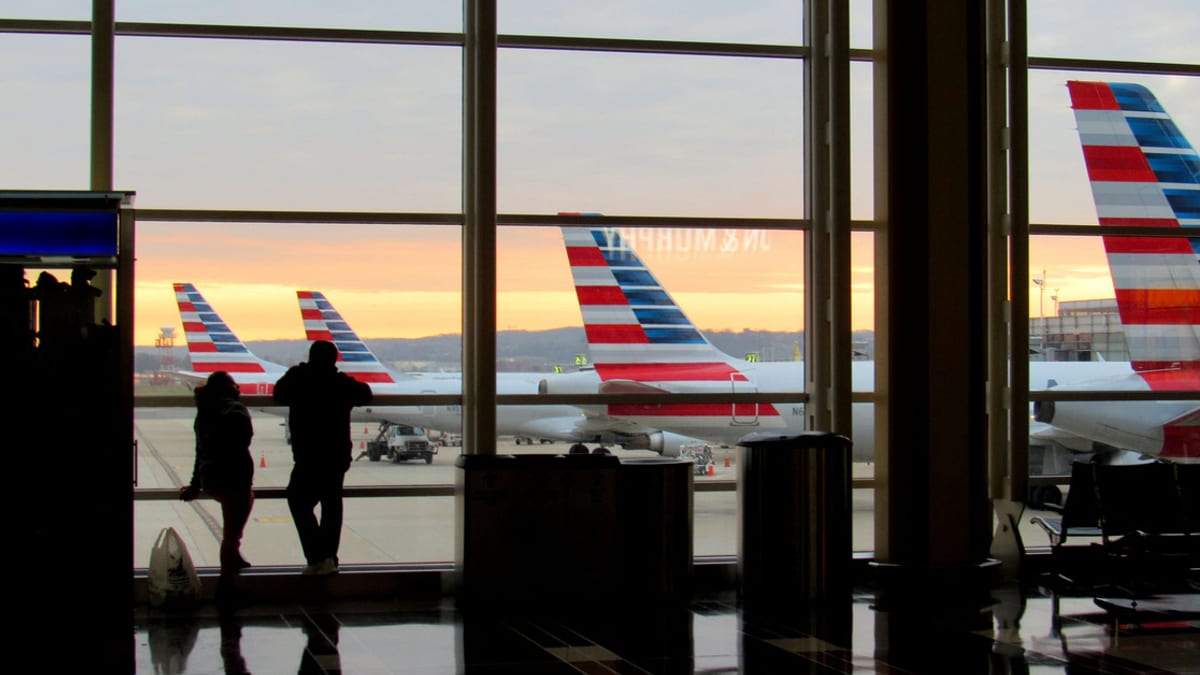
Image by thetravel.com
Strong Smell At Potomac TRACON Halts DC Region Traffic
According to publicly available FAA status alerts and regional news coverage, air traffic into and out of the Washington, D.C. region was abruptly halted after a strong smell was reported at the Potomac TRACON, the radar approach control facility that sequences flights for multiple East Coast airports. The incident occurred on Friday evening, March 27, affecting the dense evening rush of business and leisure travelers.
Traffic was temporarily stopped to Ronald Reagan Washington National, Washington Dulles International, Baltimore–Washington International Thurgood Marshall, Charlottesville–Albemarle, and Richmond International, creating an immediate backlog of arriving and departing flights. The odor was significant enough that controllers at the facility were impacted and operations had to be reduced, prompting a formal ground stop that prevented additional aircraft from departing for the region.
While the precise nature of the smell has not been fully detailed in public reports, coverage from multiple outlets consistently describes it as a strong chemical or burning type odor. Investigations have previously linked similar events at the same facility to overheated equipment, raising renewed questions about the resilience of aging air traffic infrastructure that manages some of the country’s busiest airspace.
Potomac TRACON, located in Warrenton, Virginia, handles approach and departure control for the Washington metropolitan area and parts of Maryland and Virginia. Any disruption at this facility can quickly cascade through airline schedules, particularly for carriers with large operations that rely on tight connection banks.
Ground Stops Hit Major United And American Hubs
The DC-area shutdown reverberated across airline networks because Washington National and Dulles function as important focus cities for American Airlines and United Airlines respectively, and feed long-haul and regional traffic through other hubs such as Chicago O’Hare, Newark, Dallas–Fort Worth, and Charlotte. When flights into the capital region were frozen, aircraft and crews scheduled to continue on to other destinations were stranded out of position.
Flight-tracking data referenced in published coverage indicates that hundreds of departures and arrivals were delayed nationwide as the ground stop took effect and then gradually lifted. United, which operates a major hub at Dulles, experienced significant disruption on transcontinental and transatlantic routes that either originated or terminated in the Washington area. American Airlines saw knock-on delays at Washington National, where its closely timed shuttle and corridor services depend on precise sequencing through Potomac TRACON-managed airspace.
The ripple effects extended to airports far from the Mid-Atlantic as aircraft bound for DCA, IAD, BWI, CHO, and RIC were held at origin or diverted to alternates when airborne capacity into the region was temporarily reduced. Some long-haul flights headed for Dulles were reported in tracking data as diverting to secondary hubs so that passengers and crews could disembark safely while controllers worked through the outage.
Because both United and American build their schedules around banked waves of connecting flights, the timing of the ground stop during the evening peak left many passengers facing missed connections and overnight disruptions, even after the FAA allowed limited operations to resume.
Series Of Odor-Related Incidents Raises Safety Concerns
The March 27 disruption was not an isolated event. Earlier in the month, another strong chemical smell at the same Potomac TRACON facility led to a separate ground stop that also halted flights into the Washington region for more than an hour, according to wire service reporting and local media summaries. In that earlier incident, transportation officials ultimately traced the odor to overheated electronic components, such as a circuit board, prompting replacement of the affected hardware.
In a separate, but related, episode less than a week before the latest DC-area ground stop, a burning smell at Newark Liberty International Airport’s control tower forced an evacuation and a brief halt in arrivals and departures. Public reports from that incident indicate that FAA controllers temporarily moved to a backup tower, and that no fire was ultimately found, but operations at one of United’s largest hubs were still interrupted.
Taken together, these odor-driven events highlight how air traffic control facilities can be vulnerable to relatively mundane but operationally serious issues, such as electrical faults or ventilation problems. Even when no fire is detected and no injuries are reported, any situation that affects the health or focus of controllers triggers strict protocols that can quickly reduce airspace capacity.
For airlines such as United and American, which depend heavily on efficient operations at coastal gateways like Dulles, Newark, and National, the combination of closely spaced traffic, limited runway capacity, and centralized control facilities means seemingly minor technical problems can quickly spill over into network-wide disruptions.
Passengers Face Missed Connections And Overnight Disruptions
Travelers flying on March 27 encountered long waits on tarmacs, crowded concourses, and extended customer service lines as carriers struggled to rebook disrupted itineraries. Social media posts and passenger accounts compiled by news outlets describe aircraft parked away from gates while crews awaited clearance, as well as flights that pushed back only to return when the scope of the ground stop became clearer.
United and American, like other large carriers, rely on complex crew and aircraft rotations that assume on-time arrivals at key hubs. When a regional ground stop locks up an entire segment of the network with little warning, aircraft may end their day at the wrong airport and crews can time out under federal duty rules. That can result in cancellations that extend well beyond the end of the official ground stop period.
Publicly available information shows that airlines implemented standard disruption playbooks, including rolling delays, selective cancellations, and the consolidation of lightly booked flights. Travelers arriving late into hub cities sometimes missed the last bank of onward departures for the night, adding hotel and meal costs to an already stressful travel day.
Industry analysts note in published commentary that frequent, short-notice disruptions pose particular challenges for business travelers who plan tight same-day itineraries, as well as for long-haul international passengers whose trips depend on a single critical connection at a U.S. hub.
Spotlight On Aging Infrastructure And Contingency Planning
The recurrence of odor-related incidents at pivotal air traffic control sites has renewed attention on the condition of the United States’ aviation infrastructure. Reports from previous years and recent coverage both point to a patchwork of decades-old radar facilities, complex cabling, and cooling systems that can be susceptible to electrical faults.
While the system is designed with redundancies, events like the March 27 ground stop underscore that contingency plans often involve sharply reducing traffic volumes until safety and air quality can be assured for controllers. That approach protects frontline workers and passengers, but also exposes how quickly routine travel can be disrupted when a single node in the network falters.
For United and American, whose hubs in the DC–New York corridor form critical bridges between domestic and international networks, such incidents are a reminder that operational resilience now depends as much on the reliability of federal facilities as on their own fleets and staffing. Carriers have already been contending with weather-related disruptions, staffing constraints, and congestion at major hubs, and odor-related shutdowns add yet another variable.
Aviation policy specialists quoted in prior analyses of infrastructure issues have long called for sustained investment in modernizing air traffic control equipment and improving ventilation and fire detection systems in radar facilities. The latest odor-related ground stops are likely to intensify that discussion, as travelers, airlines, and policymakers weigh how to reduce the risk that a strong smell in one building can stall flights across an entire region.