

More news on this day
The U.S. aviation sector is bracing for a wave of audits, internal reviews and political crossfire after the Federal Aviation Administration issued a nationwide directive on February 13 requiring every commercial airline to formally certify that its pilot hiring is exclusively merit-based, a move framed by the Trump administration as a safety initiative and by critics as a fresh front in the battle over diversity, equity and inclusion in the skies.
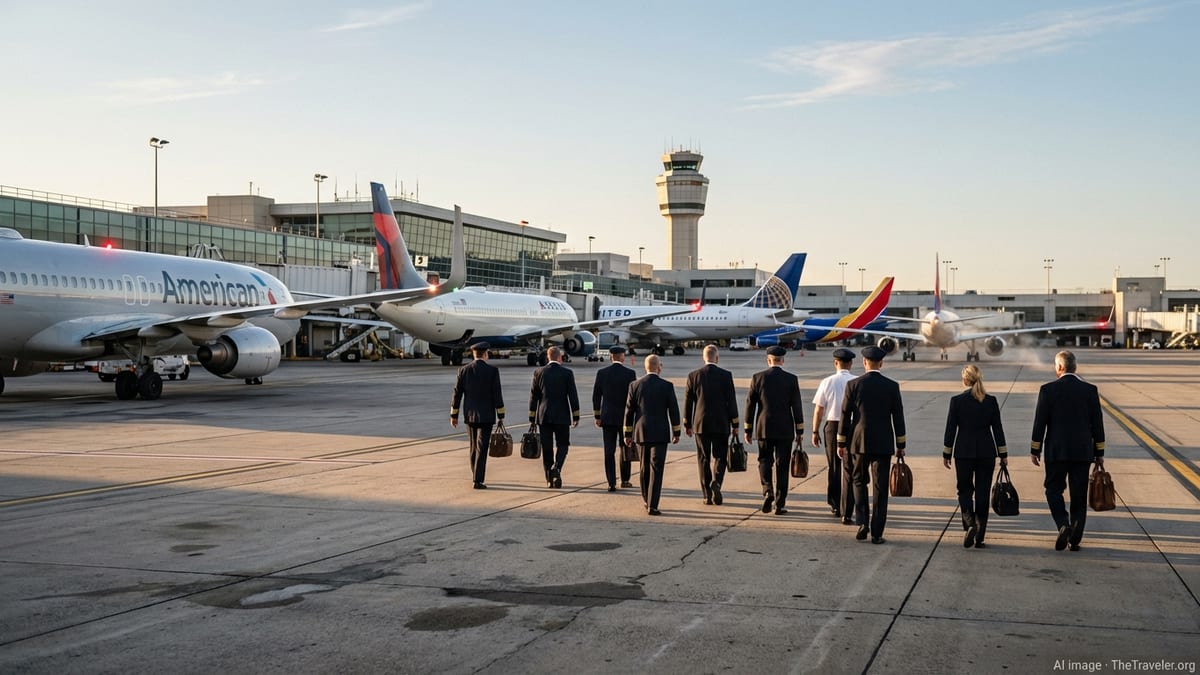
New FAA Operations Specification Puts Carriers on the Clock
The new requirement arrives in the form of a mandatory Operations Specification, or OpSpec, issued by the FAA for Part 121 carriers, the air carriers that operate scheduled commercial service. Labeled OpSpec A134 and titled "Merit Based Pilot Hiring," the clause instructs airlines that they "shall ensure pilot hiring is exclusively merit based" in order to meet their duty to provide the highest possible degree of safety in the public interest.
According to FAA guidance circulated to inspectors, the mandate is not instantaneous but will phase in over the coming weeks. Principal operations inspectors have been told to notify each airline within two business days of the notice’s publication, allow seven days for carriers to respond with written information, and then move to add the new OpSpec within 30 days after reviewing those submissions. Once imposed, OpSpec A134 becomes effective 30 days after the carrier receives its notification, setting up a rolling implementation window that will stretch into the spring.
In its public statement, the FAA linked the move to its statutory authority to prescribe minimum safety standards for air carriers and emphasized that operational safety depends on the knowledge and proficiency of flight crew members. The agency argued that training programs work best when new pilots enter with a verified baseline of technical knowledge and cognitive skills, and said the new requirement is intended to ensure that hiring pipelines are aligned with that goal.
For airlines, the operational impact goes beyond a single line of legal text. Compliance will require reviewing recruitment materials, interview processes, selection scoring rubrics and documentation standards to demonstrate that hiring decisions can be defended as strictly merit-based, particularly if federal investigators come calling.
Trump Administration Links Hiring Rule to Broader DEI Rollback
The directive stems directly from President Donald Trump’s broader effort to reverse diversity, equity and inclusion initiatives across federal agencies and affiliated industries during his current term. In a 2025 presidential memorandum on aviation safety, the White House ordered the Department of Transportation and the FAA to conduct a sweeping review of hiring and safety protocols dating back four years and to restore what it called uncompromised, merit-based standards throughout the system.
Transportation Secretary Sean P. Duffy, appointed after Trump’s return to office, has become the public face of that campaign. Announcing the new OpSpec, he said families should board aircraft "knowing the pilot behind the controls is the best of the best" and argued that the American public cares only that pilots are the most qualified, not what they look like or their gender. He has also highlighted the dismantling of DEI offices and contracts within the FAA itself as part of the same effort.
Administration officials have framed the move explicitly as a response to what they describe as allegations that some airlines have used race and sex as factors in pilot hiring. While the FAA has not publicly detailed specific complaints or enforcement cases, it has said the new mandate is intended to ensure that any such practices are terminated and that carriers can certify as much on demand.
Critics, including civil rights advocates and some labor voices, see the order as part of a wider ideological campaign rather than a neutral safety measure. They argue that airline pilot recruitment was already rooted in rigorous qualification standards and that DEI-focused outreach and scholarship programs were aimed at widening the talent pipeline, not lowering bars. Those tensions now sit at the heart of a policy clash that extends well beyond airport terminals.
Airlines and Pilot Unions Emphasize Existing Safety Standards
Major airlines and pilot unions have moved quickly to signal that they can live with the new certification requirement, while also pushing back against any implication that current hiring practices compromise safety. Airlines for America, the main trade group representing large U.S. passenger carriers, said its members already comply with all federal regulations related to qualifications, training and licensing, adding that safety is and will remain their top priority.
Delta Air Lines, one of the country’s largest carriers, stated that it has always made pilot hiring decisions based on qualifications and merit and will continue to do so. Other large carriers have echoed that message privately, describing the FAA order less as a call for change than as an expectation that needs to be formally documented and easily demonstrated in any future inquiry.
The Air Line Pilots Association, the powerful union representing tens of thousands of pilots at major and regional carriers, issued a pointed statement underscoring that all its members are trained and evaluated to the same uncompromising standards regardless of race, gender or background. ALPA’s leadership stressed that identity has no bearing on a pilot’s ability to safely operate an aircraft and that what matters is training, experience and qualification, areas where it insists there are no shortcuts and no compromises.
Behind the scenes, union officials are focused on ensuring that compliance measures do not unintentionally interfere with collective bargaining agreements or seniority-based progression systems, which are long-standing pillars of pilot careers. For now, they say, the new OpSpec appears directed at initial recruitment screening and documentation, not at negotiated promotion pathways or internal bidding processes.
Compliance Reviews and Legal Questions for U.S. Carriers
For airline compliance and human resources teams, the immediate priority is to map existing procedures against the FAA’s expectations. That means cataloguing every element of the pilot hiring process, from minimum flight time thresholds and type-rating preferences to simulator evaluations, structured interviews and scoring criteria, and then demonstrating that each factor is grounded in operational need rather than demographic goals.
Legal departments are also parsing how the new OpSpec interacts with existing anti-discrimination law. Federal civil rights statutes bar discrimination on the basis of race, sex and other protected characteristics, but they also allow companies to pursue legitimate outreach and recruitment aimed at historically underrepresented groups as long as selection decisions themselves remain nondiscriminatory. The FAA’s language, which focuses on ensuring hiring is "exclusively merit-based," could spark debate over which practices fall on which side of that line.
Another open question is enforcement. The agency has made clear that failure to adopt and abide by the merit-based hiring OpSpec could trigger federal investigation, but it has not detailed exactly what would constitute a violation or how often inspectors will audit carrier practices. Industry lawyers anticipate that early enforcement actions, if any, will effectively define the rule’s contours and could be challenged in federal court, particularly if airlines argue that the FAA is reaching beyond its core safety mandate into management prerogatives.
Airlines operating internationally are also weighing how the directive fits alongside foreign regulatory requirements and voluntary commitments they may have made on diversity and inclusion. Some global carriers have signed on to industry charters encouraging broader representation in cockpits, and U.S. airlines in joint ventures or alliances will now need to ensure that any global messaging does not conflict with domestic regulatory expectations.
DEI Programs Under Renewed Scrutiny Across Aviation
The FAA’s move effectively places a regulatory magnifying glass over the wide array of diversity and outreach initiatives that airlines, airports and manufacturers have developed in recent years. From scholarships for aspiring pilots from underrepresented communities to partnerships with historically Black colleges and universities and women-in-aviation organizations, these programs were created to address a long-recognized lack of diversity in cockpits without diminishing training or qualification standards.
Government data underline the scale of that representation gap. As of late 2024, women accounted for less than one in ten pilots and flight engineers in the United States, and racial and ethnic minorities also remained significantly underrepresented relative to the broader workforce. Aviation educators warn that without targeted outreach and financial support, the high cost of pilot training can deter talented candidates who lack the resources to accumulate the required flight hours.
Supporters of DEI initiatives argue that, when properly designed, they expand the pipeline of qualified applicants rather than alter the qualifications themselves. They say the FAA’s new emphasis on explicit merit-based certification risks chilling legitimate efforts to broaden access by making airlines wary of programs that could be perceived, rightly or wrongly, as demographic preferences rather than opportunity expansions.
Administration officials counter that nothing in the new OpSpec prevents airlines from conducting outreach to a wide range of communities, as long as the ultimate hiring decisions can be clearly tied to objective qualifications, experience and aptitude. Still, the practical distinction between outreach and selection may be tested as airlines review marketing materials, partnerships and scholarship criteria through a more defensive lens.
Passenger Perception, Safety Messaging and the Travel Market
The political framing of the new directive, coupled with heightened media attention, has the potential to influence how travelers think about pilot competence and airline safety, at least in the short term. By suggesting that the order is needed to counteract alleged identity-based hiring, federal officials risk unintentionally planting doubts among some passengers about whether previous hiring practices were sufficiently rigorous, despite the industry’s strong safety record.
Airlines are responding with their own messaging, emphasizing continuity rather than change. Communications teams are highlighting long-standing training pipelines, recurrent simulator checks and strict medical and qualification standards as evidence that flyers have always been in the hands of highly trained professionals. In interviews and social media posts, many pilots have echoed that narrative, stressing that nobody reaches the left or right seat of an airliner without years of demanding preparation and continuous evaluation.
Travel industry analysts note that while safety perceptions are central to airline choice, there is little evidence that policy disputes over hiring practices alone significantly shift booking patterns, particularly when no specific safety incidents are linked to the issue. Instead, they say, the broader concern is whether the politicization of aviation regulation could eventually affect consumer confidence if future accidents or incidents are framed through a partisan lens.
For tourism destinations, airports and travel brands beyond the airlines themselves, the debate is more background noise than frontline concern. Still, they have a stake in maintaining public confidence in the U.S. aviation system, which underpins domestic tourism and international visitation. Many are watching to see whether the FAA follows this hiring directive with additional measures that could affect capacity, scheduling or crew availability.
What Comes Next for Regulators, Airlines and Lawmakers
In the coming weeks, attention will shift from the text of the OpSpec to how it is implemented on the ground. FAA field offices will be responsible for sending notification letters, reviewing carrier submissions and finalizing the new specification for each airline. Industry groups are likely to seek informal clarifications and, if necessary, formal guidance to ensure consistency across regions and operators.
On Capitol Hill, lawmakers on transportation and oversight committees are already signaling plans for hearings that could probe both the rationale for the directive and its real-world effects. Supporters of the administration’s approach are expected to press airline executives on how they document hiring decisions and what steps they take to ensure objectivity. Opponents are preparing questions for FAA leaders on whether the agency is drifting into culture-war battles at the expense of more pressing safety challenges such as air traffic control staffing and infrastructure modernization.
For the aviation industry, the new requirement adds another layer to a complex regulatory environment that also includes ongoing discussions over pilot retirement ages, training pathways, regional pilot pipelines and post-pandemic staffing shortages. Executives say that while the paperwork associated with certifying merit-based hiring will be manageable, the larger challenge is navigating a political environment in which operational decisions increasingly carry symbolic weight well beyond the hangar.
As the compliance deadlines approach, airlines, regulators, unions and advocacy groups will be watching closely for the first signs of how strictly the FAA intends to police the new rule. Whether the directive ultimately proves to be a largely symbolic reaffirmation of existing practice or a catalyst for legal battles and lasting changes in how airlines recruit the next generation of pilots could shape the regulatory landscape of U.S. aviation for years to come.