

More news on this day
The United States Federal Aviation Administration has issued an emergency airworthiness directive for Boeing 737 MAX 8 and 8200 aircraft after two in flight incidents of uncontrollable overheating in the cockpit and cabin, mandating rapid changes to airline operating procedures while a permanent technical fix is developed.
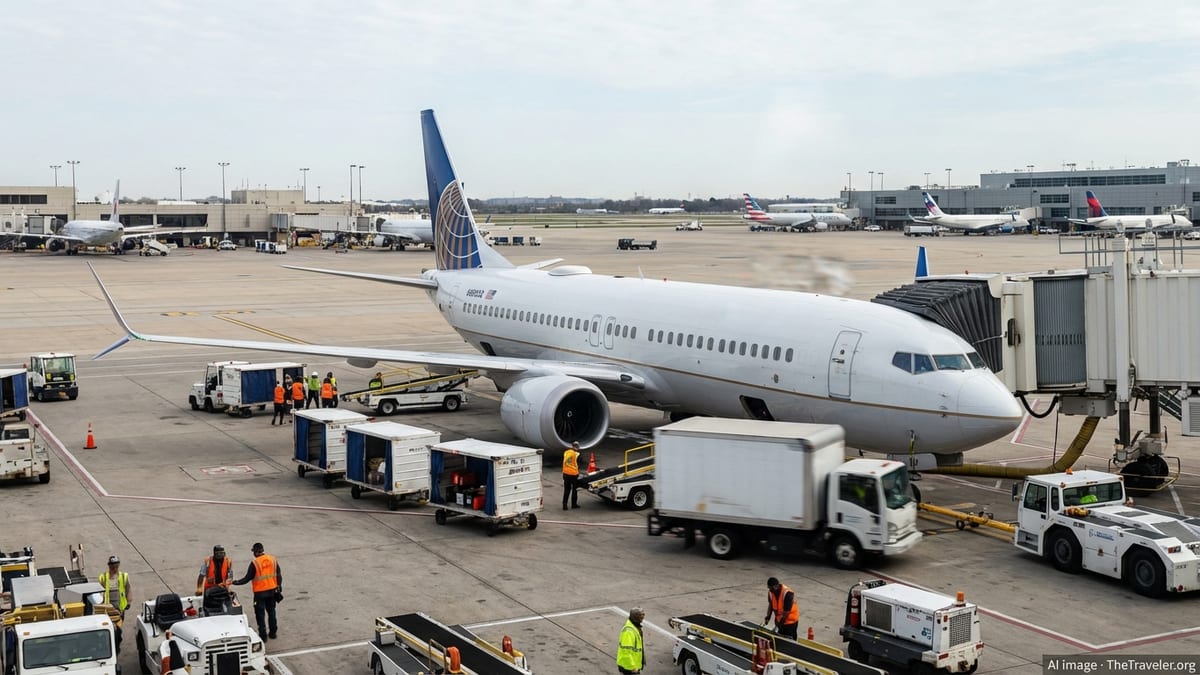
New Emergency Directive Targets Overheating Hazard
The emergency directive, effective February 24, requires operators of Boeing 737 MAX 8 and high density MAX 8200 variants to revise their airplane flight manuals within 30 days. The directive applies to 2,119 aircraft worldwide, including 771 registered in the United States, according to the FAA and reporting by Reuters. The agency said the risk to the flying public justified bypassing the normal notice and comment process typically used for new rules.
Regulators acted after two recent flights in which crews reported rapidly rising, excessively high temperatures in both the flight deck and passenger cabin that could not be controlled using existing procedures. In both cases, the aircraft landed safely, but the FAA concluded that the underlying failure mode created an unsafe condition that must be addressed immediately while a longer term engineering modification is prepared.
The directive is legally binding and requires airlines to insert new non normal checklists and crew actions into their manuals. Affected aircraft are permitted to continue flying, but pilots must be trained on and follow the new procedures whenever the specified fault is suspected or detected.
Electrical Fault at Heart of Overheating Risk
Investigations traced the overheating hazard to a specific electrical anomaly linked to the tripping of circuit breaker CB3062 in the standby power control unit. That part of the system powers environmental control functions, including air conditioning, cabin pressurization and overheat protection. When the breaker trips, it can generate an unintended electrical signal that in turn commands valves in the air conditioning pack system to close, sharply reducing cooling airflow through the heat exchangers.
With less cooling air available, hot bleed air from the engines may not be sufficiently cooled before entering the cabin and flight deck. The FAA warned that this scenario can cause the air system to supply excessively hot air, leading to uncontrollable, excessively high temperatures that could injure or incapacitate passengers and crew. Aviation safety publications report that in the two known events, cockpit temperatures climbed rapidly despite crews attempting standard corrective steps.
Boeing has said it has identified the root cause as a ground wire fault within the air conditioning system and that previous generation 737s are not affected. The company has told industry outlets it supports the FAA directive, which formalizes operating guidance Boeing initially issued to airlines in January 2026, and that it is advancing an engineering solution intended to eliminate the possibility of the electrical fault recurring.
Mandatory Procedural Changes for Airlines and Crews
Under the emergency order, airlines must add new procedures that fundamentally change how flight crews respond if the relevant circuit breaker trips or if they experience abnormal temperature increases on Boeing 737 MAX aircraft. The directive calls for a controlled descent and planning a landing at the nearest suitable airport once the condition is confirmed, rather than attempting to continue the flight to destination.
Revised checklists authorize crews to attempt a single reset of the CB3062 circuit breaker, which is located behind the right seat in the cockpit. If the breaker immediately trips again or cannot be reset, pilots must stop the supply of engine bleed air feeding the affected systems to prevent further overheating. Additional measures outlined in operator guidance include lowering cabin and cockpit lighting, opening the flight deck door to improve airflow, and descending to the lowest safe altitude or to around 10,000 feet, whichever is higher, to help reduce heat load.
In reported guidance, airlines are also instructing crews that, if needed, they may use drag devices to increase the descent rate in order to bring the aircraft to a cooler environment and reduce engine power more quickly. The FAA emphasized that the objective is to manage temperatures to protect passengers and crew while preserving the ability to maintain safe flight and landing.
Impact on Airlines, Passengers and Boeing’s MAX Program
Major U.S. and international carriers operating the 737 MAX are now racing to update manuals, train pilots and brief cabin crews within the 30 day compliance window. While the directive does not ground any aircraft, the required procedures could lead to more unscheduled diversions if overheating events occur, adding potential disruption to already tight airline schedules. For passengers, the risk remains categorized as rare, but travelers may experience precautionary diversions or noticeable temperature changes in the unlikely event of a fault.
Industry analysts note that the directive adds new scrutiny to Boeing’s MAX family at a sensitive moment, as the manufacturer works to secure certification of the smaller MAX 7 and larger MAX 10 models. Boeing has told media outlets that the coming engineering fix will be incorporated into in service MAX 8 and MAX 9 jets and built into the MAX 7 and MAX 10 before they are certified, and does not expect the issue to alter its certification timeline.
Pilot unions, which have been vocal on several MAX related design topics, are watching closely how quickly a permanent hardware and software modification is developed, approved by the FAA and deployed across the fleet. Until then, airlines will rely on the new operational measures as the primary safeguard against the overheating scenario.
Next Steps: Interim Measures While Long Term Fix Advances
The FAA characterized the emergency directive as an interim step and signaled that additional regulatory action could follow once a permanent technical remedy is ready. According to aviation safety reporting, a broader review of the environmental control system has also identified other downstream circuit breakers that could, in some circumstances, contribute to related temperature control issues, and regulators are assessing whether further rulemaking is needed.
Boeing and CFM International, the engine supplier for the 737 MAX, are already engaged in other safety related updates tied to the Leap 1B powerplant and associated systems, including modifications to an engine anti ice design flaw and a load reduction device that can route fumes into the cabin after an engine failure. Those projects, overseen by the National Transportation Safety Board and FAA, are expected to progress in parallel with the new overheating fix and will be closely watched by airlines and travelers alike.
For now, federal officials stress that the combination of rapid crew procedures and continued monitoring provides an acceptable level of safety while engineering teams work on a more robust solution. With nearly eight hundred U.S. registered MAX jets in service and many of them flying high density domestic routes, the speed and thoroughness of the industry’s response will be a key focus for regulators and the traveling public in the weeks ahead.