

More news on this day
Summer travelers planning to connect through Chicago O’Hare International Airport in 2026 are being urged to brace for tighter schedules, fuller planes, and potential itinerary changes after the Federal Aviation Administration moved to cap flights at one of the nation’s busiest hubs.
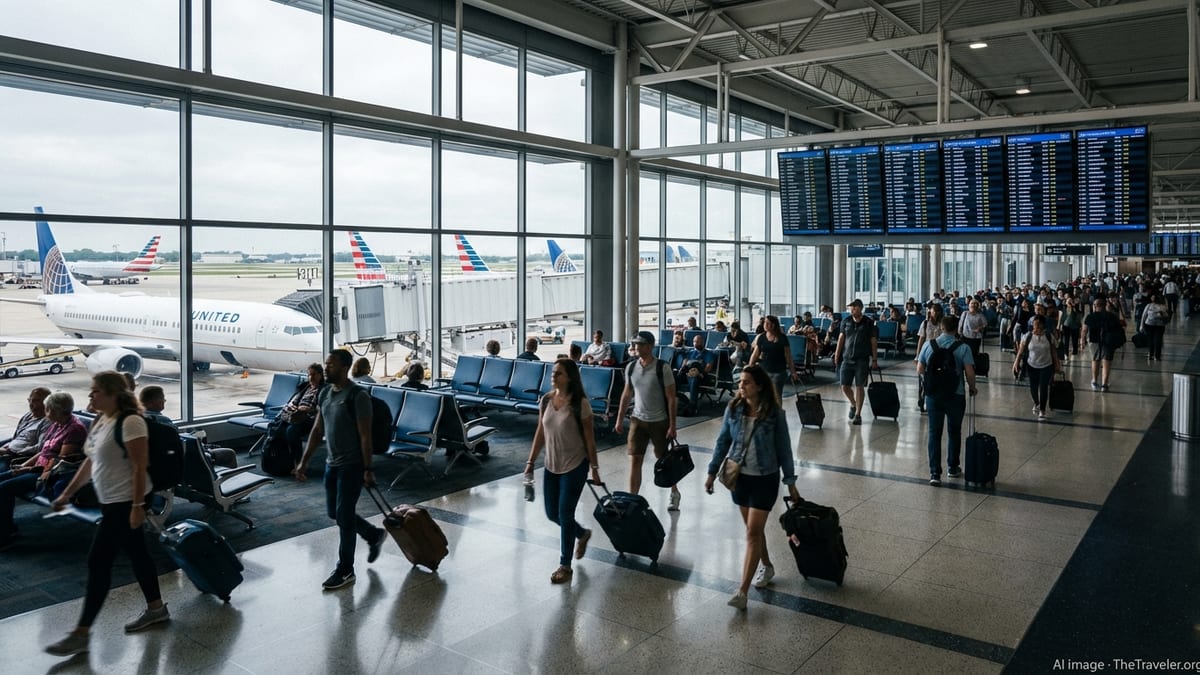
FAA Moves To Rein In Surging Schedules
The FAA has confirmed it will impose operating limits at Chicago O’Hare between late March and late October 2026, citing mounting concerns that airlines have “overscheduled” the airport for the peak summer travel period. Regulators say the combination of rapid capacity growth, ongoing air traffic control staffing challenges, and O’Hare’s already heavy daily volume left little room for error if summer storms or other disruptions hit.
Based on airline filings, carriers had planned roughly 3,080 operations on peak days this summer, compared with about 2,680 last year. Under the new regime, the FAA is working with airlines to hold activity to around 2,800 takeoffs and landings per day, effectively forcing a cut of roughly 9 to 10 percent from what had been scheduled.
The cap will cover flights by U.S. carriers between March 29 and October 25, 2026, focusing on the busiest hours from early morning through late evening. International and foreign-carrier services are not expected to see the same degree of constraint, though they will still be affected by any congestion rippling through shared runways and taxiways.
Officials emphasize that the move is designed to prevent a repeat of past summers when aggressive scheduling at constrained hubs led to rolling delays, ground stops, and mass cancellations. By trimming volume on paper now, the FAA argues, it can preserve reliability and safety when thunderstorms and other routine disruptions inevitably strike.
United–American Turf War Hits a Ceiling
The order lands squarely in the middle of a high-stakes battle between United Airlines and American Airlines, both of which use O’Hare as a core hub. United has been ramping up sharply, with plans to operate around 780 daily flights this summer, up significantly from last year’s levels, while American has been adding more than 100 additional daily departures as it seeks to claw back market share.
That growth spurt pushed O’Hare toward a breaking point, according to federal officials and aviation analysts. The airport’s modernized, parallel-runway layout is designed to handle high volumes, but the underlying constraints in air traffic control staffing and gate availability mean there is a practical ceiling on how many operations can be handled without cascading delays.
By stepping in now, the FAA is effectively forcing both airlines to reconsider how they compete in Chicago. Rather than flooding the market with frequency on overlapping routes, carriers will have to decide where each flight counts most, potentially emphasizing higher-yield business destinations, key international connections, and banked waves of departures that support tight connections.
Industry observers note that while the cuts may look like a setback for United and American in the near term, the move could ultimately spare both from an expensive capacity war that erodes profits and frustrates travelers. With a fixed cap in place, the competition is likely to shift from sheer frequency to onboard product, schedule quality, and network connectivity.
How Many Flights Will Disappear – And When
While final carrier-by-carrier allocations are still being negotiated, the broad contours are becoming clear. Regulators are publishing detailed 30-minute demand profiles for the hours between 6 a.m. and midnight, then identifying the periods where projected operations exceed what the system can safely absorb. Those peaks are where cutbacks will be concentrated.
On the busiest summer days, trimming from about 3,080 planned operations to roughly 2,800 will translate into hundreds of flights that never make it onto the final schedule. Much of that reduction is expected to come from domestic services operated by United and American, including shorter-haul routes where multiple daily frequencies give planners some flexibility to consolidate.
Passengers are unlikely to see an overnight wave of cancellations. Instead, airlines are expected to rework their schedules over the coming weeks, quietly removing some flights from sale, swapping larger aircraft onto key routes, and adjusting departure times to smooth out pressure in the busiest banks. Travelers who booked early may receive schedule-change notices as these adjustments filter through.
Because foreign carriers are not directly constrained by the same order, most long-haul international services into O’Hare are expected to remain intact. However, some feeder flights that connect to those long-haul departures could be reshaped as U.S. airlines rebalance their banks, so travelers making tight domestic-to-international connections should pay extra attention to any timing changes.
What Summer 2026 Travelers Should Expect
For passengers, the most visible impact will be fewer flight options on some routes and fuller cabins on those that remain. With less slack in the system, last-minute shoppers may find higher fares on peak dates and popular corridors, especially where airlines choose to prioritize profitability over frequency.
Travel planners recommend building in more buffer time for connections at O’Hare this summer, especially for itineraries that involve regionals or weather-prone cities. Even with the cap, the airport will still be operating at very high volumes, and thunderstorms over the Midwest can swiftly disrupt tightly banked schedules.
Travelers who already hold tickets for late spring or summer should watch their reservations closely over the next several months. Airlines are expected to offer free rebooking options when schedule changes exceed certain thresholds, allowing customers to switch to alternative flights or, in some cases, different connecting hubs with minimal penalties.
More broadly, the cuts could subtly reshape Midwest connectivity. Some small and midsize cities that rely heavily on O’Hare connections may see modest reductions in frequency, while larger markets may receive larger aircraft but fewer daily departures. For travelers in those communities, it could mean less flexibility in departure times, but potentially more seats per flight.
Strategies To Navigate the New O’Hare Reality
With O’Hare’s summer capacity now effectively capped, travelers can take several practical steps to reduce the risk of disruption. Booking earlier than usual for peak travel windows can help secure seats on preferred flights before limited inventory tightens further. Morning departures, which tend to be less exposed to knock-on delays, may be a safer bet than late-evening options on busy days.
Choosing slightly longer connection windows at O’Hare may also pay off. While tight, 40-minute connections might still be offered in some cases, a buffer of 60 to 90 minutes can provide insurance against routine ground delays, crowded taxiways, or minor weather hiccups that push flights behind schedule.
Travelers who have flexibility might consider alternative routings through other hubs during the most congested summer weeks, particularly if they are booking with United or American, which also operate large connecting banks in cities like Denver, Dallas-Fort Worth, Phoenix, and Houston. Spreading demand across the network can sometimes yield better on-time performance and more rerouting options if something goes wrong.
Finally, experts say the situation at O’Hare underscores a wider reality across the U.S. system: even as demand soars and infrastructure expands, the air traffic control workforce remains a limiting factor. Until staffing and training pipelines catch up with the post-pandemic rebound in flying, travelers can expect regulators to use tools like targeted flight caps to keep the system stable, particularly at complex mega-hubs like Chicago O’Hare.