

More news on this day
The Federal Aviation Administration has proposed a 172,894 dollar civil penalty against South Africa based Dentec Avionics for alleged aircraft maintenance violations, drawing fresh attention to cross border oversight of companies that work on components used in U.S. registered aircraft.
Get the latest news straight to your inbox!
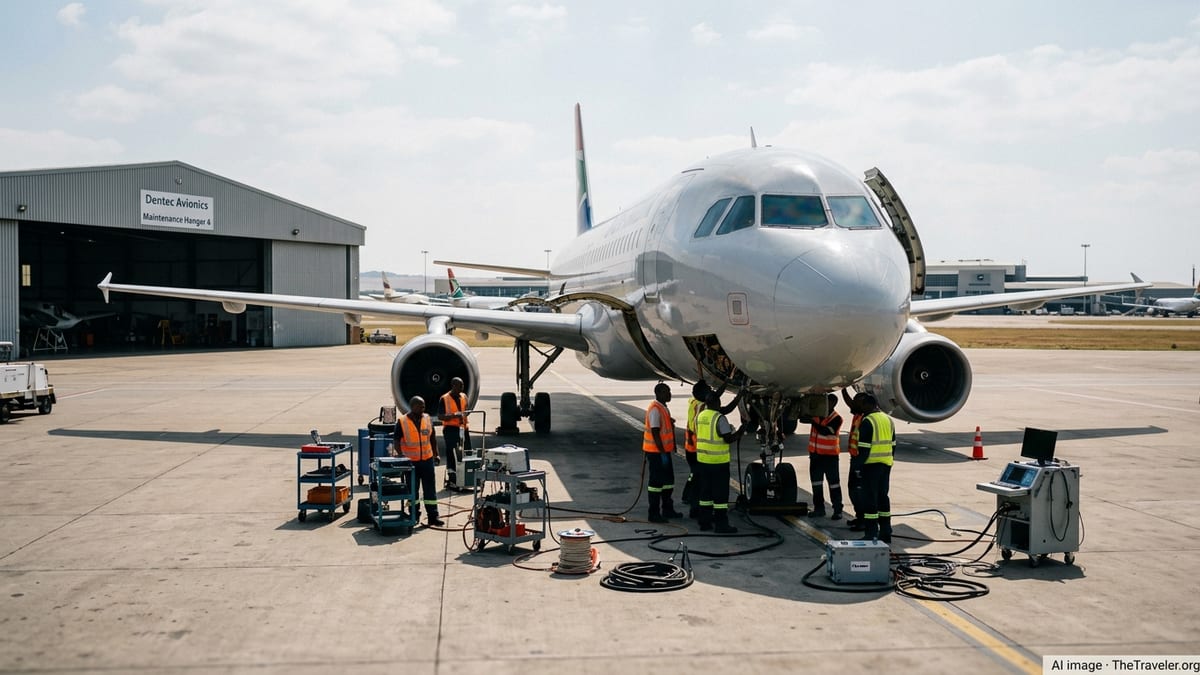
What Dentec Avionics Is Accused Of
According to publicly available enforcement documents and related coverage, Dentec Avionics is alleged to have performed or approved work on aircraft systems in a manner that did not fully comply with Federal Aviation Regulations governing maintenance and recordkeeping. The proposed penalty of 172,894 dollars is tied to multiple alleged violations rather than a single incident.
Reports indicate that the case centers on avionics components maintained or released to service for aircraft that operate in U.S. airspace or under U.S. certification. When foreign repair stations work on such equipment, they are required to follow U.S. rules specified in Federal Aviation Regulations, in addition to their own national regulations. The FAA treats any noncompliance in this context as a potential safety risk, even if no accident or in flight incident has occurred.
Information released so far suggests that the FAA considers the alleged issues to involve procedural and documentation lapses related to how work was carried out, inspected, and signed off. While technical details of the Dentec case are limited in public summaries, similar actions in the past have involved questions about whether required tests were performed, whether parts met approved design data, and whether maintenance releases accurately reflected the work done.
In proposing a civil penalty, the FAA seeks both to address the specific situation at Dentec Avionics and to reinforce expectations for other repair stations that service aircraft and components linked to the U.S. market. The allegations have not yet been adjudicated and Dentec retains the option to contest the case or negotiate a settlement.
How FAA Civil Penalties Work
The Dentec Avionics case is being pursued as a civil penalty action, a tool the FAA routinely uses when it believes regulations have been violated. Under U.S. law, the agency may seek significant financial sanctions per violation, with overall amounts influenced by the number of counts, the seriousness of the alleged conduct, and any history of prior enforcement involving the company.
In practice, the process usually begins with a notice outlining the alleged violations and the proposed penalty. The recipient can respond in writing, request an informal conference, pursue alternative dispute resolution, or ask for a formal hearing before an administrative law judge. Many cases are resolved through negotiated settlements that may reduce the final payment or include corrective actions the company agrees to undertake.
Civil penalty amounts across the aviation sector have risen over time through periodic inflation adjustments mandated by U.S. statute. Recent guidance indicates that for some categories of violations, the maximum civil penalty per violation for larger entities can run into tens of thousands of dollars, which means totals can climb quickly when a case involves multiple alleged infractions over an extended period.
For travelers and aviation customers, these cases generally play out behind the scenes, but they are an important part of how regulators seek to enforce compliance without grounding fleets or immediately revoking certificates. The Dentec Avionics proposal fits within this broader pattern: a financial sanction paired with expectations that any identified gaps will be corrected.
Implications for Travelers and Airlines
News of a six figure proposed penalty can raise understandable questions about safety, especially when it involves avionics, which are central to navigation, communication, and aircraft monitoring. Aviation safety data over many years, however, indicates that regulatory enforcement typically intervenes well before issues translate into serious operational events.
For airlines and corporate operators, the case is a reminder of the scrutiny that applies to maintenance providers, particularly when work is carried out overseas but tied to U.S. registered aircraft or U.S. issued approvals. Operators remain responsible for the airworthiness of their fleets and are expected to exercise due diligence when selecting and auditing repair stations, whether in South Africa, Europe, North America, or elsewhere.
From a passenger perspective, the immediate impact of the Dentec Avionics action is likely to be minimal and largely invisible. Modern commercial aviation is built around multiple layers of redundancy, from aircraft design and certification to airline maintenance programs and independent oversight by national authorities. When potential weaknesses are identified at a supplier or repair station, the typical regulatory response focuses on correcting the problem while keeping overall risk to passengers extremely low.
Nonetheless, cases like this one highlight the global nature of aviation supply chains. A single avionics shop in one country may work on equipment installed in aircraft that fly on several continents, meaning that enforcement actions can have ripple effects on how airlines manage their maintenance partnerships and approvals around the world.
Regulatory Oversight Across Borders
The Dentec Avionics matter also illustrates how U.S. aviation rules reach beyond national borders through bilateral agreements and foreign repair station approvals. The FAA works with civil aviation authorities in partner countries to recognize each other’s oversight systems while still reserving the right to enforce U.S. specific requirements when aircraft or parts are used in U.S. operations.
Foreign repair stations that support U.S. registered aircraft or U.S. certificate holders must meet detailed standards on personnel qualifications, procedures, tooling, and quality systems. They are subject to inspections and audits, and they must maintain records in a form that can be reviewed by auditors and investigators. Alleged shortfalls in any of these areas can trigger enforcement, including proposed civil penalties such as the one now facing Dentec Avionics.
For South Africa, which has a well established role in the wider African aviation market, continued alignment with international safety benchmarks remains central to attracting maintenance, repair, and overhaul business from foreign operators. Cases that draw attention to individual companies may lead to closer coordination between the FAA and South African authorities on oversight priorities and best practices.
More broadly, the situation underscores the reality that aviation regulators in different regions closely watch one another’s enforcement actions. A case initiated by the FAA can influence how other authorities view similar conduct, encouraging a more consistent global approach to maintenance standards and documentation expectations.
What Happens Next in the Dentec Case
As of late March 2026, Dentec Avionics faces a proposed civil penalty rather than a final, adjudicated sanction. The company has procedural avenues to respond, including the possibility of challenging the allegations, presenting mitigating factors, or seeking a reduction in the proposed amount. In some past aviation cases, companies have agreed to pay part of the proposed sum and to invest in additional training or quality system upgrades.
Published information indicates that next steps could involve confidential discussions between Dentec and U.S. government counsel, followed by either a consent order or a contested hearing if the parties do not reach agreement. The timeline can vary, but many civil penalty matters are resolved over a period of months rather than weeks, especially when they involve international entities and complex technical issues.
Travelers are unlikely to receive detailed public updates at every stage, yet the eventual outcome will typically be reflected in a publicly accessible order or summary once the matter is closed. At that point, observers will be able to see whether the final amount matches the initial 172,894 dollar proposal or whether it has been adjusted.
For now, the Dentec Avionics case stands as one of several recent examples of regulators using financial penalties to reinforce maintenance standards in a rapidly expanding global aviation market. As air traffic through African hubs grows and more international operators look to third party specialists for avionics support, the scrutiny applied to compliance and documentation is expected to remain intense.