

More news on this day
Faena is preparing to open a new chapter in its global story with a long-anticipated move into the Middle East, positioning its signature blend of avant-garde culture, hospitality and beachfront glamour as a fresh ingredient in Abu Dhabi’s increasingly ambitious cultural landscape.
Get the latest news straight to your inbox!
Faena’s Concept Arrives in a Rapidly Evolving Region
The Faena brand, known for fusing immersive art, performance, design and luxury hospitality in destinations such as Miami Beach and Buenos Aires, is turning its attention to the Gulf as the region accelerates investment in culture-led tourism. Publicly available information on upcoming Faena projects indicates an emphasis on waterfront locations and close proximity to major cultural institutions, a model that aligns closely with the strategic direction of Abu Dhabi and other Gulf cities.
In the Middle East, cultural infrastructure has expanded at pace in recent years, with new museums, concert series and creative districts reshaping regional travel patterns. Against this backdrop, Faena’s arrival is widely interpreted as part of a broader shift in which global hospitality and lifestyle brands seek to anchor themselves in destinations that offer both architectural spectacle and a maturing local arts ecosystem.
While detailed timelines and final design reveals for Faena’s Middle East opening remain limited, reports indicate that the project is being framed as a cultural platform as much as a hotel. That approach mirrors the brand’s earlier districts, where curated exhibitions, residencies and live performances have been used to draw international visitors and local audiences into a shared urban stage.
A New Player in Abu Dhabi’s Culture-Led Tourism Strategy
Abu Dhabi has spent more than a decade positioning itself as a cultural capital through the development of museum districts, festivals and cross-disciplinary arts programmes. The emirate’s strategy has focused on drawing visitors who are as interested in galleries, architecture and performance as they are in beaches and theme parks, aiming to complement rather than replicate neighboring tourism hubs.
Recent years have seen the completion and expansion of major institutions in the capital, creating a dense constellation of museums and cultural venues that has attracted extensive international coverage. This ecosystem has, in turn, created demand for hospitality brands that can offer not just accommodation, but a curatorial point of view and access to creative networks. Faena’s Middle East chapter is expected to tap into that demand by programming its spaces around exhibitions, gastronomy, design and music.
Public reporting on Abu Dhabi’s visitor economy shows that culture-focused travel is becoming a more important component of the emirate’s diversification agenda. Within that context, a Faena-branded project is likely to be positioned as a bridge between waterfront leisure and the capital’s museum-driven narrative, giving travelers a single address that connects beach, city and culture.
Design, Architecture and the Faena Signature
Faena’s previous districts have been defined by bold architecture, dramatic interiors and a strong emphasis on visual storytelling, often working with high-profile designers and artists to create spaces that function as large-scale installations. Industry commentary on the brand’s Middle East plans suggests a continuation of this approach, adapted to regional materials, light and climate.
In practical terms, this is expected to translate into public spaces conceived as galleries and stages, rather than conventional lobbies and lounges. The brand’s track record points to a mix of indoor and outdoor cultural venues, including flexible performance areas, intimate cabaret-style rooms and curated retail that foregrounds design and craftsmanship.
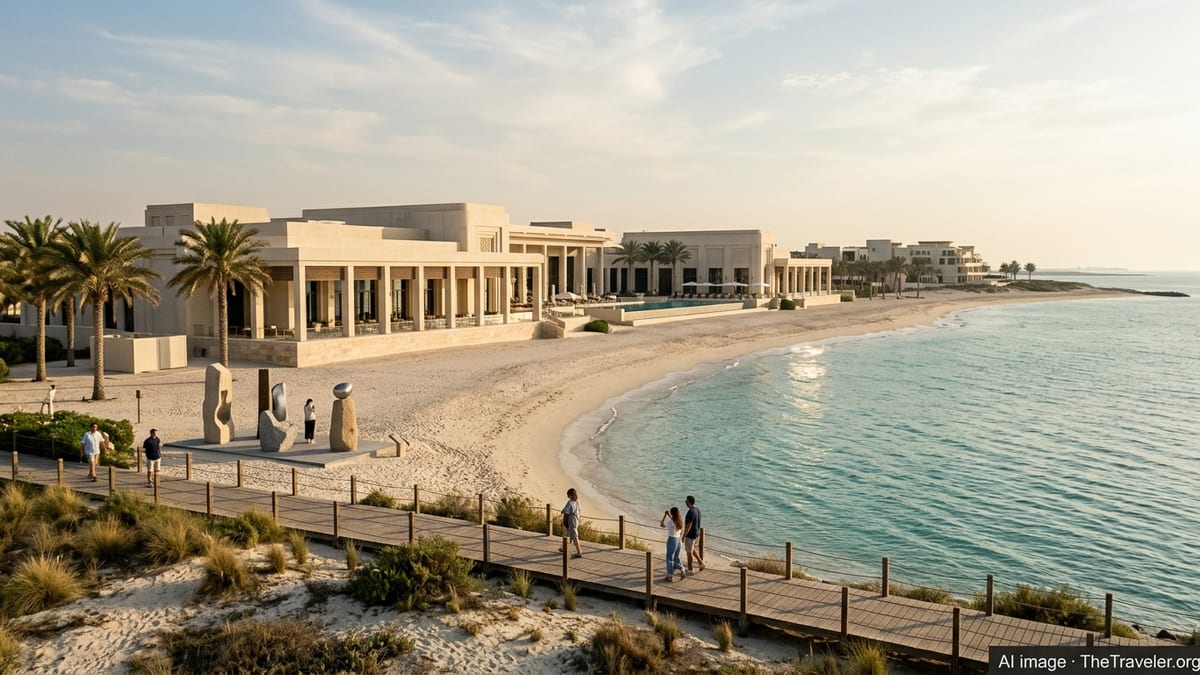
Architecturally, the Middle East setting invites engagement with coastal landscapes, desert hues and the interplay of intense sunlight and shade. Faena’s new project is anticipated to incorporate generous terraces, shaded promenades and water-facing plazas that can host performances, screenings and open-air installations, with the goal of blurring the boundary between resort and cultural district.
Implications for Regional Travelers and the Creative Community
For regional travelers, Faena’s move into the Middle East broadens the range of culturally driven stays available within a short flight. The brand’s model, which typically layers restaurants, nightlife, live performance and visual art into a single precinct, offers an alternative to more conventional luxury resorts that focus primarily on rooms and amenities.
The opening is also expected to resonate with artists, curators and creative practitioners across the Gulf, many of whom already participate in art fairs, design weeks and festivals in the region’s major cities. A Faena cultural district in Abu Dhabi would add another platform for collaborations, pop-ups and residencies, potentially linking regional talent with the brand’s existing networks in the Americas and Europe.
For the wider hospitality sector, Faena’s Middle East chapter may serve as a test case for how lifestyle brands can integrate more deeply with local cultural policy and long-term urban planning. The success of the project will likely be measured not only in occupancy and average daily rates, but also in its ability to attract repeat visitors, host meaningful cultural programmes and contribute to the city’s global identity as a place where art and leisure intersect.