

Faliraki Beach on the island of Rhodes has long been one of Greece’s best known resort strands, combining soft sand, shallow waters, and a full spectrum of facilities from family friendly play areas to pulsing nightlife.
In recent years the area has refreshed its image, adding upgraded services and improving water quality, while still keeping its reputation as a place where you can pack a week’s worth of sun, sea and entertainment into a single day.
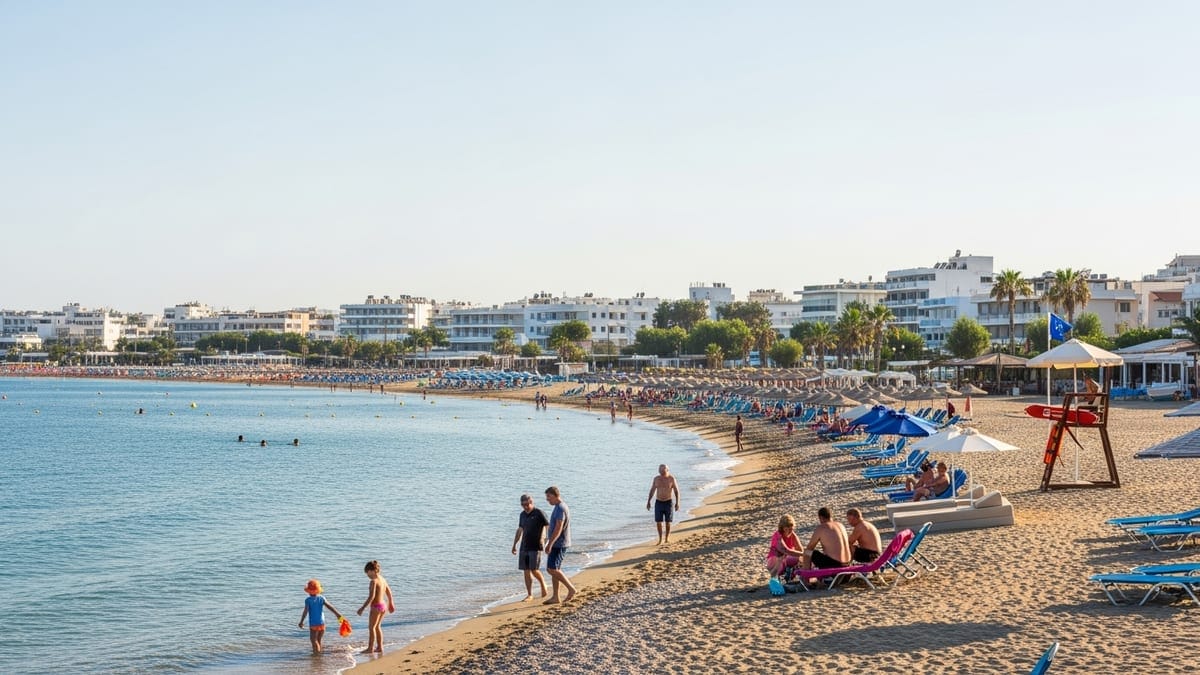
What Faliraki Beach Is Like Today
Faliraki is the main seaside resort on the northeastern coast of Rhodes, about 14 kilometers south of Rhodes Town and within easy reach of the island’s airport.
The beach itself stretches for roughly five kilometers along a wide bay, with a long arc of golden sand and sections where fine shingle appears near the waterline.
It is an intensely developed stretch of coast, lined with hotels, beach bars and water sports centers, yet the size of the bay means there is usually room to spread out somewhere even in peak season.
The atmosphere along Faliraki Beach changes subtly as you move from north to south. The central areas in front of the main resort and bar street feel energetic and busy, with music drifting from beach bars, constant movement on the promenade and a high density of sunbeds.
As you walk further south, toward Kathara and then the naturist section at Mandomata, the mood becomes more relaxed and less commercial, with smaller tavernas and more space between umbrellas.
At the far northern end, beyond some of the larger resort hotels, the beach fronts a row of high-end properties with carefully managed zones and slightly calmer surroundings.
Water quality is one of Faliraki’s strong points. The bay is relatively sheltered, which keeps waves low on most days and makes the sea feel almost like a giant swimming pool.
The entry is generally shallow, so you can wade out a fair distance before the water reaches chest height, which suits nervous swimmers and families with young children.
Recent Blue Flag awards for multiple sections of Faliraki underline the improvements that have been made in cleanliness and environmental management across the resort.
Facilities, Services and Accessibility
Faliraki is one of the most fully serviced beaches in the Dodecanese, designed to function as an all day base where you can arrive in the morning and not need to leave until after sunset. Almost every organized section offers sunbeds and umbrellas for rent, freshwater showers, changing cabins and easy access to food and drink.
In summer 2025, visitors reported typical prices of around 10 euros for a single lounger or about 20 euros for a set of two with umbrella for the day, though exact rates vary by beach bar and hotel frontage.
Many of the beach bars operate as all-in-one hubs, where renting a lounger gives you waiter service at your seat, use of toilets and sometimes access to a small pool or shaded chill-out area behind the sand.
Several venues advertise all-day packages that include loungers, a drink and sometimes a snack or light meal, which can be good value if you plan to stay put for several hours.
At peak times in July and August, it is wise to arrive earlier in the morning if you want front-row loungers close to the sea in the livelier central zone.
Accessibility has improved in recent years. Large hotels maintain paved paths or wooden walkways down to the beach, and some sections have gentle ramps instead of steps.
During the high season, there are lifeguards stationed along key parts of the shoreline, particularly on the Blue Flag certified segments.
Basic first-aid equipment is generally available at lifeguard posts and through hotel front desks, while pharmacies and a small medical center can be found just behind the main beach strip in Faliraki village.
Parking is relatively straightforward if you arrive by rental car or scooter, with a mix of informal roadside areas and small lots near the water park, harbor area and behind the main strip. Spaces fill up faster on weekends and in August, but turnover is constant as day trippers come and go.
Buses from Rhodes Town stop close to the center of Faliraki, from where it is a short walk to the sand, making the beach accessible even for visitors staying elsewhere on the island.
Water, Sand and Swimming Conditions
The main draw of Faliraki Beach is how easy the sea is to enjoy. The sand here is generally soft and light-colored, with a few pebbly pockets depending on winter storms and coastal currents.
The seabed slopes gradually, with few sudden drop-offs, which makes it particularly comfortable for paddling and for children who are still building water confidence. On calm days the clarity can be excellent, with shades of turquoise and deep blue visible just offshore.
Because the bay is oriented to the east, mornings often bring the calmest conditions. Early swimmers can enjoy glassy water and a quieter soundscape before the speedboats and inflatable rides begin operating.
By midday there is more activity on the water, but waves remain modest unless there are atypical weather patterns. For those sensitive to rocks, it can be worth bringing water shoes, especially for sections nearer to the headlands where occasional stones appear underfoot.
Faliraki’s shoreline is segmented into distinct Blue Flag sections, each monitored for water quality and safety. These certified zones typically have lifeguard coverage, clear signage, and well-maintained access points.
Families, including those traveling with grandparents or older relatives, often gravitate to these organized areas for the reassurance of official oversight.
Outside the most structured stretches, the water remains inviting, but swimmers should always be aware of personal limits and keep a reasonable distance from motorized water sports lanes.
Sunbeds, Beach Bars and Food Options
One of the hallmarks of Faliraki Beach is the density and variety of beach bars and loungers that line the shore from end to end.
In the central portion of the bay, rows of sunbeds stretch deep from the waterline toward the promenade, managed by a mix of independent bars and hotel operations.
You can choose between simple loungers with a parasol, oversized cushioned daybeds, cabana-style platforms or, at certain high-end hotel fronts, premium sunbeds with towel service and call buttons for ordering drinks.
Typical pricing on organized sections runs from around 8 to 10 euros per lounger for the day in standard areas, rising for more luxurious setups with thicker mattresses or front-row beachfront placement.
Many venues do not strictly time-limit the rental, so you can occupy your lounger from morning until late afternoon if you wish. Some bars follow a minimum-spend policy rather than a fixed rental fee, which can be attractive if you plan to have lunch and several drinks.
Food and drink options on the beach range from simple to surprisingly sophisticated. Along the main strip you will find everything from gyros, grilled fish and classic Greek salads to burgers, pizzas, and international snack menus.
Several beach bars have built reputations for their cocktails and smoothies, serving fruit-based blends and iced coffees that are a staple of Greek summer life.
Prices are generally higher than in the backstreets of Faliraki village but still competitive compared to other major Mediterranean resorts.
For those seeking quieter or more authentic meals, stepping just a little away from the most central zone can pay off. Around Kathara and Mandomata you will find smaller tavernas and family-run spots where grilled seafood and meze plates are served on shaded terraces above the sand.
Here the pace is slower, and visitors often linger over lunch for hours before heading back down to the water.
Water Sports, Activities and Nearby Attractions
Faliraki Beach serves as one of Rhodes’ main centers for seaside activities, with multiple water sports operators stationed along the sand.
Visitors can expect the usual array of banana boats, ringos, and sofa rides pulled by speedboats, which add a high-energy soundtrack to parts of the bay.
Jet skis are available for rental in designated lanes, and parasailing rides carry guests up for sweeping views of the coastline and the distant contours of the island’s interior.
Beyond motorized fun, stand up paddleboards and kayaks can be hired in calmer stretches, particularly toward the southern end of the bay, where the water can feel less congested.
Snorkeling along the rocky fringes near Kathara and the headlands reveals patches of seagrass and small schools of fish, though the area is not known for dramatic underwater scenery compared with some other Greek islands.
Organized boat trips also depart from the small harbor of St. Apostolos, taking day trippers to nearby coves such as Anthony Quinn Bay and to landmarks like Lindos.
Just behind the northern part of Faliraki lies one of Greece’s largest water parks, a significant draw for families and groups. The park offers slides, lazy rivers and children’s areas, and can easily occupy a full day away from the beach while still keeping the focus on water-based fun.
In the evening, a bowling center, small fun park and a scattering of arcades and mini-golf courses provide additional entertainment options off the sand.
Cultural attractions are mostly found beyond Faliraki itself, but the resort’s location makes day trips straightforward.
Rhodes Town with its medieval Old Town walls, harbors and museums is within a half-hour drive or bus ride, while the whitewashed village of Lindos is reachable in under an hour by road or via boat excursions.
Many visitors choose to balance a few intense beach days in Faliraki with slower-paced exploration of the island’s historical and natural highlights.
Different Zones and Best Spots Along Faliraki Beach
Because Faliraki Beach is so long and varied, choosing the right section has a big impact on the kind of day you will have.
Roughly speaking, the northern zone close to several large resorts and the water park tends to attract hotel guests who prefer seamless access between room and sunbed.
Here you will find well organized hotel-managed segments with manicured sand, clearly marked swimming areas and a somewhat more insulated feel, though non-guests can still make use of public corridors and some independent beach bars.
The central portion of Faliraki, fronting the main resort village and close to bar street, is the liveliest. This is where music from beach bars is loudest, promotional teams encourage participation in games and happy hours, and the mix of nationalities and age groups is widest.
Younger travelers, groups of friends and those who like a social beach atmosphere typically gravitate to this stretch. The trade-off is reduced tranquility and a more commercial vibe, but the convenience of having everything at your fingertips is undeniable.
Moving south, Kathara Beach offers a slightly different experience. Technically part of the Faliraki area yet distinct in character, Kathara features a gentler pace, fewer loud bars and a more family focused ambiance.
Sunbeds are available but not as densely packed, and the buildings feel lower and less imposing than in the central strip. Swimmers here appreciate the calm water and relatively open space, while diners enjoy a handful of mellow seaside tavernas.
Further still, the official naturist section at Mandomata occupies a small cove-like indentation in the coastline. It is recognized as a clothing optional area and is popular with both international and Greek visitors who prefer a more liberated beach experience.
Facilities are simpler than in the main resort stretch, but there is a tavern close to the sand and basic services such as toilets. This part of the coast tends to feel the most secluded, despite being only a short distance from the resort’s core.
Faliraki Beach for Families, Couples and Night Owls
Faliraki’s appeal lies partly in its ability to serve very different types of travelers within a compact area. For families, the shallow waters, organized Blue Flag sections and abundance of shade make it a practical choice.
Parents can keep children within view in the gentle surf, pick up snacks and drinks easily, and retreat to air-conditioned hotel rooms or apartments within minutes if younger members of the group need a rest.
The presence of the water park, bowling alley and fun park adds variety to a week-long stay.
Couples often find themselves torn between the convenience of central Faliraki and the quieter charm of neighboring coves. Many choose to base themselves in or near Faliraki for the sheer range of dining and evening options, while spending their actual beach hours in calmer pockets like Kathara, Mandomata or nearby bays reachable by car or boat.
In the evening, a stroll along the promenade and a drink in a relaxed beachfront bar can be followed by a later visit inland to bar street if the mood strikes.
For night owls and party focused travelers, Faliraki’s bar and club scene remains a key selling point. The pedestrianized party streets inland from the beach are lined with venues pumping out chart hits, house music and R&B well into the early hours during high season.
Drink deals, themed nights, foam parties and bar crawls maintain a youthful, high-energy environment that has earned the resort comparisons with other European party hotspots.
The beach itself plays a role too, with several bars hosting sunset sessions, beach parties and after-hours gatherings on the sand.
It is important to note that the intensity of Faliraki’s nightlife varies by month. July and August are traditionally the loudest and busiest, with a dense concentration of young visitors.
In shoulder months such as May, June, September and early October, the resort feels more balanced, with families and older couples more prominent and nightlife still active but less overwhelming.
Travelers who are sensitive to noise may want to choose accommodation slightly removed from the busiest bar streets while still enjoying daytime access to the beach.
The Takeaway
Faliraki Beach today is a versatile, fully developed resort coastline where almost any style of beach holiday can be created with some careful choice of location and timing.
Its long arc of sand, shallow and usually calm water, and dense network of facilities make it easy to relax without logistical hassles.
Families benefit from the organized Blue Flag segments, lifeguard presence and nearby attractions such as the water park, while couples and quieter travelers can gravitate toward Kathara, Mandomata or the edges of the bay for a calmer feel.
The trade-off for this convenience is that parts of Faliraki can feel crowded and overtly commercial, particularly in the central zone at the height of summer.
The soundtrack of water sports engines, bar music and party promotions is part of the experience here, and those seeking a completely secluded or rustic Greek beach may prefer to use Faliraki as a base for exploring more remote coves elsewhere on Rhodes.
Still, for many visitors, the ability to combine easy swimming, varied food options, day trips and a well-established nightlife scene in one place is exactly what makes Faliraki Beach stand out.
Ultimately, the best way to enjoy Faliraki is to think in zones. Decide whether you are here for lively days, quiet swims, late nights or a mixture of all three, then match your chosen stretch of sand and style of accommodation to that goal.
With thoughtful planning and realistic expectations, Faliraki Beach can offer anything from a family-friendly base with every service at hand to a party-centric holiday where the beach is as much a stage for socializing as a place to lay down your towel.
FAQ
Q1: Is Faliraki Beach suitable for young children and non-swimmers?
Yes. Much of Faliraki Beach has soft sand and very shallow entry, so you can wade out gradually with few sudden drop-offs. Combined with generally calm conditions and lifeguard presence on key Blue Flag sections in high season, this makes it one of the more family friendly beach choices on Rhodes. Parents should still supervise closely, especially near water sports lanes.
Q2: How busy does Faliraki Beach get in summer?
In July and August the central stretch of Faliraki can become very busy, with most loungers occupied from late morning onward and a constant stream of people along the promenade. The northern hotel-fronted areas and the southern pockets near Kathara and Mandomata usually feel less crowded, especially earlier in the day or outside peak holiday weeks.
Q3: What is the typical cost of sunbeds and umbrellas at Faliraki?
Recent visitor reports suggest that standard loungers with an umbrella on organized sections often cost around 10 euros per bed or 20 euros for a pair with shade for the day. Prices fluctuate by venue and month, and premium setups at upscale beach clubs or hotel zones can cost more. Occasionally bars operate a minimum-spend system instead of a fixed rental fee.
Q4: Are there public areas where I can sit on the sand for free?
Yes. Although large portions of Faliraki are lined with organized sunbeds, there are still gaps and less dense stretches where you can lay your own towel without charge. These tend to be found between hotel zones, nearer to the southern end and at the edges of the main resort area. Access to the shoreline itself is public, so you are free to walk the length of the bay.
Q5: What kind of nightlife should I expect near the beach?
While the most intense nightlife is a short walk inland on Faliraki’s bar and club streets, the beachfront also has an active evening scene in high season. Many bars host sunset cocktails, live DJ sets and occasional beach parties, especially on weekends. Noise levels vary: central stretches are livelier, whereas Kathara and the southern end remain calmer after dark.
Q6: How do I get to Faliraki Beach from Rhodes Town or the airport?
Faliraki is about 14 kilometers south of Rhodes Town and roughly the same distance from the island’s main airport. Regular buses run between Rhodes Town and Faliraki, with stops close to the beach and resort center. Taxis and rental cars are also widely available, and the drive typically takes 20 to 30 minutes, depending on traffic and exact starting point.
Q7: Is there a naturist section at Faliraki?
Yes. At the southern end of the Faliraki area you will find an official naturist beach known as Mandomata. It is a recognized clothing optional zone popular with both international visitors and locals. Facilities are simpler than on the main resort strip but include at least one tavern and basic services, and the cove-like shape offers a more secluded feel.
Q8: Can I find quieter spots even in high season?
Generally yes, especially if you avoid the central portion of the beach. Walking a little further south toward Kathara and Mandomata, or north beyond the densest hotel clusters, often rewards you with more space and a softer soundtrack. Arriving earlier in the morning before day-trip crowds appear is another reliable way to secure a peaceful patch of sand.
Q9: What activities are available besides sunbathing and swimming?
Faliraki offers a broad menu of activities, including water sports such as jet skiing, banana boat rides and parasailing, as well as stand up paddleboarding and kayaking in calmer areas. Nearby you will find a large water park, a bowling center and small fun parks for children. Boat trips to bays like Anthony Quinn and to villages like Lindos also depart from the local harbor.
Q10: When is the best time of year to visit Faliraki Beach?
The best period depends on your priorities. For warm water, guaranteed sunshine and a fully active nightlife scene, late June through early September is ideal, though it will be busy and hot. For more moderate temperatures, fewer crowds and still-pleasant swimming conditions, late May, early June and September into early October offer a more relaxed experience while keeping most services and facilities open.