

Faliraki on the island of Rhodes has a reputation as a high-energy resort where the party rarely stops in summer. For many would-be visitors, that raises a simple question: how much does it really cost, and can you still do Faliraki on a sensible budget?
With tourism prices in Greece rising in recent years and a new nationwide climate tax on accommodation now in effect, costs have undeniably crept up.
Yet Faliraki remains one of the more affordable big-name beach resorts in the country, especially if you avoid peak-season excess and know where to trim spending.
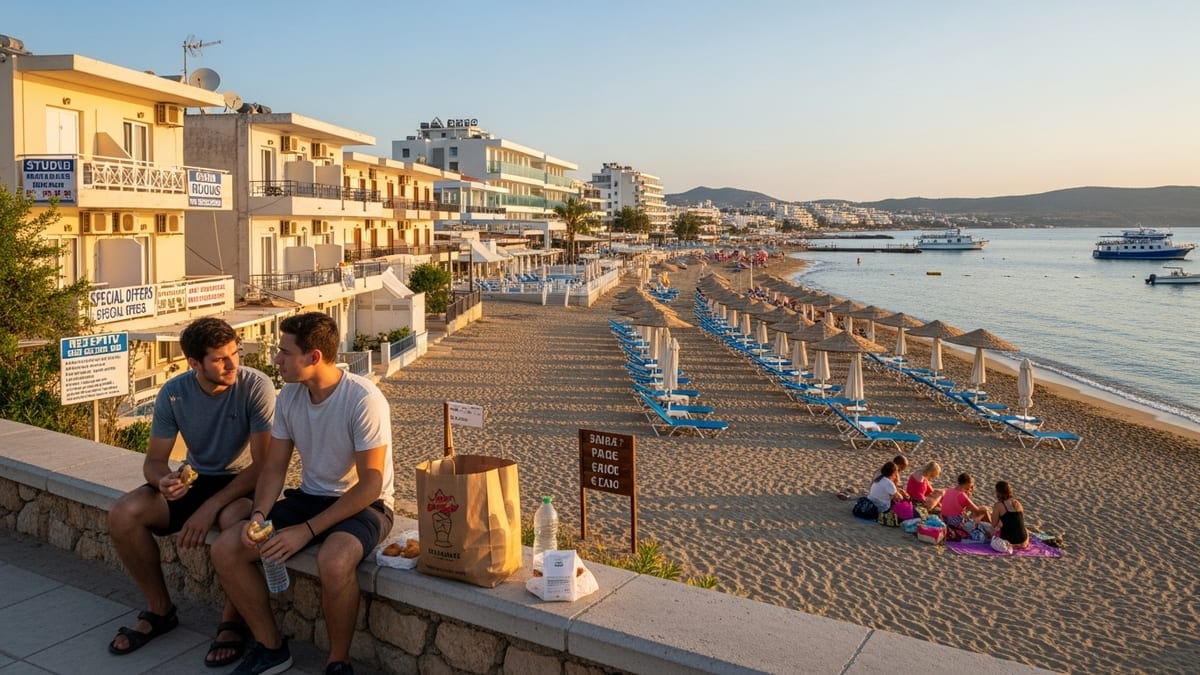
Price Context: Greece, Rhodes and Faliraki in 2026
Greece’s tourism sector has been on a strong revenue run, with 2024 and 2025 both delivering record or near-record takings, helped by a steady rise in spending per visitor.
At the same time, inflation in hotels, cafes and restaurants has remained higher than the overall consumer price index, with official data showing annual price increases for hospitality services consistently in the mid-single digits through 2024 and 2025.
That backdrop has pushed up room rates and menu prices in many island destinations, particularly in marquee names like Santorini and Mykonos.
Rhodes has broadly followed this national pattern, but its sheer size and variety of resorts means there are still meaningful price differences between areas.
Rhodes Town and Lindos tend to command the highest average nightly rates in peak summer, while Faliraki, Ixia and some inland villages offer more mid-range and budget-friendly options.
Travelers coming in July and August, when Greece earns more than half of its annual tourism revenue, face the stiffest prices; shoulder months such as May, early June, late September and October offer noticeably better value.
Faliraki itself has evolved from a purely party-focused destination into a more mixed resort, attracting families, couples and groups who want lively nightlife but also accessible beaches and day-trip options.
That broader appeal has encouraged a range of accommodation types, from basic studios to higher-end beachfront hotels.
While average costs have risen, the competition among properties and restaurants still keeps many everyday prices in check compared with the most exclusive Greek islands.
Accommodation: What You Really Pay to Sleep in Faliraki
Accommodation is by far the largest line item in most Faliraki budgets. On Rhodes generally, average hotel prices for a standard double room have climbed in the last two seasons, in line with national trends that now put a typical mid-range room in Greece at around the mid-100s of euros per night in peak season.
Faliraki sits below that island-wide average for much of the summer, mainly because it has a large stock of older two and three-star hotels and self-catering units that keep prices competitive.
In practical terms, a budget traveler in high summer can still find simple studios and basic guesthouses in Faliraki from roughly 60 to 90 euros per night if booking early or accepting a location a little back from the beachfront.
Mid-range hotels with pools, breakfast and decent facilities often fall in the 110 to 160 euro bracket in July and August, depending on proximity to the sea and whether rates include half-board.
At the top end, sleek beachfront properties and well-known chains can easily run from 200 euros a night and up, especially for sea-view rooms.
Seasonality makes a huge difference. In May, early June, late September and October, the same budget studio might drop to 40 or 50 euros per night, while mid-range hotels that ask 140 euros in August may sell rooms for 80 or 100 euros.
For travelers intent on doing Faliraki on a tight budget, those shoulder months are where the biggest value lies, particularly as sea temperatures in Rhodes stay swimmable from late spring through much of autumn.
On top of base rates, visitors in 2026 need to factor in Greece’s updated climate tax on accommodation, which replaced the old overnight stay levy.
During the main season from April to October, the tax is set at several euros per room per night and rises with hotel category, adding a noticeable amount to a one- or two-week stay.
It is payable directly to your accommodation and rarely included in online prices, so it pays to verify the nightly amount in advance when comparing offers.
Food, Drink and Going Out
Day-to-day costs in Faliraki hinge on how and where you eat and drink. Food inflation in Greece has nudged menu prices up for staples such as meat, fish, dairy and olive oil, which has filtered through to tavernas and cafes.
Even so, there remains a clear price gap between tourist-front establishments on the main strip or right along the beach and the more understated places a few streets back or in nearby residential pockets.
A sit-down meal at a simple taverna, with a main dish like souvlaki, moussaka or a generous salad plus a soft drink, can still come in around 12 to 18 euros per person. Add a starter and a glass of house wine and you are closer to 18 to 25 euros.
Waterfront restaurants and venues targeted at the evening crowd can charge more, particularly for fresh fish, cocktails and imported drinks. Ordering the catch of the day by weight or pairing seafood with premium wine will quickly push a dinner for two well beyond 50 euros.
For those watching their wallet, Faliraki makes it relatively easy to mix supermarket self-catering with restaurant meals. Mid-sized supermarkets and mini-markets stock bakery items, yogurt, fresh fruit, cheeses and deli meats at broadly similar prices to the rest of Greece, which is to say somewhat higher than a few years ago but still reasonable by Western European standards.
Grabbing a gyros pita on the go, often costing around 3 to 4 euros, or a bakery pie and coffee for breakfast can hold down daily spending without feeling deprived.
Nightlife is where Faliraki can become expensive if you are not careful. Bars and clubs on the strip often advertise enticing happy-hour deals, but standard cocktail prices in the busiest period regularly sit in the 9 to 13 euro range, with premium or imported spirits higher.
Beers in bars might cost 5 to 7 euros, compared with 1 to 2 euros in a supermarket. A big night out with multiple rounds, entrance fees in peak season venues and late-night snacks can easily rival or exceed your daily accommodation budget, so budget-conscious travelers tend to alternate between going big some evenings and keeping things low-key on others.
Getting There and Getting Around
Transport is another significant factor in assessing Faliraki’s overall affordability. Most visitors arrive at Rhodes International Airport, where a taxi to Faliraki typically costs around 25 to 30 euros according to recent local transport guides.
There is also a public bus service between the airport, Rhodes Town and Faliraki, which reduces the cost dramatically but adds time and potential crowding in peak months.
For those arriving via ferry in Rhodes Town, shuttle buses and local taxis are readily available, with standard taxi fares from the town to Faliraki generally quoted in the high teens to low 20s in euros.
Once in Faliraki, many travelers rely on a mix of walking, buses and occasional taxis. The resort itself is compact enough that central beaches, many hotels and the nightlife strip are within easy walking distance for able-bodied visitors.
Local buses connect Faliraki with Rhodes Town, Lindos and several intermediate villages, with single fares typically remaining under a few euros. Services can be very busy and occasionally irregular in high summer, but they remain the cheapest way to see more of the island without hiring a vehicle.
Car and scooter rental is widely available, with day rates influenced by demand, insurance coverage and vehicle type. Small cars in peak summer often start around 40 to 60 euros a day, plus fuel, though longer rentals and off-peak periods bring that down.
Scooters and quad bikes can appear cheaper at first glance, but travelers should be wary of safety, licensing requirements and extra insurance.
For those on a strict budget, pooling car rental among three or four people for one or two focused sightseeing days can be an economical compromise.
Taxis remain the priciest per-kilometer option, but they are useful late at night when buses no longer run. There is no large-scale app-based ride-hailing system on Rhodes, so travellers depend on official taxi ranks, hotel reception desks and phone dispatchers.
Agreeing approximate fares in advance and keeping enough cash on hand is still advisable, even as card acceptance improves slowly.
Activities, Beaches and Hidden Costs
One of Faliraki’s best traits for budget travelers is that many of its core attractions are low-cost or free. The main beach, a long sweep of sand and shingle backed by bars and restaurants, is open to all, and you are not obliged to rent sunbeds if you bring your own towel or beach mat.
However, loungers and umbrellas are available along most of the shore, with daily rental charges that can add up over a week if used constantly.
Water sports, boat trips and theme parks form the bulk of paid activities. Jet-ski rides, parasailing, banana boats and similar thrills are widely offered along Faliraki beach, at prices that mirror other Mediterranean resorts and reflect rising fuel and equipment costs.
A short banana-boat run might cost each participant a modest amount, while longer jet-ski rentals run significantly higher. The large waterpark just outside the resort is a popular day out for families and groups; tickets for adults and children are not trivial but still competitive with comparable attractions elsewhere in Europe.
Day cruises along the coast, including routes to Anthony Quinn Bay or the island’s eastern coves, usually fall somewhere in the mid- to high double digits in euros per person, depending on whether food and drinks are included.
Trips to Lindos by boat are a perennial favourite and combine sightseeing with swim stops, but again cost-conscious visitors may prefer taking the bus one way and reserving just one or two organized excursions for their stay.
There are also quietly accumulating costs that first-time visitors sometimes overlook. Bottled water, snacks, ice creams and beach bar drinks can eat into a budget faster than expected if purchased at premium waterfront prices every day.
The climate tax on accommodation, late checkout fees, luggage storage on departure days, and incidental charges such as room safes or air conditioning in older buildings can further inflate final bills. Asking in advance what is included in the room rate and which extras are optional can prevent unpleasant surprises at check-out.
Seasonality, Crowds and Value for Money
Assessing how expensive Faliraki really is requires considering not only absolute prices but also what you receive in return and when you visit. In July and August, demand peaks, especially among European package holidaymakers and younger crowds.
Flights are priciest, hotel occupancy is high, and bars and clubs are in full swing. At that time, per-night and per-meal costs reach their maximum, and budget-conscious visitors may find the overall experience less comfortable due to crowds and heat, even if the party atmosphere is exactly what others are after.
By contrast, May, early June and late September into October strike a more attractive balance. Airfares are typically lower, accommodation costs are more negotiable, and the resort feels lively without being overwhelming.
Sea temperatures are pleasant and the weather generally stable, though shoulder-season visitors should accept the chance of a breezier day or an occasional shower.
For travelers focused on value rather than peak-season buzz, these months are when Faliraki most clearly shows its budget-friendly side.
There is also the question of comparing Faliraki with alternative Greek destinations. While some lesser-known islands remain cheaper for accommodation and dining, prices in the most famous hotspots have climbed to the point where Rhodes, and Faliraki in particular, look relatively affordable.
Feedback from visitors in recent seasons often highlights that while Rhodes is not a bargain in absolute terms anymore, it still offers more generous portions, lower drink prices and better hotel value than some competing islands where overtourism and limited capacity have driven rates sharply higher.
Ultimately, value is subjective. Travelers seeking a quiet, low-key escape might decide Faliraki’s nightlife-centric identity lowers its perceived value for them compared to a tranquil village.
For those who want a mix of beaches, clubs, day trips and convenience without paying Mykonos or Santorini prices, Faliraki remains an attractive middle ground.
Budget Strategies That Actually Work in Faliraki
Even with upward pressure on prices, several practical choices can keep a Faliraki trip comfortably within budget. The first is location within the resort.
Staying a few streets back from the beachfront, or at the edge of Faliraki rather than in the absolute heart of the strip, typically lowers nightly rates while still leaving beaches and nightlife within walking distance.
Self-catering apartments and studios, in particular, can be economical for couples and groups who are willing to cook simple breakfasts or lunches.
Booking timing is also crucial. Early-bird deals for the following summer, often released in autumn and winter, can lock in lower hotel rates and early flight prices before seasonal spikes.
Conversely, flexible travelers willing to gamble on last-minute availability sometimes secure discounted package deals, though this is less predictable in a period of strong overall demand for Greece. For North American visitors, watching for shoulder-season airfare sales and routing via major European hubs often trims hundreds of dollars from total transport costs.
On the ground, structuring your days can meaningfully affect spending. Many visitors adopt a rhythm of one or two low-cost days followed by a higher-spend day.
For instance, a quiet beach day using supermarket snacks and a simple taverna meal balances a later day that includes a paid excursion, full restaurant dinner and night out.
Drinking more at home or in budget-friendly bars before entering pricier clubs, sharing larger dishes at restaurants, and using refillable water bottles help control recurring expenses.
Transport choices matter as well. Buying bus tickets in strips, using shared taxis when practical, or planning itineraries that cluster attractions together reduce repeated journeys. Renting a car for just one or two key sightseeing days instead of the entire week, and sharing it among a group, often proves cheaper than relying on frequent taxis or multiple organized excursions.
Above all, arriving with a realistic daily budget in mind, broken down between food, drinks, activities and incidentals, makes it easier to spot when spending is drifting higher than intended.
The Takeaway
So how expensive is Faliraki really in 2026? The honest answer is that it is no longer a true shoestring destination in peak summer, but it still offers solid value compared with Greece’s headline-grabbing luxury islands.
Accommodation and food prices have risen in line with national trends, and new climate-related taxes add a small but noticeable layer of cost. A traveler expecting early-2010s prices will likely feel some sticker shock, particularly in July and August and in the most touristy bars and restaurants.
Yet Faliraki remains a place where thoughtful choices go a long way. Choose shoulder season over high season, pick a modest hotel or studio a short walk from the seafront, lean on supermarkets for some meals, use buses where possible, and save splurges for a couple of standout nights out or memorable excursions.
Under those conditions, an average visitor can still enjoy a classic Greek beach holiday with nightlife, sunshine and day trips at a cost that undercuts many better-known Mediterranean hotspots.
In short, Faliraki today is best described as mid-priced rather than cheap or expensive. It can feel costly if you lean into its most high-octane, club-heavy side every night of the week, but it can also be surprisingly gentle on the wallet if you approach it with a balanced, locally informed plan.
For travelers willing to trade a little spontaneity for smarter budgeting, Faliraki on a budget is not only possible, it can be one of the most rewarding ways to experience Rhodes.
FAQ
Q1. Is Faliraki still a cheap destination compared with other Greek islands?
Faliraki is no longer rock-bottom cheap in peak summer, but it is generally more affordable than ultra-famous islands like Mykonos and Santorini, especially for accommodation and everyday meals, placing it in a mid-range bracket rather than at the top of the price scale.
Q2. How much should I budget per day in Faliraki?
A careful budget traveler self-catering some meals can manage on around 70 to 90 euros per person per day excluding flights, while those eating out more often and enjoying regular nights out might plan on 100 to 140 euros per day to feel comfortable.
Q3. When is the cheapest time of year to visit Faliraki?
May, early June, late September and October typically offer the best value, with lower hotel prices, more airfare deals and a less intense nightlife scene, while still providing warm weather and swimmable seas.
Q4. Are restaurants in Faliraki expensive?
Restaurant prices vary, but simple tavernas and family-run spots remain reasonably priced, especially away from the main strip and waterfront, whereas trendy beach bars, prime seafront venues and late-night hotspots charge noticeably more for similar food and drinks.
Q5. How much does nightlife cost in Faliraki?
A modest night out with a few drinks at bars can be kept under 30 to 40 euros per person, but visiting multiple clubs, ordering cocktails, and staying out late can easily double that, so it helps to set a spending limit before you head out.
Q6. Is public transport a good money-saving option?
Yes, buses between Faliraki, Rhodes Town and other parts of the island are significantly cheaper than taxis and suitable for most daytime trips, although they can be crowded and less frequent late at night.
Q7. Do I have to pay the climate tax in Faliraki?
Yes, the nationwide climate tax applies to all tourist accommodation in Greece, including Faliraki, and is charged per room per night according to hotel category, usually paid directly to your hotel or host on arrival or departure.
Q8. Can I visit Faliraki comfortably on a student or backpacker budget?
It is possible if you travel in the shoulder season, stay in basic studios or shared rooms, rely on supermarket food for many meals, and limit paid excursions and big nights out, but visiting in peak season with the same budget will feel more constrained.
Q9. Are activities and excursions in Faliraki worth the cost?
Many travelers find that choosing one or two well-reviewed boat trips, a day at the waterpark or a focused car rental day provides good value, especially when balanced with several free or low-cost beach days and self-guided explorations.
Q10. Is Faliraki a good value choice for families?
For families seeking a mix of beaches, child-friendly hotels, and nearby attractions without paying the highest island premiums, Faliraki can be good value, particularly outside August, provided parents budget carefully for extras like sunbeds, snacks, drinks and theme park visits.