

More news on this day
Long-haul air travel is entering a turbulent new phase as rising fuel costs, airspace closures and delays in new widebody aircraft deliveries converge, driving up fares and forcing airlines to trim or reroute some of the world’s busiest intercontinental services.
Get the latest news straight to your inbox!
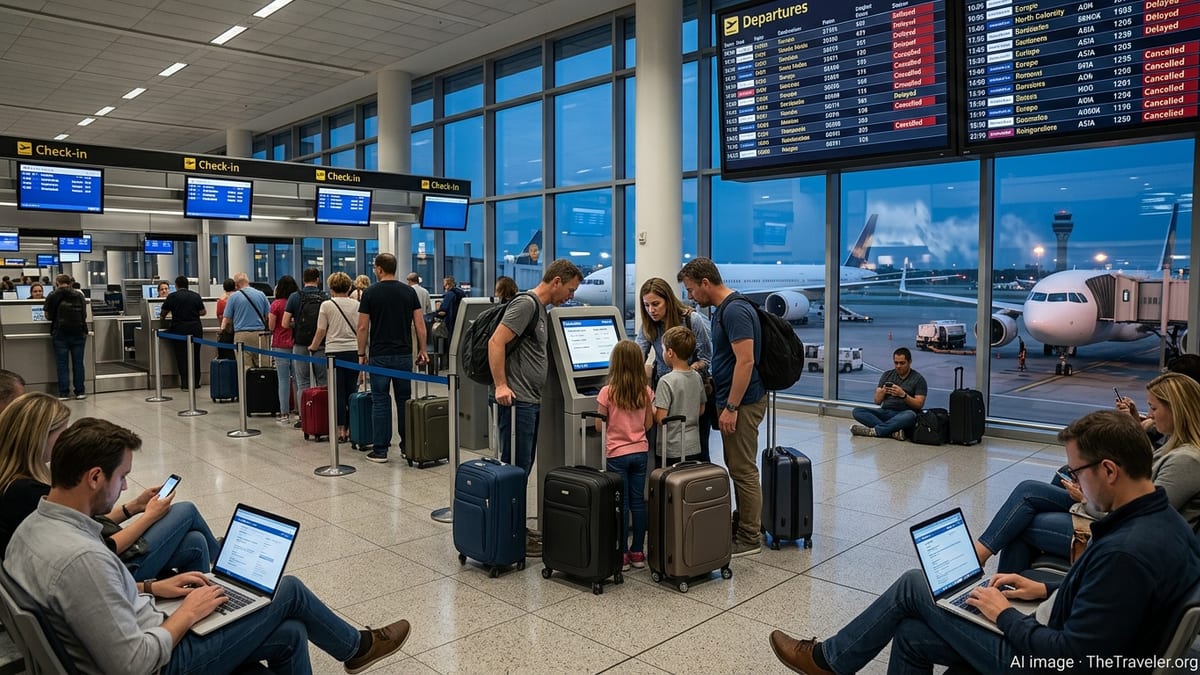
Capacity Squeezed As Demand Stays Strong
Global passenger demand for long-haul travel is running ahead of available capacity, keeping cabins full even as airlines struggle to restore networks to pre-pandemic patterns. Recent industry outlooks indicate that passenger traffic in 2025 and early 2026 is growing faster than seat supply, leading to high load factors on many international routes and leaving limited slack when disruption strikes.
Publicly available data from airline associations shows that aircraft departures and seat capacity are increasing only gradually as carriers confront lingering supply chain issues and staffing constraints. The imbalance is particularly acute on intercontinental routes that require widebody jets, where replacement capacity is harder to source and schedules are less flexible than on short-haul networks.
With demand outpacing supply, average fares on many long-haul sectors have remained elevated compared with pre-2020 levels. Analysts note that while headline ticket prices fluctuate by season and booking window, structural pressures on costs and capacity are keeping a firm floor under what airlines are willing to charge.
Fuel Spike and War-Driven Rerouting Push Fares Higher
The latest shock to long-haul economics is arriving via the fuel bill. Jet fuel prices have climbed in recent weeks as conflict in the Middle East disrupts regional oil flows, a trend that research from airline industry groups shows can rapidly erode margins on fuel-hungry long-distance flights. Reports from financial and energy desks suggest that carriers are once again revisiting fuel surcharges and yield strategies as they prepare for the peak northern summer travel period.
At the same time, the Iran war that escalated in late February 2026 has led to sweeping airspace closures across parts of Iran, Iraq, Israel, Kuwait, Qatar, Syria and Bahrain, sharply curtailing access to key Gulf hubs that normally knit together Europe, Africa and Asia. Aviation tracking data and specialist industry coverage describe thousands of flights disrupted or cancelled in early March as airlines scrambled to plot new routings around restricted zones.
Publicly available fare snapshots on Europe to Asia trunk routes show economy prices rising to several times typical levels for near-term travel dates, with some itineraries adding two to four hours of flying time due to diversions over the Caucasus, Central Asia or southern corridors via Egypt and Saudi Arabia. Longer flight times consume more fuel, require additional crew duty time and in some cases push aircraft to the limits of their range, prompting technical stops for refuelling that add further cost and complexity.
For travellers, the result is a sharp divergence between headline route maps and the practical options available. Some airlines continue to operate but with reduced frequencies and extended flight times, while others have suspended services entirely until conditions stabilise, funneling demand onto a shrinking pool of remaining long-haul departures.
Route Maps Redrawn as Hubs and Corridors Shift
The disruption is rippling across global route networks. Gulf megahubs in Dubai, Abu Dhabi and Doha normally act as high-capacity bridges between Europe, Asia and Africa, but reports from recent weeks describe temporary airport closures and severe schedule reductions as missile and drone threats rose in the region. With these traditional connectors constrained, traffic is being redistributed through secondary gateways and longer routings.
Travel industry analyses highlight rising volumes on alternative corridors, including connections via Turkey, southern Europe and selected East Asian hubs. Some itineraries that once relied on one-stop Gulf connections now require two or even three legs, often with overnight layovers and tighter aircraft utilisation for the carriers involved. This reshaping of flows is creating both bottlenecks and new opportunities, as airlines with access to safer, more direct corridors temporarily gain pricing power.
Elsewhere, regional geopolitical tensions are compounding the squeeze. Airspace restrictions between India and Pakistan, in place at various points through 2025 and 2026, have forced Indian carriers to lengthen routes to Europe and the Middle East, increasing fuel burn and limiting the number of rotations each aircraft can perform in a day. When overlaid with the wider Middle East constraints, these regional closures make certain long-haul pairings significantly harder to sustain at previous frequencies.
Network planners are responding with a mix of tactical cuts and structural shifts. Low-yield connecting itineraries are among the first to be trimmed, while high-demand, premium-heavy routes are protected where possible, even if this means consolidating traffic from secondary cities onto fewer long-haul departures.
Aircraft Shortages Limit Airlines’ Room to Maneuver
Complicating any effort to rebuild long-haul capacity is a persistent shortage of widebody aircraft. Manufacturer production lines are still catching up from pandemic-era shutdowns and supply chain bottlenecks, with engine availability, cabin interior components and certification processes all cited in public filings as sources of delay. Industry analyses note that global seat capacity is growing, but only by low single digits annually, a pace that leaves little margin to offset unexpected groundings or route suspensions.
Certification delays for new-generation long-haul jets are exacerbating the crunch. Boeing has pushed back the expected first deliveries of its 777X family yet again, with recent disclosures indicating an entry into service now targeted for 2027 rather than 2026. That slippage extends the service lives of older aircraft and postpones the moment when airlines can deploy more fuel-efficient, higher-capacity jets on their busiest intercontinental routes.
Widebody backlogs at both major manufacturers mean that airlines seeking additional aircraft for 2026 and 2027 often face long waits or must turn to the secondary leasing market, where lease rates have risen alongside demand. Some carriers have responded by retaining older jets longer than planned, deferring retirements and investing in cabin refurbishments to keep seats in the air, even if operating costs remain higher than with newer models.
For passengers, the aircraft shortage translates into fewer frequencies and limited competition on some long-haul city pairs, especially outside major global hubs. Where airlines cannot upgauge or add flights, they have greater scope to maintain or increase fares, particularly in premium cabins where demand remains resilient.
Travelers Face Higher Prices and Fewer Choices
The combined effect of strong demand, elevated fuel prices, conflict-driven rerouting and constrained aircraft supply is a long-haul market that feels tighter and more volatile than headline capacity statistics might suggest. Publicly available booking data and travel agency reports point to record or near-record fares on some intercontinental routes, alongside rising instances of sold-out flights, lengthy waitlists and limited alternatives when disruptions occur.
Travel advisors are encouraging long-haul passengers to book earlier, remain flexible on travel dates and consider indirect routings that avoid the most congested or conflict-affected corridors. Even so, reports indicate that last-minute shoppers, especially on Europe to Asia and South Asia to North America sectors, are facing price levels well above historical norms.
Looking ahead, industry forecasts suggest that airline profitability could remain stable or even improve in 2026, but largely because higher yields are offsetting elevated costs rather than because operations have fully normalised. As long as supply chain constraints, geopolitical flashpoints and fuel price volatility persist, the long-haul market is likely to remain characterised by higher fares, leaner route maps and a premium on flexibility for both airlines and travellers.